Case Study: Overcoming Leash Reactivity in Rescue Dogs
Discover how a 30-day desensitization protocol transformed a leash-reactive rescue dog. Learn actionable steps, gear costs, and training timelines.

The Case of Buster: A Classic Leash Reactivity Profile
Leash reactivity is one of the most common and frustrating behavioral challenges faced by rescue dog owners. To understand how to effectively modify this behavior, we are examining the 30-day case study of Buster, a 65-pound, three-year-old Boxer mix adopted from a local shelter. Within his home, Buster was a calm, affectionate companion. However, the moment he was clipped to a leash and stepped outside, he transformed. He would lunge, bark, and raise his hackles at the sight of other dogs, even those over a block away. This case study breaks down the exact desensitization and counter-conditioning protocol used to rehabilitate Buster, providing actionable data, gear costs, and timelines that you can apply to your own reactive dog.
It is crucial to understand that leash reactivity is rarely rooted in true malice or predatory aggression. According to the ASPCA's guide on canine aggression and reactivity, most leash-reactive dogs are exhibiting fear-based or frustration-based responses. The leash restricts their natural flight response, leaving them feeling trapped and forcing a 'fight' display to increase the distance between themselves and the perceived threat. Recognizing this emotional root is the first step toward effective behavioral modification.
Initial Assessment and Identifying the Threshold
Before any training could begin, we had to establish Buster's 'threshold'—the distance at which he noticed a trigger (another dog) but remained under his cognitive threshold, meaning he could still accept treats and respond to cues. During the initial assessment in a controlled, open park environment, we measured Buster's reactions. At 50 feet, he noticed a dog but remained relaxed. At 40 feet, his ears pinned back, and he offered a hard stare. At 30 feet, he began low growling and pulling. Therefore, 40 feet was established as his working threshold. All initial training had to occur at or beyond this 40-foot mark to prevent flooding, a psychological term for overwhelming a dog with fear, which only worsens reactivity.
Essential Gear and Cost Breakdown
Successful reactivity training requires specialized equipment to ensure safety and maximize the handler's control without causing the dog pain or fear. Aversive tools like prong collars or e-collars were strictly avoided, as suppressing a warning growl with pain can lead to a dog that bites without warning. Below is the exact gear setup used for Buster's rehabilitation.
| Equipment | Estimated Cost | Purpose and Justification |
|---|---|---|
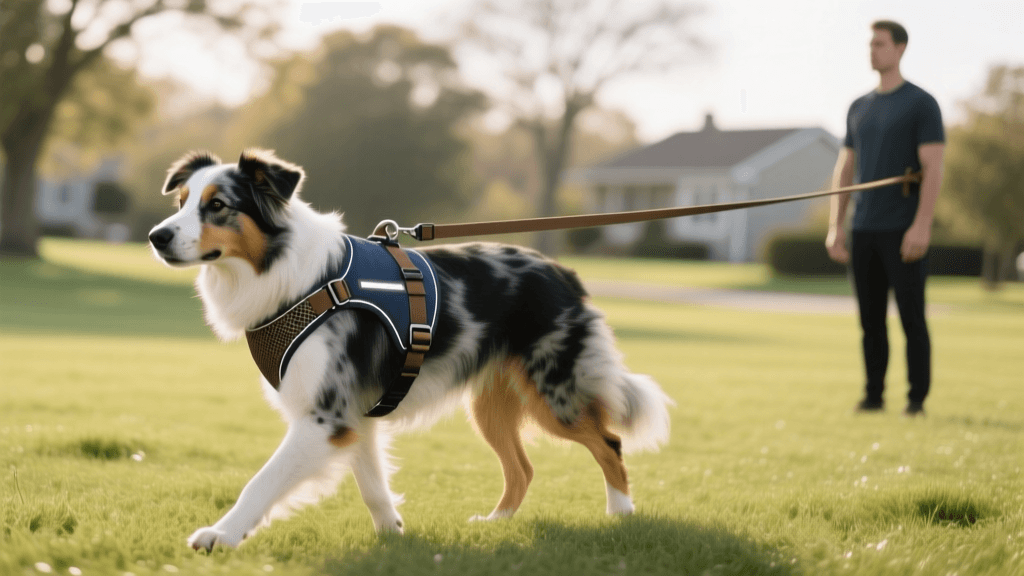
| Freedom No-Pull Harness | $28.00 | Features a front chest clip that gently redirects forward lunging momentum without choking the dog. |
| Biothane Long Line (15ft) | $35.00 | Provides a safe buffer zone. Biothane is waterproof, easy to sanitize, and will not snap under sudden tension. |
| Doggone Magnetic Treat Pouch | $18.00 | Allows for sub-second treat delivery. Fumbling with zippers ruins the timing required for classical conditioning. |
| Freeze-Dried Beef Liver | $22.00 / wk | High-value, low-calorie, and highly aromatic. Necessary to override the dog's environmental stress response. |
Total Initial Investment: $81.00 (excluding weekly treat costs). Investing in high-quality, escape-proof gear is non-negotiable when managing a strong, reactive dog.
The Science of Counter-Conditioning and Desensitization
The core of Buster's rehabilitation relied on a dual-pronged behavioral approach: Desensitization and Counter-Conditioning (CC/DS). Desensitization involves exposing the dog to the trigger at a sub-threshold distance, while counter-conditioning changes the dog's emotional response to the trigger from 'threat' to 'predictor of good things.' When Buster saw a dog at 40 feet, he was immediately fed high-value liver. Over time, his brain began to rewire. The sight of another dog no longer predicted a loss of freedom or a scary encounter; it predicted the arrival of premium food. For severe cases where a dog's panic is unmanageable, consulting a professional certified by the American College of Veterinary Behaviorists (ACVB) is highly recommended to evaluate if anti-anxiety medication is needed to facilitate learning.
Step-by-Step Protocol: The Engage-Disengage Game
We utilized a variation of the Engage-Disengage game, a staple in modern force-free behavior modification. Here is the exact protocol used with Buster:
- Step 1: The Engagement (Mark the Look). The moment Buster noticed a dog at 40 feet and offered a calm look, the handler used a verbal marker ('Yes!') within 0.5 seconds. This marks the exact behavior we want.
- Step 2: The Disengagement (Deliver the Reward). After the marker, Buster naturally turned his head back toward the handler to receive his reward. The treat was delivered away from the trigger, physically encouraging him to disengage.
- Step 3: Repetition and Criteria Raising. We repeated this 10 to 15 times per session, keeping sessions under 15 minutes to prevent cortisol fatigue. Only when Buster achieved an 80% success rate at 40 feet did we decrease the distance by 5 feet.
Timing is everything. If the dog lunges or barks, you have crossed the threshold. You must immediately increase the distance, let the dog decompress, and try again at a greater distance. The Centers for Disease Control and Prevention (CDC) emphasizes that understanding canine body language and managing distance is the primary method for preventing dog bites and managing reactive incidents in public spaces.
30-Day Progress Tracking and Data
Behavior modification is not linear, but tracking data helps identify trends and adjust the training plan. Below is Buster's progression over a 30-day period, training four days a week in controlled environments.
| Timeline | Working Distance | Trigger Intensity | Success Rate | Canine Body Language |
|---|---|---|---|---|
| Week 1 | 40 - 45 feet | Stationary dogs | 35% | Hard staring, closed mouth, stiff posture |
| Week 2 | 30 - 40 feet | Stationary dogs | 60% | Softer eyes, open mouth, occasional lip licking |
| Week 3 | 20 - 30 feet | Slow-moving dogs | 85% | Relaxed ears, willing to take treats gently |
| Week 4 | 15 - 20 feet | Parallel walking | 95% | Loose body, wagging tail, checking in with handler |
By Week 4, Buster could walk parallel to a calm, neutral dog at a distance of 15 feet without exhibiting any lunging or barking. His heart rate recovered faster after a trigger passed, indicating a lowered baseline anxiety level.
Navigating Setbacks and Trigger Stacking
On Day 18, Buster experienced a massive setback. A neighbor's off-leash dog charged the fence while Buster was at his 25-foot working distance. Buster exploded into a frenzied barking fit and redirected his frustration by nipping the handler's thigh. This is a classic example of 'trigger stacking' and redirected aggression. When a dog's nervous system is flooded with adrenaline and cortisol, it can take up to 72 hours for those stress hormones to return to baseline. Following this incident, we implemented a strict 48-hour 'decompression period.' No walks, no training, and no triggers. Buster was kept in the house with frozen Kongs and snuffle mats to encourage natural foraging behaviors, which lower heart rate and soothe the nervous system. Recognizing when to stop training is just as important as knowing how to train.
Long-Term Management and Decompression Walks
While Buster's reactivity was vastly improved, it is vital to understand that reactivity is often managed rather than entirely 'cured.' The dog's genetic predisposition and early socialization deficits play a permanent role in their baseline temperament. To maintain Buster's progress, his owner incorporated 'decompression walks' or 'sniffaris' three times a week. Using the 15-foot Biothane long line in quiet, wooded areas, Buster was allowed to roam, sniff, and explore at his own pace without the pressure of heel-work or obedience cues. Sniffing has been scientifically shown to lower a dog's pulse rate and provide immense mental enrichment. By balancing structured CC/DS training with unstructured decompression, Buster transitioned from a stressed, reactive shelter dog into a confident, manageable companion capable of navigating the human world safely.
jonas-cole
All our authors care for dogs every day — read more of their work on the authors page.