Dog Leash Reactivity: Diagnosing Fear vs Frustration
Is your dog reactive on walks? Learn how to diagnose fear versus frustration-based leash reactivity and apply proven, step-by-step training solutions.
Understanding Leash Reactivity in Dogs
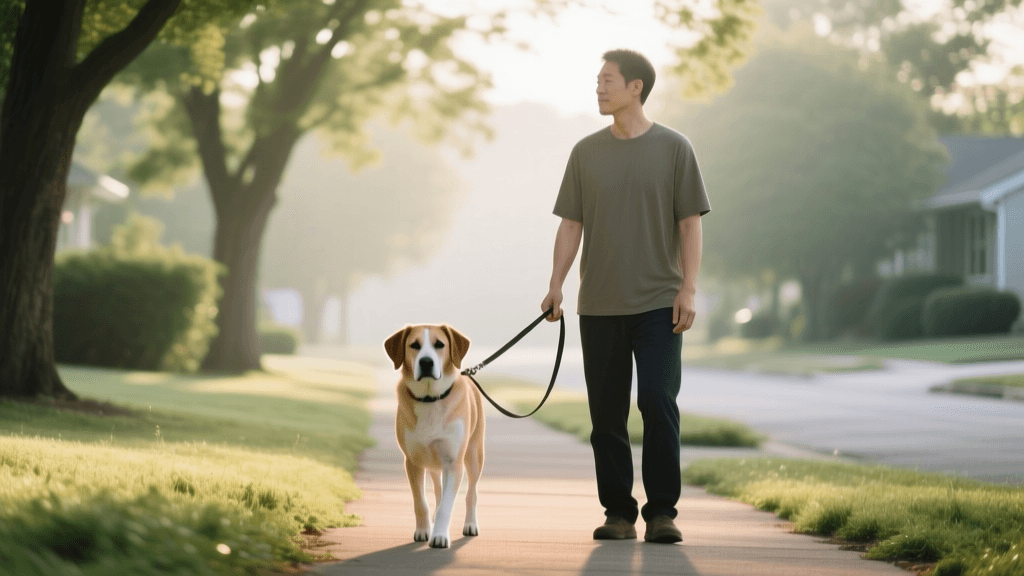
Leash reactivity is one of the most common and stressful behavioral issues reported by dog owners. Characterized by barking, lunging, and growling when encountering other dogs, people, or stimuli while on a walk, reactivity can turn a relaxing stroll into an anxiety-inducing chore. According to the American Kennel Club (AKC), leash reactivity is not always a sign of true aggression; rather, it is a complex emotional response stemming from either fear or frustration. Understanding the psychology behind your dog's behavior is the critical first step toward rehabilitation.
When a dog is on a leash, their natural flight-or-fight response is compromised. The leash restricts their ability to flee from a perceived threat or to approach a desired playmate freely. This restriction creates a pressure cooker of emotion, resulting in explosive outward behavior. To effectively solve the problem, we must accurately diagnose whether your dog is shouting 'Go away!' (fear) or 'Let me say hi!' (frustration).
Diagnosing the Root Cause: Fear vs. Frustration
Misdiagnosing the root cause of reactivity can lead to training methods that inadvertently worsen the behavior. For instance, using corrective collars on a fear-reactive dog will only confirm their belief that the approaching trigger is dangerous. Conversely, punishing a frustrated dog can increase their arousal levels. Let us break down the diagnostic criteria for both emotional states.
Signs of Fear-Based Reactivity
Fear-based reactivity is driven by anxiety and a desire to increase distance from the trigger. These dogs are often under-socialized, have had traumatic past experiences, or possess a genetic predisposition to neophobia (fear of new things). When a strange dog approaches, the fear-reactive dog feels trapped by the leash and uses loud, aggressive displays as a bluff to make the threat retreat.
- Body Language: Stiff posture, tucked tail, pinned-back ears, 'whale eye' (showing the whites of the eyes), and raised hackles.
- Vocalization: Low-pitched growling, snarling, or sharp, rapid barking.
- Off-Leash Behavior: Avoidant, hiding behind owners, or fleeing. If cornered off-leash, they may bite defensively.
- Post-Encounter: Shaking off, panting heavily, or refusing to eat treats immediately after the trigger passes.
Signs of Frustration-Based Reactivity
Frustration-based reactivity, often called 'barrier frustration' or 'leash frustration,' occurs in highly social, overly enthusiastic dogs. These dogs love other dogs and desperately want to play, but the leash prevents them from doing so. The inability to access the trigger causes a tantrum-like emotional outburst. The ASPCA notes that barrier frustration is rooted in impulse control deficits rather than malice or fear.
- Body Language: Forward-leaning, wiggly body, loose and wagging tail (sometimes in a high, stiff position due to arousal), play bows.
- Vocalization: Whining, high-pitched barking, squealing, and 'roo-roo' talking.
- Off-Leash Behavior: Extremely friendly, playful, and socially appropriate (though sometimes overly boisterous).
- Post-Encounter: Quickly recovers, remains eager to engage, and will readily take treats or toys once the trigger is gone.
Diagnostic Comparison Chart
| Feature | Fear-Based Reactivity | Frustration-Based Reactivity |
|---|---|---|
| Core Motivation | Increase distance (Go away!) | Decrease distance (Let me play!) |
| Body Posture | Stiff, crouched, or retreating | Forward, loose, wiggly, pulling |
| Tail Position | Tucked or stiffly bristled | High, wagging rapidly, or helicopter |
| Off-Leash Reality | Avoidant or defensively aggressive | Friendly, playful, social |
| Treat Acceptance | Refuses food when over threshold | May take food but remains distracted |
Actionable Solutions for Fear-Based Reactivity
If your dog is reacting out of fear, your primary goal is to change their emotional response from 'threat' to 'predictor of good things.' This requires classical counter-conditioning and desensitization.
Step 1: Find the Threshold Distance
Your dog's threshold is the distance at which they notice a trigger but do not react. For some dogs, this is 15 feet; for others, it is 50 feet. You must work entirely under this threshold. If your dog is barking, you are too close, and learning cannot occur.
Step 2: The Engage-Disengage Protocol
Stand at your sub-threshold distance (e.g., 40 feet from a park bench where dogs pass).
- Engage: The moment your dog looks at the trigger, click a clicker or say a marker word like 'Yes!'
- Disengage: Wait 1 to 2 seconds. Your dog should naturally turn their head back to you to get the reward. If they do not, gently lure them away.
- Reward: Deliver a high-value treat (e.g., boiled chicken breast or Zuke's Mini Naturals, approx. $6/bag) directly to their mouth.
Over weeks of practice, your dog will begin to voluntarily look at the trigger and immediately look back at you, effectively rewiring their brain to associate the scary stimulus with a paycheck.
Step 3: Emergency U-Turns
Teach a 'Let's Go!' cue at home with zero distractions. Toss a treat behind you, say 'Let's Go!', and run away cheerfully. On walks, if a trigger appears unexpectedly within your dog's threshold, execute the U-turn immediately to create distance before the reaction starts.
Actionable Solutions for Frustration-Based Reactivity
For the frustrated, overly social dog, the goal is to teach impulse control and that calmness—not pulling and screaming—is the key to accessing what they want.
Step 1: The 'Look at That' (LAT) Game
Similar to counter-conditioning, LAT teaches the dog that looking at another dog earns a reward from you, removing the need to pull toward them.
- Mark the exact second your dog spots the trigger.
- Reward heavily when they turn to you.
- Gradually require a longer duration of eye contact with you before delivering the reward.
Step 2: The 'Find It' Scatter
When a dog approaches and your dog begins to whine or pull, cheerfully say 'Find it!' and toss a handful of small, smelly treats (like freeze-dried liver, approx. $12/bag) into the grass. Sniffing naturally lowers a dog's heart rate and redirects their brain from an aroused state to a foraging state.
Step 3: Impulse Control Drills
Practice the 'Sit to Say Please' protocol at home. Require a sit before opening doors, putting on the leash, or tossing a toy. This builds the neurological pathways required for patience on walks.
Essential Gear for Reactive Dogs
Having the right equipment ensures safety and prevents physical strain on both you and your dog. Avoid retractable leashes and choke chains, which increase tension and can cause physical injury or heightened aggression.
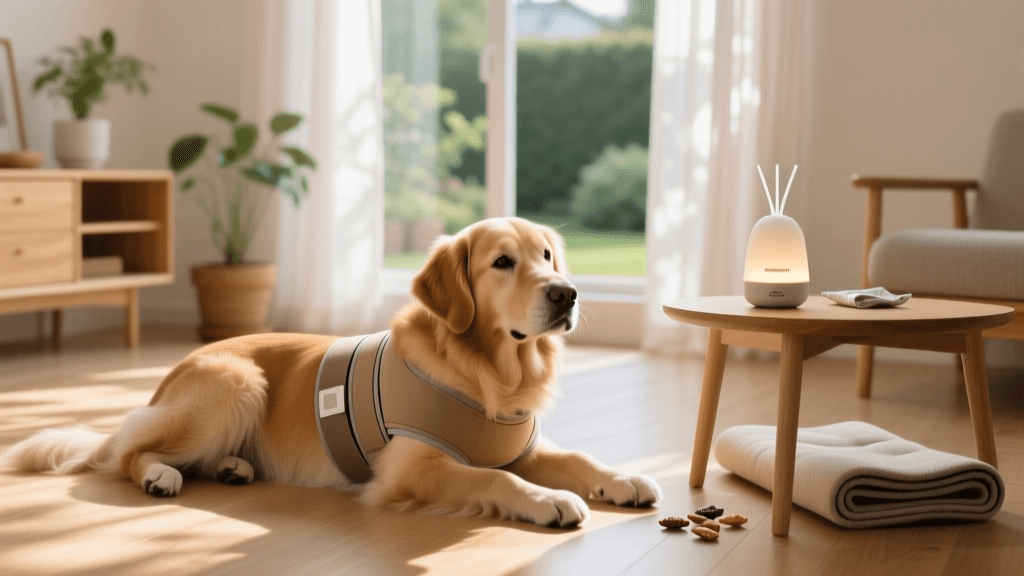
- Front-Clip Harness: The Ruffwear Front Range Harness (approx. $39.95) features a front chest clip that gently redirects your dog's momentum toward you when they pull, giving you better leverage without choking them.
- Hands-Free Leash: A hands-free waist leash (like the Tuff Mutt Hands-Free Leash, approx. $25.99) keeps your arms relaxed. Dogs can sense human tension through the leash; keeping your body loose helps keep your dog calm.
- Treat Pouch: The PetSafe Treat Pouch (approx. $15.99) allows for rapid reward delivery, which is critical for precise timing during the Engage-Disengage protocol.
When to Seek Professional Help
While many cases of mild to moderate reactivity can be managed with dedicated owner training, severe cases require professional intervention. If your dog has a history of biting, escapes harnesses, or causes you physical injury, it is time to hire an expert.
Look for a Certified Professional Dog Trainer (CPDT-KA) or a Certified Applied Animal Behaviorist (CAAB). According to the International Association of Animal Behavior Consultants (IAABC), behavior modification should always rely on positive reinforcement and force-free methods. Expect to pay between $150 and $250 per session for private in-home behavior consultations, or $800 to $1,500 for a comprehensive 6-week reactive dog rehabilitation package.
Patience, consistency, and accurate diagnosis are your best tools. By understanding whether your dog is acting out of fear or frustration, you can tailor your training approach, rebuild their confidence, and eventually enjoy peaceful walks together.
tom-renshaw
All our authors care for dogs every day — read more of their work on the authors page.