Preventing Puppy Osteoarthritis: Joint Care Guide 2026
Learn how to prevent early-onset osteoarthritis in puppies. Discover 2026 joint care tips, PennHIP screening, and the best puppy joint supplements.
The Hidden Puppyhood Roots of Canine Osteoarthritis
When most dog owners hear the term "canine osteoarthritis" (OA), they picture a senior dog struggling to climb the stairs or rise from a bed. However, veterinary orthopedic specialists emphasize a critical paradigm shift for 2026: osteoarthritis is not strictly a disease of aging; it is a disease of developmental mechanics. The foundation for lifelong joint health, and the prevention of early-onset osteoarthritis, is built entirely during your puppy's first year of life.
During the first 12 months, a puppy's skeletal system undergoes rapid, volatile changes. Growth plates remain open, cartilage is highly vascularized and vulnerable, and the synovial fluid that lubricates the joints is establishing its long-term baseline. If a puppy experiences developmental orthopedic diseases (DOD) such as hip dysplasia, elbow dysplasia, or osteochondritis dissecans (OCD), the microscopic cartilage damage initiates an inflammatory cascade. This cascade is the exact genesis of osteoarthritis. Therefore, treating canine osteoarthritis actually begins with aggressive, proactive management and prevention during puppyhood.
Early Orthopedic Screening: The 16-Week Window
Waiting until your dog is two years old to check for joint issues is an outdated practice that misses the critical window for early intervention. The most effective way to predict and manage future osteoarthritis risk is through early orthopedic screening. The Orthopedic Foundation for Animals and leading veterinary universities strongly advocate for early assessment, particularly for large and giant breeds that are genetically predisposed to joint laxity.
The PennHIP (University of Pennsylvania Hip Improvement Program) distraction method can be performed on puppies as young as 16 weeks old. Unlike traditional extended-hip radiographs that require the dog to be fully mature, PennHIP measures passive joint laxity while the puppy is still growing. If a 16-week-old puppy shows a high Distraction Index (DI), indicating significant joint looseness, veterinarians can immediately implement conservative management strategies. These include strict weight control, physical therapy, and potentially early surgical interventions like Juvenile Pubic Symphysiodesis (JPS), which must be performed before 20 weeks of age to alter the biomechanics of the pelvis and drastically reduce the severity of future osteoarthritis.
Nutritional Intervention: Halting the Rapid Growth Cascade
Overnutrition is one of the primary environmental triggers for developmental orthopedic disease in puppies. Feeding a large-breed puppy a standard, high-calorie puppy diet causes the skeleton to grow faster than the supporting musculature and cartilage can adapt. This mechanical mismatch leads to microfractures, joint instability, and the eventual breakdown of articular cartilage.
According to the American Kennel Club, large breed puppy foods must meet specific Association of American Feed Control Officials (AAFCO) guidelines, strictly capping calcium levels between 1.0% and 1.8% on a dry matter basis. Excess calcium disrupts normal bone remodeling and cartilage turnover. Furthermore, maintaining a lean body condition is non-negotiable. Every extra pound of body weight places exponential, compounding force on developing joints during high-impact activities like running and jumping.
2026 Puppy Body Condition Score (BCS) Targets
| Puppy Age | Ideal BCS (9-Point Scale) | Visual & Tactile Indicators | Osteoarthritis Risk Factor |
|---|---|---|---|
| 2 - 4 Months | 4 / 9 | Ribs easily felt with minimal fat cover; distinct waist from above. | Low (Optimal skeletal loading) |
| 5 - 8 Months | 4 to 5 / 9 | Ribs palpable without excess fat; abdominal tuck visible from side. | Low to Moderate (Growth plates highly active) |
| 9 - 12 Months | 5 / 9 | Ribs palpable; waist visible but less pronounced as muscle mass increases. | Moderate (Approaching skeletal maturity) |
Exercise Modification: Protecting Open Growth Plates
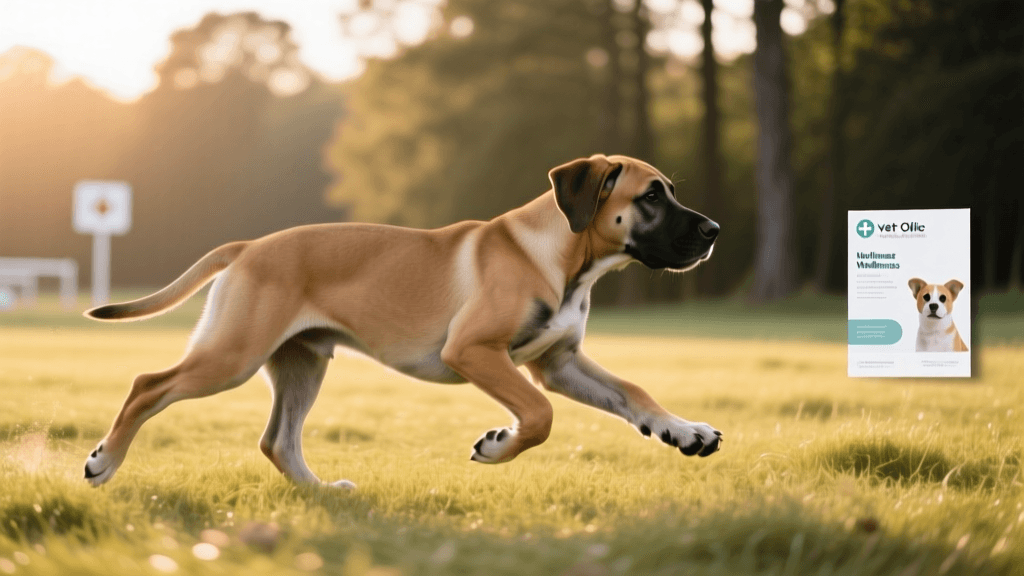
A common misconception in puppy care is that rigorous exercise will "tire out" a high-energy dog and build strong joints. In reality, forced, repetitive, or high-impact exercise on open growth plates causes repetitive stress injuries that accelerate cartilage degradation. The 2026 veterinary consensus on puppy exercise revolves around the "5-Minute Rule": a puppy should engage in no more than 5 minutes of structured, leashed exercise per month of age, up to twice a day.
For example, a 4-month-old Labrador Retriever should have no more than 20 minutes of continuous, structured walking per session. Free play on soft, natural surfaces like grass or dirt is highly encouraged, as it allows the puppy to self-regulate and rest when fatigued. Conversely, activities such as agility training, repetitive frisbee catching, jumping out of vehicles, and running on slippery hardwood floors must be strictly avoided until radiographic confirmation of growth plate closure, which typically occurs between 14 and 18 months of age depending on the breed.
Early Pharmacological and Supplemental Interventions
While the AAHA Osteoarthritis Guidelines heavily feature monoclonal antibodies like Librela (bedinvetmab) for adult dogs suffering from active OA pain, these medications are not indicated for growing puppies. Instead, early intervention focuses on chondroprotective agents and disease-modifying osteoarthritis drugs (DMOADs) that preserve existing cartilage and reduce synovial inflammation before irreversible damage occurs.
Polysulfated glycosaminoglycans (PSGAGs), commonly known by the brand name Adequan Canine, are frequently utilized off-label by veterinary orthopedic specialists for puppies diagnosed with early-stage OCD or severe dysplasia. PSGAGs inhibit the enzymes that break down cartilage and stimulate the production of hyaluronic acid, thickening the synovial fluid and providing a better cushion for developing joints. For daily, non-invasive support, high-quality oral joint supplements containing Avocado/Soybean Unsaponifiables (ASU), EPA/DHA from marine sources, and undenatured type II collagen are recommended.
2026 Joint Supplement Profile for At-Risk Puppies
| Supplement Brand | Key Active Ingredients | Primary Mechanism of Action | Puppy Safety Profile |
|---|---|---|---|
| Nutramax Dasuquin Advanced | ASU, Glucosamine, Chondroitin, EPA/DHA | Blocks cartilage breakdown; reduces inflammatory cytokines. | Excellent (Safe for puppies over 8 weeks) |
| VetriScience GlycoFlex Plus | Green Lipped Mussel, MSM, Glucosamine | Provides natural glycosaminoglycans; supports connective tissue. | Very Good (Ideal for moderate-risk breeds) |
| Animal Necessity Flexadin Advanced | Undenatured Type II Collagen (UC-II) | Immune modulation to prevent autoimmune cartilage attack. | Excellent (Low daily dose, highly palatable) |
Recognizing Subtle Juvenile Joint Distress
Puppies are notoriously stoic and rarely vocalize chronic joint pain. By the time a puppy is visibly limping, significant inflammatory damage has often already occurred. Owners must become adept at reading subtle behavioral changes that indicate early orthopedic discomfort. Watch for the "bunny hop" gait, where the puppy uses both hind legs simultaneously while running, which is a classic compensation mechanism for bilateral hip or stifle discomfort.
Other red flags include a sudden reluctance to jump onto the couch, sitting with one hind leg kicked out to the side ("puppy sitting"), lagging behind on walks, or uncharacteristic irritability when being groomed or handled around the hindquarters. If any of these signs are observed, immediate consultation with a veterinary orthopedic specialist is required. Early diagnosis of conditions like panosteitis, hypertrophic osteodystrophy (HOD), or early dysplasia allows for immediate medical management, halting the progression toward severe, lifelong osteoarthritis and ensuring your puppy grows into a mobile, pain-free adult.
robin-maitland
All our authors care for dogs every day — read more of their work on the authors page.