Safe Raw & Fresh Diets for Large Breed Puppies in 2026
Discover how to safely feed large breed puppies a raw or fresh diet in 2026. Learn calcium ratios, top AAFCO brands, and transition steps.
The Evolution of Fresh and Raw Puppy Diets in 2026
As we navigate the pet care landscape in 2026, the shift toward raw, fresh, and alternative diets for dogs has moved from a niche trend to a mainstream nutritional science. Pet parents are increasingly aware of the benefits of whole-food ingredients, improved digestibility, and the absence of ultra-processed fillers. However, feeding a growing puppy is fundamentally different from feeding an adult dog. When you introduce a raw or fresh diet to a puppy, especially a large or giant breed like a German Shepherd, Golden Retriever, or Great Dane, the margin for nutritional error is virtually zero. The first year of a puppy's life is marked by rapid skeletal, muscular, and neurological development. Providing a diet that is not only fresh but also meticulously balanced for growth is the cornerstone of preventing lifelong orthopedic and metabolic issues.
In this comprehensive guide, we will explore the science behind raw and fresh diets for puppies, the critical importance of calcium-to-phosphorus ratios, how to calculate daily energy requirements, and the safest commercial fresh food brands available in 2026 that meet rigorous veterinary standards.
The Critical Role of Calcium and Phosphorus Ratios
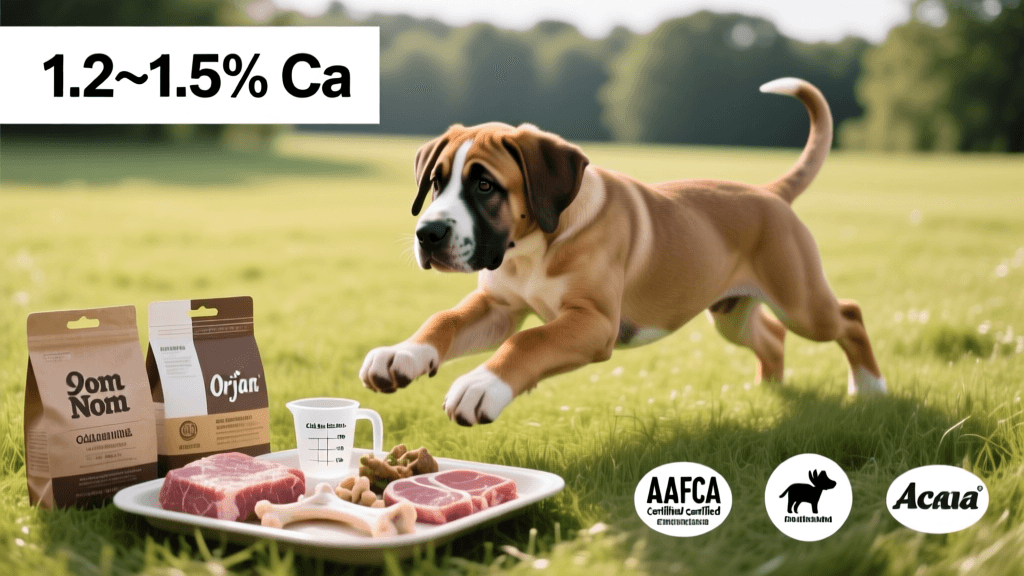
When formulating or selecting a diet for a large breed puppy, the calcium-to-phosphorus (Ca:P) ratio is the single most critical metric to monitor. Unlike adult dogs, which can tolerate a wider variance in mineral intake, growing puppies have a highly limited ability to regulate calcium absorption in their intestines. If a puppy consumes too much calcium, it can severely disrupt normal bone remodeling, leading to developmental orthopedic diseases (DOD) such as osteochondritis dissecans (OCD) and hypertrophic osteodystrophy (HOD).
According to the WSAVA Global Nutrition Guidelines, large breed puppies must consume diets specifically formulated to prevent rapid bone growth and excessive mineralization. The ideal Ca:P ratio for a growing large breed puppy should strictly fall between 1.1:1 and 1.4:1. Furthermore, the absolute amount of calcium must be controlled, typically not exceeding 3.5 grams per 1,000 kilocalories of food. Many generic 'all life stages' raw diets fail this specific large-breed puppy requirement, making it imperative to read the nutritional adequacy statement on any fresh food packaging.
The Dangers of Unbalanced Homemade Raw Diets
Many well-meaning owners attempt to feed a homemade raw diet consisting primarily of muscle meat, organs, and raw meaty bones, often following outdated internet recipes or unverified social media trends. While adult dogs might temporarily survive on an imbalanced diet, a puppy will rapidly develop severe deficiencies. A meat-heavy diet without precise supplementation is notoriously deficient in iodine, vitamin D, vitamin E, and essential trace minerals like copper and zinc.
Experts at the Tufts Cummings School of Veterinary Medicine Clinical Nutrition Service consistently warn against feeding homemade raw diets to growing puppies unless the recipe is formulated and regularly audited by a board-certified veterinary nutritionist. The risk of secondary nutritional hyperparathyroidism—a condition where the body leaches calcium from the bones to compensate for dietary imbalances, resulting in spontaneous fractures—is far too high. If you are committed to a fresh diet, commercially prepared, AAFCO-compliant fresh and raw foods are the only safe route for a puppy's first year.
Calculating Energy Requirements for Growing Puppies
Overfeeding is just as dangerous as underfeeding when it comes to large breed puppies. Excess calories lead to rapid weight gain, which places immense mechanical stress on developing joints and growth plates. To safely feed a fresh or raw diet, you must calculate your puppy's Resting Energy Requirement (RER) and Daily Energy Requirement (DER).
- Resting Energy Requirement (RER): Calculated as 70 x (body weight in kg)^0.75.
- Daily Energy Requirement (DER): For puppies aged 8 to 16 weeks, multiply the RER by 3.0. For puppies aged 4 to 12 months, multiply the RER by 2.0.
Because fresh and raw diets are highly digestible and calorie-dense compared to extruded kibble, you must weigh the food using a digital kitchen scale rather than relying on volume measurements like cups. A slight miscalculation in a calorie-dense raw diet can lead to unwanted weight gain within a matter of weeks.
Top AAFCO-Compliant Fresh and Raw Brands for Puppies in 2026
Fortunately, the commercial fresh and raw food market in 2026 offers rigorously tested, scientifically backed options that cater specifically to the developmental needs of puppies. Here are the top-tier brands that prioritize safety, balance, and growth-specific formulations.
JustFoodForDogs Fresh Puppy Recipe
JustFoodForDogs remains a leader in the gently cooked fresh food space. Their Fresh Puppy Recipe is specifically formulated with the optimal Ca:P ratio for large breed growth. It features high-quality chicken, brown rice, and a precise blend of vegetables, fortified with a proprietary nutrient blend that includes essential DHA from fish oil for cognitive and retinal development. Because it is gently cooked, it eliminates the risk of bacterial pathogens while retaining the moisture and bioavailability of whole foods, making it an excellent choice for puppies with sensitive digestive tracts transitioning off mother's milk.
WeFeedRaw Puppy Specific Plan
For owners dedicated to a raw diet, WeFeedRaw offers a specialized Puppy Plan that utilizes High-Pressure Processing (HPP) to eliminate dangerous pathogens like Salmonella and Listeria without cooking the meat. Their puppy-specific blends include precisely ground bone for calcium, carefully measured organ meats for vitamins, and added kelp and synthetic trace minerals to ensure the diet meets AAFCO's stringent 'growth' profiles. The HPP treatment provides peace of mind for households with immunocompromised individuals or young children, addressing the primary safety concern associated with raw feeding.
The 10-Day Fresh Food Transition Protocol
Transitioning an 8-to-12-week-old puppy from a breeder's kibble to a fresh or raw diet must be done gradually to avoid gastrointestinal upset, diarrhea, and subsequent dehydration. The microbiome of a young puppy is fragile. Follow this structured 10-day transition schedule to ensure a smooth adaptation to the new moisture and protein levels.
| Days | Old Kibble/Diet | New Fresh/Raw Diet | Expected Stool Changes |
|---|---|---|---|
| 1-3 | 75% | 25% | Normal, slightly softer |
| 4-6 | 50% | 50% | Softer, increased volume |
| 7-9 | 25% | 75% | Transitioning, smaller volume |
| 10+ | 0% | 100% | Firm, small, low odor |
During this transition, adding a high-quality canine-specific probiotic and a pump of digestive enzymes can significantly ease the burden on your puppy's developing gut. If loose stools persist for more than 48 hours at any stage, pause the transition and hold at the previous ratio until the stool firms up.
Teething, Enrichment, and Food Safety
Puppies go through an intense teething phase between 12 and 24 weeks of age. Fresh and raw diets offer unique opportunities for enrichment and pain relief during this uncomfortable milestone. While you should never give a puppy weight-bearing bones from large animals (which can fracture delicate deciduous and emerging adult teeth), you can utilize frozen fresh food mats or specially designed raw recreational bones under strict supervision.
Freezing portions of your puppy's daily raw or fresh food allocation inside a rubber enrichment toy provides a soothing, cold surface for inflamed gums while simultaneously slowing down their eating pace and providing mental stimulation. This is particularly useful for high-energy breeds that need mental engagement alongside their physical nutrition.
When handling any raw or fresh diet, strict hygiene protocols are non-negotiable. The FDA's guidelines on raw pet food diets emphasize the importance of washing hands, utensils, and bowls with hot, soapy water immediately after preparation and feeding. Never leave raw food out at room temperature for more than 20 minutes. If your puppy does not finish their meal, discard it or refrigerate it immediately to prevent bacterial proliferation.
'Nutrition is the foundation of your puppy's development. While fresh and raw diets offer incredible benefits in terms of digestibility and whole-food nutrients, they must be treated with the same scientific rigor as veterinary therapeutic diets. Never guess when it comes to a growing puppy's minerals.'
Conclusion: Setting the Stage for a Healthy Adult Dog
Feeding a large breed puppy a raw or fresh diet in 2026 is entirely possible and can yield remarkable health benefits, including a robust immune system, a lustrous coat, and optimal lean muscle development. However, success relies entirely on choosing AAFCO-compliant, growth-specific formulations, strictly monitoring calcium and caloric intake, and adhering to rigorous food safety standards. By partnering with reputable fresh food brands and consulting with your veterinarian, you can safely provide your puppy with the vibrant, whole-food nutrition they need to thrive from their first steps into adulthood.
marcus-aldridge
All our authors care for dogs every day — read more of their work on the authors page.