Kurgo Tru-Fit No-Pull Puppy Harness Review 2026: Stop Pulling
Discover how the Kurgo Tru-Fit no-pull puppy harness stops leash pulling in 2026. Learn fitting tips, front-clip training methods, and puppy safety.
The Reality of Puppy Leash Pulling in 2026
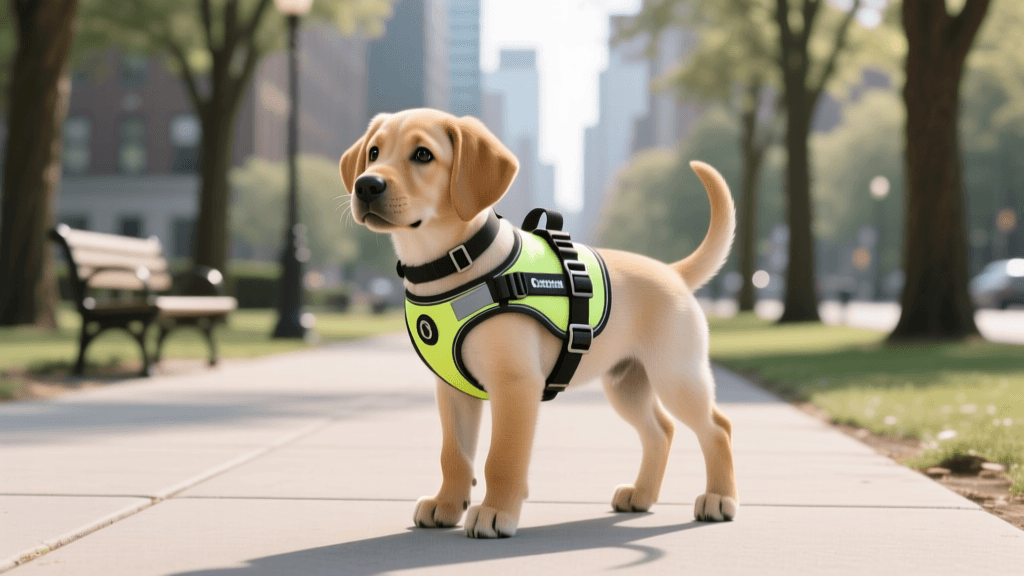
Bringing a new puppy home is a whirlwind of joy, chewed-up shoes, and critical developmental milestones. However, one of the most frustrating hurdles for new dog owners is the first outdoor walk. Instead of a peaceful neighborhood stroll, you are often dragged down the sidewalk by an enthusiastic ball of fur. While leash pulling is a natural canine behavior driven by curiosity and the opposition reflex, it must be corrected early. In 2026, modern canine behavioral science heavily favors the use of a front-clip no-pull harness, specifically the highly rated Kurgo Tru-Fit, to humanely redirect a puppy's momentum without causing physical harm or psychological stress.
Why Traditional Collars Endanger Puppy Tracheas
Many first-time owners default to a standard flat nylon collar, assuming it is the safest option. Unfortunately, a puppy's anatomy is incredibly delicate. Puppies have developing tracheas (windpipes) composed of soft cartilage rings that are not fully calcified. When a puppy pulls against a flat collar, all the kinetic energy and physical pressure are concentrated directly on the front of the neck. This can lead to tracheal micro-tears, chronic coughing, and in severe cases, early-onset tracheal collapse. Furthermore, the pressure on the neck triggers the 'opposition reflex'—an instinctual canine response where a dog naturally pulls harder against any force applied to its neck, making the pulling behavior significantly worse.
How Front-Clip No-Pull Harnesses Redirect Momentum
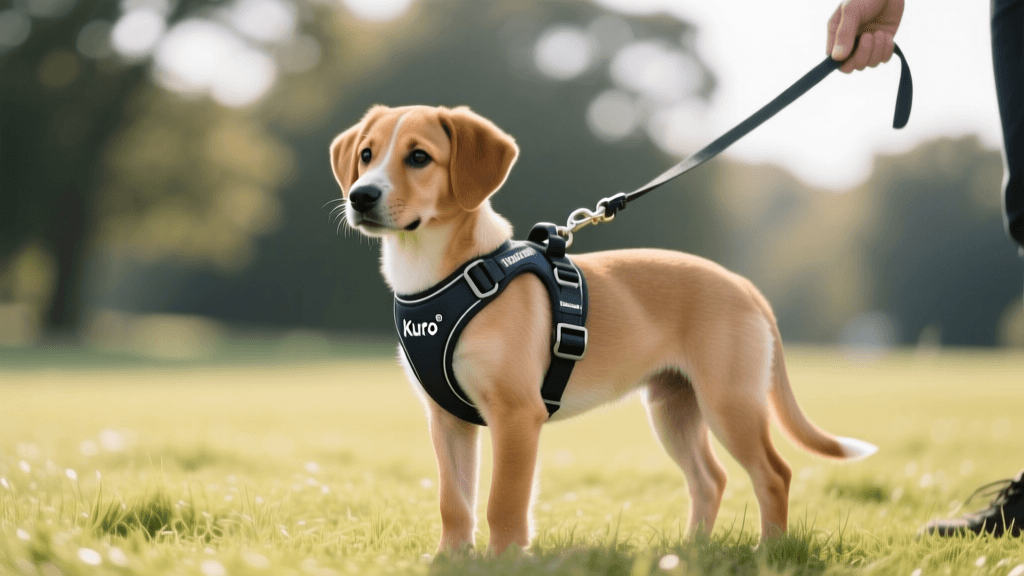
The brilliance of a front-clip harness lies in basic biomechanics. By placing the leash attachment point on a reinforced D-ring or V-ring located on the chest (the sternum), you change the physical leverage. When the puppy surges forward and hits the end of the leash, the front attachment point gently pivots the dog's chest and shoulders sideways, turning them back toward the handler. This completely neutralizes the opposition reflex because the dog cannot physically brace its hindquarters and pull forward when its center of gravity is being redirected.
Harness Attachment Comparison Chart
| Harness Type | Attachment Point | Effect on Pulling | Best Used For |
|---|---|---|---|
| Back-Clip | Spine/Shoulders | Encourages pulling (sled dog effect) | Calm, fully trained adult dogs |
| Front-Clip (No-Pull) | Chest/Sternum | Redirects momentum sideways | Puppies learning leash manners |
| Dual-Clip | Chest and Spine | Offers versatile training options | Transitional training phases |
| Head Halter | Snout/Muzzle | Controls head direction | Massive, strong adult breeds |
Top No-Pull Harness Features for 2026 Puppy Models
When evaluating the Kurgo Tru-Fit and similar premium harnesses for puppies this year, several 2026 design standards stand out. First, modern harnesses utilize ultra-breathable 3D air mesh padding. Puppies regulate their body temperature primarily through panting and their paw pads, making them highly susceptible to overheating. The latest mesh technologies prevent chafing and heat retention during summer walks. Second, the webbing is now frequently crafted from high-tensile recycled ocean plastics, offering immense durability without the stiff, heavy feel of older nylon models. Finally, a true no-pull harness for a growing puppy must feature a 4-point or 5-point adjustment system. Puppies grow in uneven spurts; a harness that only adjusts at the neck will quickly become a choking hazard or an escape risk as the puppy's chest broadens.
How to Properly Fit a No-Pull Harness on a Growing Puppy
An improperly fitted harness can cause severe chafing behind the front armpits (the axillary region) or allow the puppy to back out and slip away into traffic. To fit the Kurgo Tru-Fit or any front-clip harness correctly, follow the two-finger rule. After buckling the harness, you should be able to slide exactly two fingers flat under any strap. If you can fit your whole hand, it is too loose and the puppy can escape. If you cannot fit two fingers, it is restricting blood flow and breathing. Always measure your puppy's girth (the widest part of the ribcage just behind the front legs) rather than relying solely on weight-based sizing charts, as breed proportions vary wildly.
Step-by-Step Front-Clip Leash Training Protocol
A no-pull harness is a training tool, not a magic wand. To achieve a polite heel, you must pair the front-clip harness with positive reinforcement. The American Kennel Club (AKC) recommends consistent, reward-based redirection for puppy leash training.
Step 1: Harness Desensitization (Days 1-3)
Do not put the harness on and immediately drag the puppy outside. Puppies often freeze or bite at the harness when they first feel it. Put the harness on indoors for five minutes at a time while feeding high-value treats like boiled chicken or playing a favorite game of tug. This builds a positive classical conditioning response to the feeling of the chest straps.
Step 2: The Magnetic Hand Technique
Attach the leash to the front sternum ring. Hold a handful of treats in your hand right at your pant seam, directly next to the puppy's nose. Walk forward a few steps. The puppy will follow the 'magnetic' hand. Mark the behavior with a verbal 'Yes!' and feed the treat while keeping your hand in the heel position. This teaches the puppy that the reward zone is by your leg, not three feet ahead at the end of the leash.
Step 3: The Red Light, Green Light Game
The moment the leash goes tight and you feel tension on the front clip, immediately stop walking like a tree (Red Light). Do not yank the leash; simply stand still. Wait for the puppy to look back at you or take a single step backward to relieve the tension. The moment the leash goes slack, say 'Let's go!' and resume walking (Green Light). According to the ASPCA, consistency in this method teaches the puppy that pulling equals stopping, while a loose leash equals forward movement.
Step 4: The 180-Degree Turn-Around
If your puppy is highly distracted and ignoring the Red Light rule, cheerfully say 'This way!' and abruptly turn 180 degrees, walking in the opposite direction. Because the leash is attached to the front chest ring, this turn will gently sweep the puppy around to face you. When they catch up to your side, reward them heavily. This engages their brain and forces them to pay attention to your body language rather than the environment.
When to Transition to a Back-Clip Harness
The front-clip harness is the ultimate tool for the first year of a puppy's life while leash manners are being solidified. However, once your dog has mastered the loose-leash walk and no longer puts tension on the sternum ring, you can begin transitioning to a back-clip harness for casual sniffaris and hiking. The back-clip allows for a more natural, unrestricted gait for a fully trained adult dog. Until that milestone is reached, rely on the front-clip, keep your training sessions under 15 minutes to match a puppy's attention span, and enjoy the journey of raising a polite, happy walking companion.
hannah-wickes
All our authors care for dogs every day — read more of their work on the authors page.