Best Teething Toys for Puppy Bite Training in 2026
Discover the best teething toys for puppy bite inhibition training in 2026. Learn redirection techniques, top product picks, and expert safety tips.
The Critical Link Between Teething and Bite Inhibition
Welcome to the challenging but rewarding world of puppy training. If you are raising a puppy in 2026, you already know that the teething phase can feel like living with a tiny, adorable land shark. Between the ages of three and six months, puppies lose their deciduous teeth and grow their adult teeth, leading to intense gum discomfort and an overwhelming biological urge to chew. However, from a professional dog training perspective, teething is not merely a veterinary milestone; it is a critical window for behavioral conditioning. Specifically, it is the prime time to teach bite inhibition and proper redirection.
The Science of Puppy Teething and Behavioral Conditioning
When a puppy chews, they are exploring their environment, relieving gingival pain, and exercising their jaw muscles. If left unguided, a puppy will naturally choose household items, furniture, or human hands as their preferred chewing outlets. This is where the strategic introduction of the best teething toys becomes a foundational training tool. According to the American Kennel Club (AKC), providing appropriate chew outlets during this developmental window is essential for preventing destructive behaviors and teaching a dog what is acceptable to bite. By pairing high-value teething toys with positive reinforcement, you are actively conditioning your puppy's brain to associate specific textures and shapes with the reward of chewing, effectively wiring them for lifelong good habits.
Top 3 Teething Toys for Redirection Training in 2026
Choosing the right toy is not just about durability; it is about training utility. A good training toy must be engaging, safe, and capable of holding a puppy's attention long enough for the redirection lesson to sink in. Here are the top three teething toys that professional trainers recommend for bite inhibition and redirection protocols in 2026.
1. KONG Puppy Toy (Classic Blue/Pink)
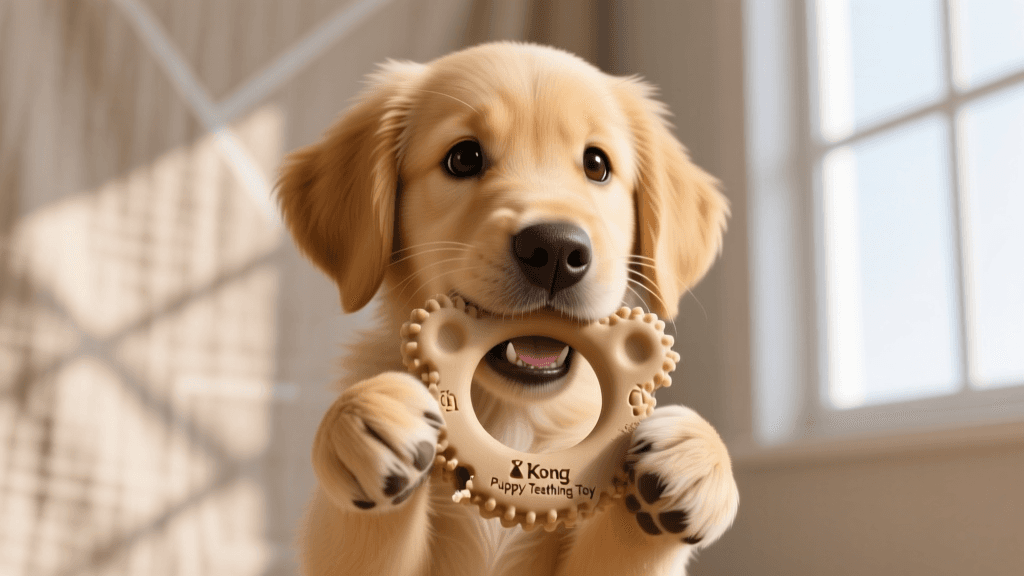
The KONG Puppy remains the gold standard for interactive teething and crate training. Made from a softer, puppy-specific rubber formula, it is gentle on developing teeth while being resilient enough to withstand sharp incisors. For training purposes, the KONG's hollow center is its greatest asset. By stuffing it with xylitol-free peanut butter, plain pumpkin puree, or puppy-safe yogurt and freezing it, you create a long-lasting enrichment puzzle. When your puppy begins to mouth your hands during a training session, immediately present the frozen KONG. The cold temperature soothes inflamed gums, while the extended engagement time reinforces the concept that toys, not human skin, provide the highest value rewards. In 2026, the small and medium sizes retail between $12 and $16, making it an incredibly cost-effective training staple.
2. Nylabone Puppy Chew Teething Dino
For puppies that are aggressive chewers and need immediate tactile feedback, the Nylabone Puppy Teething Dino is an exceptional choice. This toy features raised bristles and nubs that act like a toothbrush, massaging the gums and helping to dislodge loose baby teeth. From a training standpoint, its rigid structure and distinct flavor profiles (such as the 2026 updated bacon and chicken infusions) make it an excellent decoy toy. When you catch your puppy gnawing on a baseboard or shoe, a swift, silent swap to the Teething Dino provides an immediate, satisfying alternative. Priced around $8 to $11, it is an affordable tool to keep in every room of your house for instant redirection.
3. Benebone Puppy Zaggler
The Benebone Puppy Zaggler stands out for its ergonomic, wishbone-like design, which allows puppies to easily grip the toy with their front paws while they chew. This is particularly beneficial for independent chewing sessions and settling exercises. Teaching a puppy to go to their mat and chew is a vital impulse-control exercise, and the Zaggler's unique shape and durable nylon construction make it the perfect anchor for this behavior. The 2026 puppy-specific formula is slightly softer than the adult version, ensuring it does not fracture delicate young teeth. Retailing for approximately $14 to $18, it is a premium option for teaching calm, settled chewing behaviors.
2026 Teething Toy Comparison Chart
| Toy Model | Best Training Application | Material | Est. 2026 Price |
|---|---|---|---|
| KONG Puppy Classic | Crate training, frozen enrichment, prolonged redirection | Soft Puppy Rubber | $12 - $16 |
| Nylabone Teething Dino | Quick swaps, tactile gum relief, decoy chewing | Textured Nylon | $8 - $11 |
| Benebone Puppy Zaggler | Settle exercises, impulse control, paw-grip chewing | Puppy-Specific Nylon | $14 - $18 |
Step-by-Step Redirection Training Protocol
Having the best teething toys is only half the equation; knowing how to use them in a structured training protocol is what yields results. The ASPCA highly recommends the Redirection and Praise method for managing puppy mouthing and teaching bite inhibition. Here is a step-by-step guide to implementing this technique using your chosen teething toys.
Step 1: The Marker
When your puppy's teeth make contact with your skin, immediately let out a high-pitched yelp or say a firm Ouch, and withdraw your hand by crossing your arms and looking away. This mimics the feedback a littermate would give, signaling that the bite was too hard and play has stopped. Wait for three to five seconds of calm behavior or a slight retreat from the puppy.
Step 2: Immediate Redirection
Once the puppy has paused, present your designated teething toy (e.g., the KONG Puppy or Nylabone Dino). Make the toy exciting by moving it along the floor to trigger their prey drive. The goal is to make the toy infinitely more interesting than your stationary hand or clothing.
Step 3: Positive Reinforcement
The exact moment your puppy's teeth touch the rubber or nylon toy instead of your skin, offer calm, verbal praise such as Good chew or Yes. Avoid overly excited petting, which might overstimulate them and trigger another bout of mouthing. Let them enjoy the toy for several minutes to cement the association between chewing the toy and receiving positive attention.
Step 4: Consistency Across Environments
Ensure that every family member and visitor follows this exact protocol. Inconsistency confuses puppies and prolongs the teething and biting phase. Keep a basket of teething toys in high-traffic areas like the living room, kitchen, and near the puppy's pen so that a redirection tool is always within arm's reach.
Safety, Hygiene, and Toy Rotation
As you integrate these toys into your 2026 training regimen, safety and hygiene must remain top priorities. Puppies have incredibly strong jaws relative to their size, and damaged toys can pose severe choking or intestinal blockage hazards. Inspect all teething toys daily for deep gouges, missing chunks, or frayed edges. If a toy shows significant wear, discard it immediately and replace it.
Furthermore, practice toy rotation. Puppies suffer from habituation; if a toy is always available, it loses its novelty and value as a training reward. Keep half of your puppy's teething toys hidden in a closet, and rotate them every three to four days. This simple psychological trick ensures that when you pull out the KONG or the Benebone for a redirection exercise, the puppy views it as a brand-new, high-value prize. Additionally, wash rubber and silicone toys weekly in warm, soapy water or on the top rack of your dishwasher to prevent bacterial buildup that could cause gastrointestinal upset.
Conclusion
Navigating the puppy teething phase requires patience, consistency, and the right equipment. By viewing teething toys not just as pacifiers, but as active training tools for bite inhibition and redirection, you set your dog up for a lifetime of good manners. The KONG Puppy, Nylabone Teething Dino, and Benebone Zaggler remain the top choices for trainers in 2026 due to their safety, durability, and enrichment value. Stick to your redirection protocol, prioritize safety, and remember that this challenging phase is temporary. With the right approach, your tiny land shark will soon mature into a polite, well-adjusted adult dog with excellent chewing habits.
hannah-wickes
All our authors care for dogs every day — read more of their work on the authors page.