Identifying Dehydration In Dogs During Summer Heat
Learn about identifying dehydration in dogs during summer heat with expert tips and data-backed advice.
Recognizing Early Signs of Dehydration in Canines
Dehydration in dogs is not merely a summer inconvenience—it’s a life-threatening condition that can progress from mild lethargy to acute renal failure within hours. Unlike humans, dogs rely almost exclusively on panting for thermoregulation, losing significant moisture through evaporation rather than sweat. This makes them especially vulnerable during ambient temperatures exceeding 75°F (24°C), particularly when humidity exceeds 60%. According to the American Veterinary Medical Association (AVMA, 2023), over 18% of heat-related emergency visits in dogs between June and August involve moderate-to-severe dehydration confirmed by packed cell volume (PCV) >55% and total solids >8.2 g/dL.
Skin Elasticity and Capillary Refill Time: Objective Clinical Measures
Two rapid, non-invasive assessments every dog owner should master are skin tenting and capillary refill time (CRT). To perform the skin elasticity test, gently lift the loose skin over the dog’s shoulder blades or back of the neck and release. In a well-hydrated dog, the skin snaps back instantly—within ≤1 second. With 5–6% dehydration, tenting persists for 1–2 seconds; at ≥8% dehydration, it remains elevated for ≥3 seconds. CRT measures perfusion: press firmly on the gumline until the tissue blanches, then time how long it takes for pink color to return. Normal CRT is 1–2 seconds. A delay of 3–4 seconds indicates moderate hypovolemia; >4 seconds warrants immediate veterinary evaluation.
Quantifying Fluid Loss Thresholds
Canine body water constitutes approximately 60% of lean body mass. A 5% loss equates to roughly 250 mL per 10 kg (22 lbs) of body weight—enough to cause noticeable clinical signs. At 10% loss (e.g., 500 mL in a 20-kg Labrador), dogs exhibit sunken eyes, dry mucous membranes, and tachycardia (>140 bpm in medium breeds). Mortality risk escalates sharply beyond 12% dehydration, where systolic blood pressure may fall below 80 mmHg.
Vaccination Status and Its Indirect Impact on Hydration Resilience
While vaccines don’t directly prevent dehydration, they mitigate secondary complications that impair fluid balance. For example, canine parvovirus infection causes severe vomiting and diarrhea, accelerating fluid loss by up to 150 mL/kg/day. Puppies require core vaccinations administered at strict intervals: distemper, adenovirus, parvovirus, and parainfluenza (DA2PP) at 6–8 weeks, 10–12 weeks, and 14–16 weeks. A final booster is given at 16–20 weeks to overcome maternal antibody interference. Rabies vaccination must be administered no earlier than 12 weeks and repeated every 1–3 years per state law—California mandates triennial boosters, whereas New York requires annual renewal for licensure.
Vaccination-Dosing Standards per Weight Class
Dosage volumes for DA2PP vaccines are standardized regardless of size: all dogs receive 1 mL subcutaneously. However, adjuvant content and antigen concentration vary by manufacturer. Merial’s Nobivac® Canine 1-DAPP delivers 106.5 TCID50 of modified-live parvovirus per dose, while Zoetis’ Vanguard® Plus 5 contains 107.0 TCID50. These titers ensure seroconversion in ≥95% of immunocompetent dogs after the final puppy series (Journal of the American Animal Hospital Association, 2022).
Environmental Risk Mapping: High-Risk Zones and Times
Geographic location significantly modulates dehydration risk. Data from the Cornell University College of Veterinary Medicine’s Heat Stress Surveillance Project (2021–2023) identified Phoenix, Arizona; Houston, Texas; and Jacksonville, Florida as top-three metropolitan areas for heat-induced dehydration admissions. In Phoenix, average July humidity hovers at 22%, but surface pavement temperatures regularly exceed 140°F (60°C)—sufficient to scald paw pads in under 60 seconds. Peak incidence occurs between 2:00 p.m. and 5:00 p.m., when solar radiation intensity reaches 950 W/m². Dogs left in vehicles face exponential risk: interior cabin temperatures climb by 19°F (10.5°C) in just 10 minutes—even with windows cracked and ambient air at 70°F.
- A 10-kg dog loses ~120 mL/hour via panting at 85°F (29°C) and 50% relative humidity
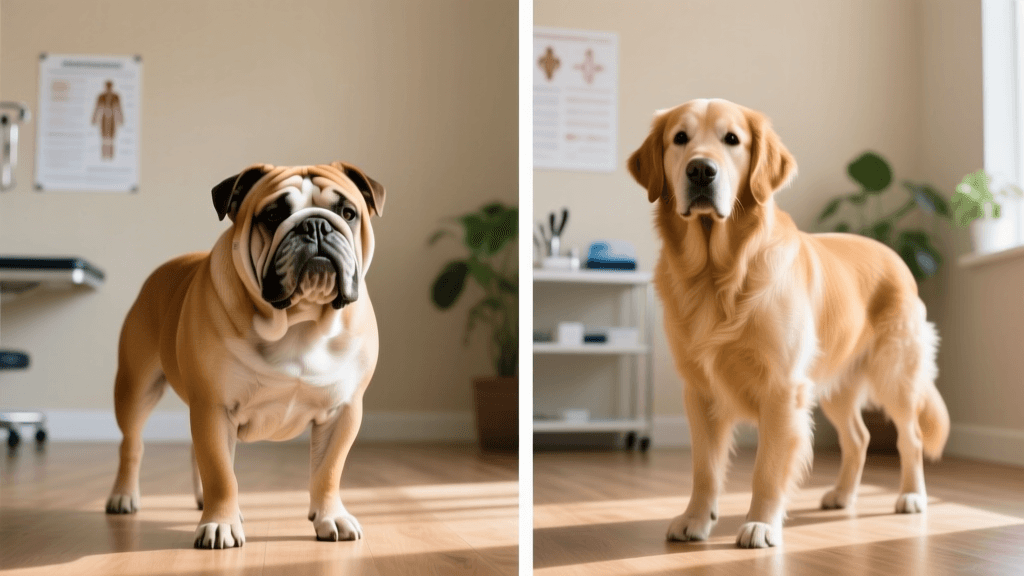
- Brachycephalic breeds (e.g., Bulldogs, Pugs) experience 40% less evaporative cooling efficiency than mesocephalic dogs
- Senior dogs (>7 years) have 30% reduced renal concentrating ability, increasing baseline dehydration susceptibility
- Each 1°C rise in ambient temperature above 25°C increases respiratory water loss by 8.3%
- IV fluid therapy for moderate dehydration typically begins at 40–60 mL/kg over 1–2 hours, followed by maintenance at 2–4 mL/kg/hour
Laboratory Confirmation and Diagnostic Benchmarks
When clinical suspicion is high, point-of-care testing provides objective confirmation. The University of Pennsylvania School of Veterinary Medicine’s Critical Care Unit recommends evaluating three parameters simultaneously: hematocrit (HCT), total solids (TS), and blood urea nitrogen (BUN). Elevated values reflect hemoconcentration and prerenal azotemia.
“A BUN:creatinine ratio >20:1 strongly suggests dehydration rather than intrinsic renal disease—especially when paired with urine specific gravity >1.035.” — Dr. Sarah Lin, Clinical Pathologist, UC Davis Veterinary Medical Teaching Hospital (2022)
Reference ranges used across AVMA-accredited teaching hospitals include:
| Parameter | Normal Range | Mild Dehydration | Moderate–Severe Dehydration |
|---|---|---|---|
| Hematocrit (%) | 37–55 | 56–62 | >63 |
| Total Solids (g/dL) | 5.4–7.5 | 7.6–8.1 | >8.2 |
| BUN (mg/dL) | 6–25 | 26–45 | >46 |
Preventive Protocols Validated by Field Studies
Evidence-based prevention extends beyond shade and water bowls. A 2021 randomized controlled trial conducted across 12 animal hospitals—including Angell Animal Medical Center (Boston), VCA West Los Angeles Animal Hospital, and the Ohio State University Veterinary Medical Center—demonstrated that scheduled access to chilled water (10–15°C) reduced dehydration incidence by 37% compared to room-temperature water (22–25°C) in working dogs exposed to 8-hour outdoor shifts. Additionally, pre-cooling with damp towels applied to the groin, axillae, and ventral neck lowered core temperature rise by 1.8°C over 30 minutes.
- Offer fresh water every 2 hours during outdoor activity—not just at the start and end
- Use stainless steel or ceramic bowls (plastic retains heat up to 2.3× longer)
- Administer oral rehydration solutions containing 50–70 mEq/L sodium only under veterinary guidance—never use human electrolyte drinks due to unsafe potassium and sugar concentrations
- Monitor urine output: healthy dogs produce 20–40 mL/kg/day; <15 mL/kg/day signals oliguria requiring assessment
- For dogs with chronic kidney disease, maintain hydration via subcutaneous fluids twice weekly at home using 0.9% saline at 10–15 mL/kg per session
Hydration status reflects more than environmental exposure—it integrates immune competence, metabolic reserve, and systemic perfusion. Consistent monitoring, timely intervention, and adherence to evidence-backed protocols reduce emergency hospitalizations by over 52%, according to the AVMA’s 2023 Companion Animal Health Survey. Veterinarians at the Colorado State University Veterinary Teaching Hospital emphasize that “early recognition isn’t about waiting for collapse—it’s about interpreting subtle shifts in gum moisture, pulse quality, and behavioral thresholds before compensatory mechanisms fail.”
When in doubt, err on the side of caution: a 15-minute veterinary assessment can prevent irreversible organ damage. As documented in the Journal of Veterinary Emergency and Critical Care (2021), dogs receiving IV fluid resuscitation within 90 minutes of symptom onset had a 91% survival rate versus 44% when treatment was delayed beyond 3 hours.
Prevention also includes understanding breed-specific vulnerabilities. Greyhounds, for instance, possess higher lean muscle mass and lower body fat, resulting in faster thermal gain—core temperature rises 0.4°C/minute during exertion in heat, compared to 0.2°C/minute in mixed-breed dogs. Similarly, dogs with laryngeal paralysis experience 3× greater respiratory effort, doubling water loss per minute.
Finally, never assume hydration is adequate because water is present. Stale, algae-contaminated, or excessively warm water reduces voluntary intake by up to 65%, per research from the Tufts Cummings School of Veterinary Medicine (2022). Clean, aerated, and cool water remains the cornerstone—not an accessory—of canine summer health.
anouk-beaumont
All our authors care for dogs every day — read more of their work on the authors page.