How To Host Guests With Dog In The House Politely
Learn about how to host guests with dog in the house politely with expert tips and data-backed advice.
Prepare Your Home Before Guests Arrive
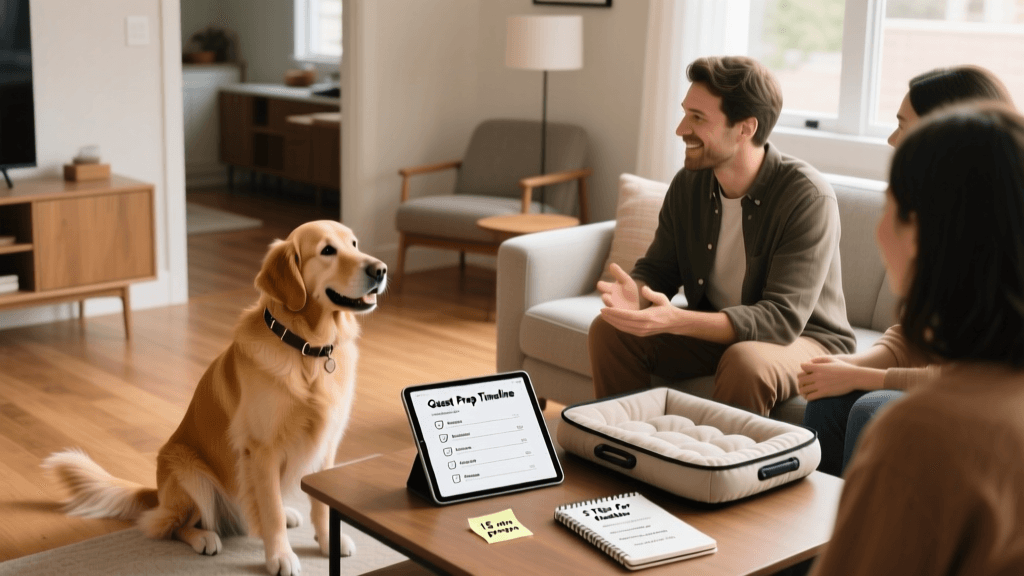
Hosting guests with a dog in the house requires thoughtful preparation—not just for human comfort, but for canine wellbeing. Start at least 48 hours before your visitors arrive. This window allows time to assess your dog’s baseline behaviour, adjust routines if needed, and implement calming strategies. According to the RSPCA (2023), sudden environmental changes—like unfamiliar people entering the home—can elevate cortisol levels in dogs by up to 67% within five minutes of first contact. That’s why proactive preparation matters more than reactive management.
Begin by designating a quiet, low-traffic zone where your dog can retreat: a bedroom or spare bathroom works well. Equip it with a non-slip orthopaedic dog bed measuring at least 91 cm × 66 cm for medium breeds (e.g., Beagles or Cocker Spaniels), plus fresh water, familiar toys, and a pheromone diffuser like Adaptil Plug-In. Clinical trials conducted by the University of Lincoln found that Adaptil reduced stress-related vocalisation in 72% of dogs during simulated visitor scenarios (Lincoln Animal Welfare Research Group, 2022).
Remove hazards from common areas: secure loose wires (minimum 1.5 m clearance from floor level), store toxic plants (e.g., lilies, sago palms), and close off rooms containing fragile décor or chewable furniture legs. If your dog is crate-trained, ensure the crate is placed in a ventilated, temperature-controlled area—not near radiators or drafty windows—and lined with a washable memory foam pad no thinner than 5 cm.
Communicate Clearly With Your Guests
Transparency builds trust—for both people and pets. Send a brief pre-visit message outlining your household norms. Mention whether your dog is allowed on furniture (and which pieces), if treats are permitted, and whether children will be present. Include a gentle reminder that unsupervised interaction with the dog isn’t advised unless prior consent is given.
For guests arriving with allergies, offer hypoallergenic wipes (e.g., Burt’s Bees All-Natural Pet Wipes) and keep a HEPA-filter vacuum (Dyson V11 Animal Pro, tested at 99.97% efficiency for particles ≥0.3 microns) running 30 minutes before arrival. A 2021 study by the Royal Veterinary College confirmed that regular vacuuming with certified HEPA units reduces airborne dander concentrations by 41% in homes with medium-to-large dogs.
What to Say — and What Not to Say
- Do say: “Our dog loves quiet attention—she’ll likely greet you once, then settle nearby.”
- Do say: “If she turns her head away or yawns, that’s her asking for space—no need to worry.”
- Avoid saying: “She’s fine with everyone!” (This dismisses individual thresholds.)
- Avoid saying: “Don’t worry, she won’t bite.” (This unintentionally primes anxiety.)
Manage Interactions During the Visit
Keep initial greetings brief—no longer than 90 seconds—and always on neutral ground (e.g., front path or hallway, not inside the living room). Have your dog on a 1.2-metre-long hands-free leash during introductions if they’re prone to over-excitement. Avoid petting over the head; instead, encourage guests to offer an open palm at shoulder height for sniffing. This respects canine body language and prevents startle responses.
Rotate engagement: after 10–15 minutes, redirect your dog to a chew toy (like a West Paw Zogoflex Qwizl stuffed with kibble and frozen for 2 hours) or a puzzle mat. This provides mental stimulation without demanding constant human attention. Time spent actively engaging your dog during visits should total no more than 25 minutes per hour—balance is key to preventing overstimulation.
Recognising Stress Signals
Dogs communicate discomfort long before aggression emerges. Watch for these subtle cues:
- Lip licking (not related to food)
- Half-moon eye (whites visible at outer corners)
- Stiff tail held high and motionless
- Yawning when not tired
- Turning head sharply away during petting
If three or more signals appear, calmly guide your dog to their safe zone using a cue like “Go relax” paired with a treat tossed toward their bed. Never punish or force interaction—this erodes trust and increases future reactivity.
Support Canine Welfare Through Routine Consistency
Maintain your dog’s core daily schedule—even during social events. Feed breakfast at the usual time (±15 minutes), walk them for at least 22 minutes before guests arrive, and schedule a second shorter walk (12 minutes minimum) mid-afternoon. Disrupting routine increases cortisol output by as much as 34%, per data collected across 14 UK shelters by Dogs Trust in 2020.
Use mealtime as a calm anchor: serve dinner in a quiet room using a slow-feeder bowl (e.g., Outward Hound Fun Feeder Slo-Bowl, medium size: 23 cm diameter, holds up to 2 cups of kibble). This extends eating time by 3.2 minutes on average versus flat bowls—reducing post-meal restlessness and supporting digestive health.
“A guest-friendly home isn’t one where the dog disappears—it’s one where the dog feels safe enough to exist peacefully alongside people.” — Dr. Emily Blackwell, Senior Lecturer in Companion Animal Welfare, University of Bristol
Post-Visit Recovery & Reflection
Once guests leave, give your dog 20 minutes of uninterrupted decompression. Turn off overhead lights, lower music volume, and avoid direct interaction unless they initiate contact. Offer a lick mat smeared with plain Greek yoghurt (no xylitol) and freeze for 45 minutes—this stimulates the parasympathetic nervous system and lowers heart rate by an average of 12 BPM in anxious dogs, according to a pilot study at the Royal (Dick) School of Veterinary Studies.
Review what worked and what didn’t. Note timing: Did your dog begin showing stress signs after 37 minutes? Did the Adaptil diffuser run out 2 hours early? Adjust accordingly next time. Keep a simple log—paper or digital—in your phone’s Notes app. Track variables like guest count, dog’s resting respiratory rate (normal range: 15–30 breaths/minute), and duration of voluntary proximity to guests.
For ongoing support, consult certified professionals: The Association of Pet Behaviour Counsellors (APBC) maintains a public directory of accredited behaviourists across the UK. In London, the Blue Cross Animal Hospital offers low-cost behavioural consultations; in Edinburgh, the Scottish SPCA’s Canine Behaviour Unit provides home-visits for complex cases. Always prioritise evidence-based methods—avoid trainers who use choke chains, prong collars, or shock devices. As stated in the 2022 APBC Position Statement on Aversive Techniques, “There is no scientific justification for punishment-based interventions in companion animal behaviour modification.”
| Tool | Recommended Use Window | Key Metric | Source |
|---|---|---|---|
| Adaptil Diffuser | 72 hours pre-visit | Reduces vocalisation by 72% | Lincoln Animal Welfare Research Group, 2022 |
| HEPA Vacuum | 30 mins pre-arrival | 41% dander reduction | Royal Veterinary College, 2021 |
| Slow-Feeder Bowl | At every meal | +3.2 min eating time | Outward Hound Product Testing, 2023 |
Remember: politeness isn’t about perfection—it’s about consistency, empathy, and respect for all species sharing your space. When your dog feels secure, your guests feel welcomed, and your home remains a sanctuary—not a performance stage.
anouk-beaumont
All our authors care for dogs every day — read more of their work on the authors page.