Herding vs Guardian Instincts: Choosing the Right Breed
Discover the psychological differences between herding and guarding dog breeds. Learn how to select the right working instinct for your family lifestyle.
Understanding Canine Instincts: Herding vs. Guardian Breeds
When selecting a dog, many prospective owners focus primarily on size, coat type, or general energy levels. However, true compatibility lies in understanding the deep-seated psychological drivers of different breed groups. For active families or rural homesteaders, the choice often narrows down to two distinct categories of working dogs: herding breeds and livestock guardian breeds. While both groups were historically developed to assist humans with agricultural tasks, their underlying behavioral psychology, instinctual sequences, and environmental requirements are fundamentally opposed. A recent behavioral study by Cornell University College of Veterinary Medicine highlights that breed ancestry strongly influences specific behavioral traits, such as barking patterns, trainability, and predatory motor sequences. Understanding these genetic blueprints is essential to preventing behavioral fallout and ensuring a harmonious human-canine relationship.
The Psychology of Herding Breeds
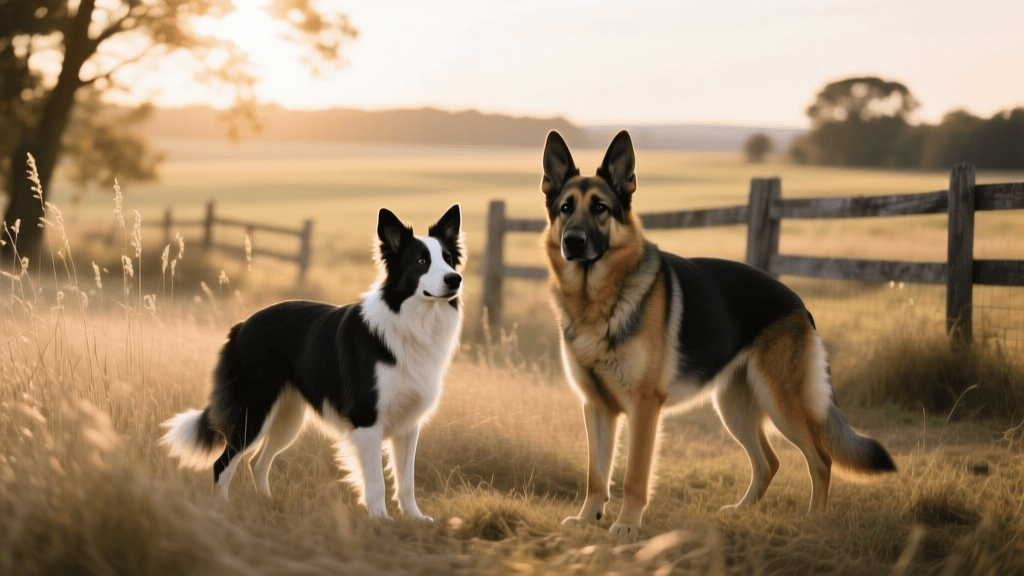
Herding breeds, such as the Border Collie, Australian Shepherd, and Australian Kelpie, are the athletes of the canine world. According to the American Kennel Club's Herding Group standards, these dogs possess an intense, hyper-focused drive to control the movement of other animals. Psychologically, this is rooted in a modified predatory sequence. In a wild wolf, the sequence is: eye, stalk, chase, grab-bite, kill-bite, dissect, consume. In herding breeds, human selective breeding has amplified the eye, stalk, and chase phases while heavily suppressing the grab-bite and kill-bite phases. This results in a dog that is hardwired to track motion, anticipate trajectory, and apply psychological pressure to moving targets.
This neurological wiring means that herding breeds are exceptionally sensitive to environmental stimuli. A child running across a yard, a bicycle passing on a trail, or even a swaying tree branch can trigger their instinctual chase-and-heel response. Without an appropriate outlet, this suppressed predatory energy frequently manifests as neurotic behaviors, including shadow chasing, flank sucking, or aggressive herding of toddlers and family pets. These dogs do not just need physical exercise; they require complex cognitive problem-solving to satisfy their innate need for a job.
Actionable Management for Herding Breeds
- Mental Enrichment Products: Invest in interactive puzzle toys like the Outward Hound Nina Ottosson Dog Brick ($30) or the Kong Wobbler ($25). These force the dog to use their brain to extract calories, mimicking the cognitive load of moving stubborn livestock.
- Physical Outlets: Standard walks are insufficient. Engage in high-speed, directional sports such as agility, flyball, or herding instinct trials. Aim for 90 to 120 minutes of vigorous, structured activity daily.
- Impulse Control Training: Begin leave it and place command training at 8 weeks of age. Use high-value treats like freeze-dried liver to reward disengagement from moving triggers like cars or joggers.
The Psychology of Livestock Guardian Breeds
In stark contrast, Livestock Guardian Dogs (LGDs) like the Great Pyrenees, Anatolian Shepherd, and Maremma Sheepdog possess a completely different psychological profile. The AKC Working Group notes that these breeds were developed to blend in with flocks and protect them from apex predators. Their predatory motor sequence is heavily suppressed across the board. They do not stalk or chase; instead, their instinct revolves around patrolling, scent-marking, barking, and physical confrontation if a threat breaches their territory.
Psychologically, LGDs are independent thinkers. Unlike herding breeds, which look to humans for constant direction and micro-management, guardians were bred to make life-or-death decisions in the absence of human handlers. This independence is often misinterpreted by novice owners as stubbornness or low intelligence. In reality, these dogs possess high situational intelligence but low biddability. They evaluate whether a command makes sense within the context of their perceived territorial duties. Furthermore, their vocalization is a primary tool; an LGD will instinctively use deep, booming barks to warn off threats long before physical engagement becomes necessary.
Actionable Management for Guardian Breeds
- Containment Systems: Invisible or underground electric fences are entirely ineffective for LGDs, as their protective drive will easily override the shock of a collar. You must install a physical fence at least 6 feet high, ideally with a 2-foot coyote roller at the top to prevent climbing.
- GPS Tracking: For rural properties, equip your guardian with a rugged GPS collar like the Garmin Alpha 200i or the Fi Series 3 Smart Dog Collar to monitor their vast territorial patrols without restricting their natural instincts.
- Socialization Timelines: The critical socialization window closes around 14 to 16 weeks. You must introduce your LGD puppy to a wide variety of benign strangers, strange noises, and different livestock during this window to prevent hyper-aggressive territoriality in adulthood.
Comparative Analysis: Herding vs. Guardian Instincts
To summarize the psychological and practical differences between these two working groups, refer to the comparison chart below:
| Behavioral Trait | Herding Breeds (e.g., Border Collie) | Guardian Breeds (e.g., Great Pyrenees) |
|---|---|---|
| Primary Instinct | Control movement (Eye, Stalk, Chase) | Protect territory (Patrol, Bark, Defend) |
| Human Bonding | Hyper-attached, Velcro dogs, highly biddable | Independent, aloof with strangers, low biddability |
| Exercise Needs | High physical and intense mental stimulation | Moderate physical, high territorial roaming space |
| Vocalization | Excitement barking, high-pitched | Warning barking, deep, nocturnal booms |
| Trainability | Excels at obedience, agility, complex tricks | Excels at independent decision-making, poor recall |
Practical Selection Guide: Space, Fencing, and Costs
Choosing between a herder and a guardian requires an honest assessment of your living environment and financial readiness. Herding breeds can adapt to suburban environments provided their intense mental and physical needs are met through structured daily routines, dog sports, and specialized daycare. The primary costs associated with herders revolve around enrichment and training. Expect to spend $150 to $300 per hour on specialized behavioral trainers or agility coaches, alongside $50 to $100 monthly on puzzle toys, flirt poles, and joint supplements to support their high-impact athletic lifestyle.
Guardian breeds, conversely, require significant physical space. They are entirely unsuited for suburban lots or close-quarter living due to their nocturnal barking and territorial patrolling needs. An ideal environment is a rural property of at least 2 to 5 acres. The infrastructure costs for an LGD are substantial. Fencing a half-acre perimeter with 6-foot woven wire field fence and dig-guards will cost between $2,500 and $5,000. Additionally, because LGDs are prone to roaming and confronting wildlife, veterinary emergency funds must be robust. However, their day-to-day enrichment costs are lower, as they do not require expensive puzzle toys; their job of surveying the perimeter provides all the mental stimulation they require.
Final Thoughts on Breed Selection
Ultimately, behavioral friction occurs when a dog's genetic blueprint clashes with its environment. If you want a highly interactive, trainable companion that will run agility courses with you and shadow your every move, a herding breed is the psychological match you need. If you are a rural landowner seeking an independent, stoic protector that will autonomously secure your property and flock while you sleep, a livestock guardian breed is the ideal choice. By respecting the evolutionary psychology behind these incredible working dogs, you set the stage for a fulfilling, lifelong partnership built on mutual understanding rather than frustration.
aaron-whyte
All our authors care for dogs every day — read more of their work on the authors page.