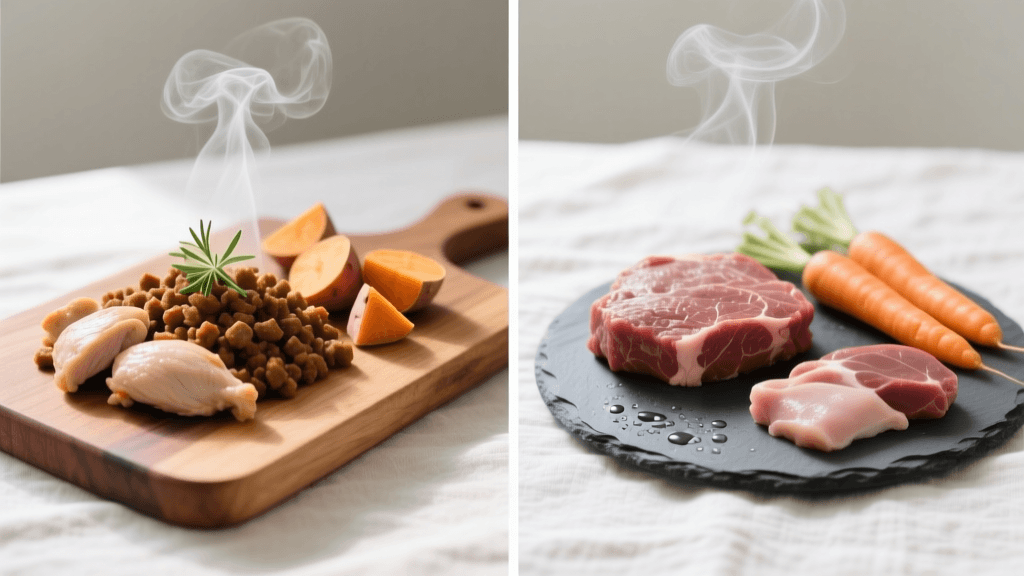
Lightly Cooked Fresh Dog Diets vs Raw: 2026 Vet Guide
Discover the 2026 veterinary consensus on gently cooked fresh dog food versus raw diets, including prep guides, cost analysis, and safety tips.
The 2026 Shift: Why Owners Are Choosing Gently Cooked Over Raw
The landscape of canine nutrition has evolved dramatically over the last decade. While the raw feeding movement (often referred to as BARF or Prey Model) dominated the alternative diet space in the late 2010s, 2026 has seen a massive pivot toward gently cooked fresh diets. Dog owners and veterinary nutritionists alike are increasingly recognizing that while fresh, whole-food ingredients are vastly superior to highly processed kibble, the strict raw feeding model carries inherent pathogen risks that can be easily mitigated through light thermal processing.
Gently cooking meat and vegetables preserves the vast majority of heat-sensitive vitamins and natural enzymes while effectively neutralizing dangerous pathogens like Salmonella, Listeria, and E. coli. This shift is particularly evident among owners of senior dogs, puppies, and dogs with compromised immune systems or gastrointestinal conditions like Inflammatory Bowel Disease (IBD).
Nutritional Bioavailability and Digestibility
One of the primary arguments for raw feeding has always been the preservation of natural enzymes and nutrients. However, modern veterinary science shows that dogs, as facultative carnivores with highly acidic stomachs and shorter digestive tracts than humans, do not strictly require raw meat enzymes to digest their food. In fact, their own pancreatic enzymes are more than capable of breaking down cooked proteins.
Lightly cooking meat (such as through sous-vide methods or gentle steaming) actually increases the bioavailability of certain proteins by denaturing tough connective tissues, making it easier for a dog's digestive system to extract amino acids. According to the U.S. Food and Drug Administration (FDA), raw pet food diets pose a significant risk of pathogenic bacteria contamination, which not only threatens the dog but also the humans handling the food and preparing the environment. By adopting a gently cooked approach, owners eliminate this cross-contamination risk while maintaining the moisture-rich, whole-food profile that fresh diets are celebrated for.
Furthermore, the World Small Animal Veterinary Association (WSAVA) consistently emphasizes that any home-prepared or alternative diet must be nutritionally complete and balanced. Gently cooking allows for safer incorporation of a wider variety of ingredients, including legumes and certain fibrous vegetables, which must be cooked to be digestible for canines.
2026 Comparison Chart: Gently Cooked vs. Traditional Raw
Below is a comprehensive comparison of how gently cooked fresh diets stack up against traditional raw diets in 2026, based on veterinary consensus and practical owner experiences.
| Feature | Gently Cooked (Sous-Vide / Light Simmer) | Traditional Raw (BARF / Prey Model) |
|---|---|---|
| Pathogen Risk | Extremely Low (Neutralized via heat) | High (Risk of Salmonella, Listeria) |
| Protein Digestibility | High (Connective tissues broken down) | Moderate to High (Depends on meat quality) |
| Bone Inclusion | No (Cooked bones splinter; uses calcium powder) | Yes (Raw meaty bones included) |
| Prep Time & Effort | Moderate (Requires cooking and cooling) | Low to Moderate (Thawing and portioning) |
| Safe for Immuno-compromised | Yes | No |
| Palatability for Picky Eaters | Exceptional (Aromas enhanced by cooking) | High (But some dogs reject cold food) |
Step-by-Step Guide to Preparing a Gently Cooked Diet at Home
Transitioning to a home-cooked diet requires precision. You cannot simply feed your dog leftovers. A standard gently cooked diet for an average, healthy, neutered 50 lb (22.5 kg) dog requires a specific macronutrient ratio. Here is a practical framework using the popular sous-vide method, which guarantees exact temperature control to preserve nutrients while ensuring safety.
1. The Base Recipe Framework (Daily Portion for a 50lb Dog)
- Muscle Meat (70%): 12 oz of boneless, skinless chicken thighs or lean ground turkey.
- Secreting Organs (10%): 1.5 oz beef liver and 1.5 oz beef kidney.
- Vegetables/Carbs (20%): 4 oz of steamed butternut squash, spinach, and blueberries.
- Calcium Source (Crucial): 1 teaspoon of finely ground eggshell powder (since we cannot feed cooked bones).
2. The Sous-Vide Cooking Method
Using a precision cooker (like the Anova Precision Cooker Pro), seal your muscle meats and organs in BPA-free, food-grade silicone bags. Set the water bath to 145°F (63°C) and cook for 90 minutes. This specific temperature and time combination is proven to pasteurize poultry, eliminating Salmonella while keeping the meat incredibly moist and tender. Vegetables should be lightly steamed separately until fork-tender to break down cellular walls for canine digestion.
3. Post-Cooking Supplementation
Never add heat-sensitive supplements before cooking. Once the food has cooled to room temperature, mix in your calcium source, omega-3 fatty acids, and a comprehensive canine multivitamin.
Crucial Supplements for 2026 Fresh Diets
Meat and vegetables alone do not meet the AAFCO (Association of American Feed Control Officials) nutrient profiles for adult maintenance. You must supplement specific micronutrients that are lost during the cooking process or are naturally deficient in muscle meat.
- Calcium to Phosphorus Ratio: Meat is extremely high in phosphorus. You must balance this with calcium. Finely ground eggshell powder is the safest, most bioavailable option for cooked diets. Use exactly 1/2 teaspoon per pound of meat.
- Omega-3 Fatty Acids: Essential for joint, coat, and cognitive health. Use a high-quality, sustainably sourced fish oil like Nordic Naturals Omega-3 Pet. Add 1 pump per 20 lbs of body weight daily.
- Iodine and Trace Minerals: Kelp powder provides essential iodine for thyroid function. A mere 1/8 teaspoon is sufficient for a medium-sized dog.
- Comprehensive Balancers: If formulating exact micro-nutrients feels overwhelming, veterinary nutritionists highly recommend using a science-backed supplement blend. The Balance IT website, developed by board-certified veterinary nutritionists, offers a free formulation tool and specific supplement blends (like Balance IT Canine) designed to complete exact home-cooked recipes.
Cost Analysis: DIY Gently Cooked vs. Commercial Fresh Delivery
As of 2026, the commercial fresh dog food market has expanded, but premium delivery services come at a steep price. Let's break down the estimated monthly costs for a 50 lb dog with moderate activity levels.
- Commercial Fresh Delivery (e.g., The Farmer's Dog, Nom Nom): Expect to pay between $6.50 and $9.00 per pound. For a 50 lb dog eating roughly 1.2 lbs a day, the monthly cost ranges from $234 to $324.
- DIY Gently Cooked (Sourcing Human-Grade Groceries): By buying bulk chicken thighs, seasonal vegetables, and organs from local butchers or wholesale clubs, your cost per pound drops to roughly $2.50 - $3.50. Including high-quality supplements, the monthly cost averages $105 to $135.
While DIY requires significantly more time, labor, and strict adherence to nutritional guidelines, the financial savings are substantial, often saving owners over $1,500 annually.
Common Mistakes to Avoid When Formulating Fresh Diets
Even well-intentioned owners can make critical errors when preparing fresh food. Avoid these common pitfalls:
- Skipping the Calcium: Feeding an all-meat diet without a calcium supplement will lead to severe metabolic bone disease and secondary hyperparathyroidism within months.
- Overcooking Vegetables: Boiling vegetables to mush leaches water-soluble vitamins (like Vitamin C and B-complex) into the water, which is then poured down the drain. Always steam or sous-vide vegetables, and retain any natural juices to pour over the final meal.
- Using Toxic Alliums: Never use onions, garlic, leeks, or chives to flavor your dog's food. Despite persistent internet myths claiming garlic is a natural flea repellent, it causes oxidative damage to canine red blood cells, leading to Heinz body anemia.
- Ignoring Zinc and Copper: Muscle meat is notoriously low in zinc and copper. Relying solely on a basic calcium supplement is not enough; a dedicated canine multivitamin or a professionally formulated recipe is mandatory.
Final Thoughts from Veterinary Nutritionists
The transition from raw to gently cooked fresh diets represents a maturation in the alternative canine nutrition space. By embracing light thermal processing, dog owners in 2026 can provide the immense benefits of whole, moisture-rich, unadulterated foods while entirely sidestepping the bacterial hazards associated with raw feeding. Whether you choose to sous-vide your own recipes using veterinary-approved supplement balancers or opt for a lightly cooked commercial option, the key to success lies in meticulous formulation, consistent monitoring of your dog's body condition score, and regular bloodwork to ensure your dog is thriving on their fresh diet.
hannah-wickes
All our authors care for dogs every day — read more of their work on the authors page.