Gently Cooked Fresh Diets for Senior IBD Dogs: 2026 Guide
Discover how a gently cooked fresh diet can soothe senior dogs with IBD in 2026. Learn recipes, transition tips, and veterinary-approved guidelines.
The 2026 Shift in Canine Gastroenterology: Embracing Fresh Nutrition
As we navigate the canine health and wellness landscape in 2026, the conversation around alternative diets has matured significantly. While the raw feeding movement of the early 2020s opened the door to whole-food nutrition, veterinary nutritionists have increasingly recognized that raw diets are not a one-size-fits-all solution—especially for aging dogs with compromised digestive tracts. For senior dogs battling Inflammatory Bowel Disease (IBD), the 2026 veterinary consensus heavily favors gently cooked fresh diets. This approach bridges the gap between the bioavailability of raw food and the safety and digestibility of cooked meals, offering a lifeline to senior dogs suffering from chronic gastrointestinal distress.
Understanding IBD in Senior Dogs
Inflammatory Bowel Disease in dogs is not a single disease but a syndrome characterized by chronic inflammation of the stomach and intestines. In senior dogs, this condition is often compounded by age-related declines in digestive enzyme production, weakened immune responses, and decreased gut motility. Symptoms such as chronic diarrhea, vomiting, weight loss, and lethargy can severely diminish a senior dog's quality of life. According to the American Kennel Club's expert health guidelines, managing IBD requires reducing the antigenic load on the gut, which means feeding highly digestible, novel ingredients that the immune system does not recognize as threats.
Why 'Gently Cooked' Beats 'Raw' for Senior IBD
While raw diets advocate for the preservation of natural enzymes, feeding raw meat to a senior dog with severe IBD poses significant risks in 2026. Senior dogs with IBD often have a compromised intestinal barrier (leaky gut) and a suppressed local immune system. The bacterial load naturally present in raw meat—even high-quality, human-grade raw food—can overwhelm their defenses, leading to secondary infections from pathogens like Salmonella or Listeria.
Gently cooking the food (typically using precision sous-vide methods at temperatures between 145°F and 150°F) achieves three critical goals:
- Pathogen Elimination: It pasteurizes the meat, making it safe for immunocompromised seniors.
- Protein Denaturation: Light heat breaks down tough protein structures, making them significantly easier for an inflamed gut to assimilate.
- Nutrient Retention: Unlike high-heat extrusion used in kibble, gentle cooking preserves heat-sensitive vitamins, amino acids, and natural moisture.
Formulating these meals at home requires precision. As highlighted by the Tufts Cummings School of Veterinary Medicine Clinical Nutrition Service, homemade diets must be meticulously balanced with synthetic or whole-food supplements to prevent severe micronutrient deficiencies over time.
The Core Macronutrient Framework for IBD
When formulating a gently cooked diet for a senior dog with IBD in 2026, veterinary nutritionists recommend a specific macronutrient profile designed to minimize residue and maximize absorption.
1. Novel, Low-Fat Proteins (60% of the diet)
Proteins must be novel (meaning the dog has never eaten them before) to avoid triggering an immune response. In 2026, rabbit, venison, and pasture-raised turkey are the gold standards. Because senior dogs with IBD often struggle with fat malabsorption, which can trigger pancreatitis or worsen diarrhea, the meat should be strictly lean (under 10% fat content).
2. Low-Residue, Soluble Carbohydrates (20% of the diet)
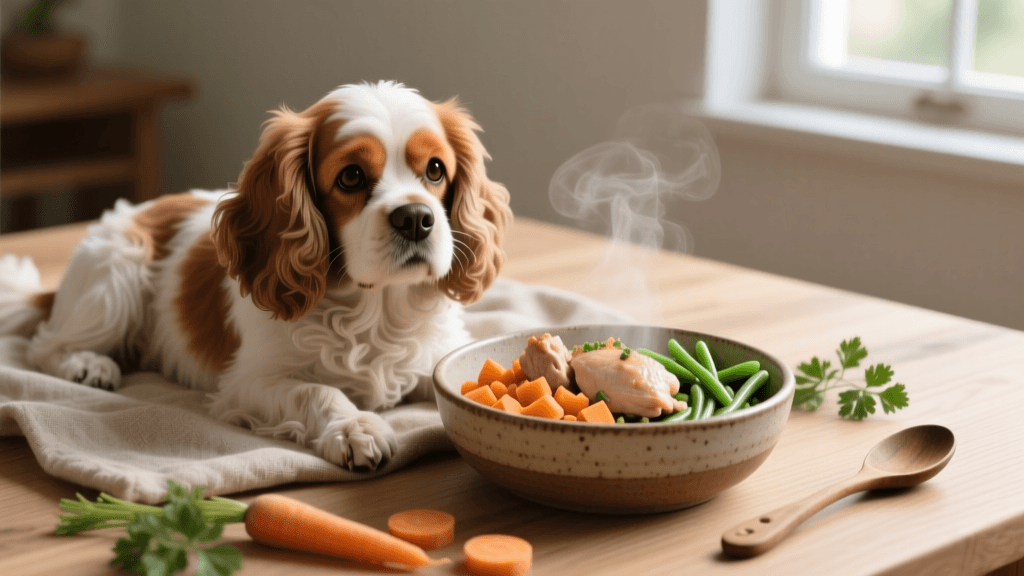
While grain-free and zero-carb diets remain popular in the holistic space, dogs with severe IBD flare-ups often require easily digestible, soluble carbohydrates to feed beneficial colonocytes and firm up stools. Well-cooked white rice, pureed pumpkin, or peeled sweet potatoes are preferred. The fiber must be predominantly soluble to avoid irritating the inflamed intestinal lining.
3. Targeted Healthy Fats (20% of the diet)
Fats are kept moderate to prevent steatorrhea (fatty stools). The primary fat source should be rich in Omega-3 fatty acids (EPA and DHA) to actively combat systemic inflammation. Wild-caught salmon oil or sustainably sourced krill oil are the top recommendations for 2026.
Nutritional Comparison: Kibble vs. Raw vs. Gently Cooked
To understand why the gently cooked method is the premier choice for senior IBD management, consider this comparison based on current 2026 veterinary nutritional data:
| Diet Type | Digestibility | Pathogen Risk | Moisture Content | Best Suited For |
|---|---|---|---|---|
| Extruded Kibble (Prescription GI) | Moderate-High | Very Low | ~10% | Convenience, mild IBD maintenance |
| Commercial Raw (HPP Treated) | High | Low-Moderate | ~70% | Healthy adults, active working dogs |
| Gently Cooked Fresh | Very High | Very Low | ~75% | Senior dogs, severe IBD, immunocompromised |
Essential Supplements for Gut Healing
A gently cooked diet provides the foundation, but targeted supplementation is the mortar that rebuilds the gut lining. Always consult your veterinarian before adding supplements, but the following are widely recognized in 2026 for canine IBD management:
- L-Glutamine: An amino acid that serves as the primary fuel source for the cells lining the intestines. It actively helps repair 'leaky gut' and tightens cellular junctions. Typical dosing ranges from 500mg to 1000mg per 20 lbs of body weight daily.
- Saccharomyces boulardii: A beneficial, non-colonizing yeast that acts as a powerful probiotic. Unlike bacterial probiotics which can sometimes be destroyed by stomach acid or antibiotics, S. boulardii survives the journey to the colon, where it outcompetes pathogenic bacteria and reduces mucosal inflammation.
- Slippery Elm Bark & Marshmallow Root: These mucilaginous herbs create a soothing, protective coating over the inflamed stomach and intestinal walls, providing immediate relief from acid irritation and cramping.
- Bone Broth (Unsalted, No Onion/Garlic): Simmered for 24 hours to extract collagen, glycine, and proline, bone broth is a hydrating, gut-healing superfood that encourages senior dogs with poor appetites to eat.
Transitioning Safely: The 14-Day Protocol
Senior dogs with IBD have highly reactive digestive tracts. A sudden switch to a fresh diet, no matter how healthy, can trigger a severe flare-up. The 2026 standard for transitioning an IBD dog to a gently cooked diet is a slow, 14-day protocol:
- Days 1-4: 75% current prescription diet, 25% gently cooked novel protein (no carbs or supplements yet).
- Days 5-8: 50% current diet, 50% gently cooked protein and low-residue carb.
- Days 9-12: 25% current diet, 75% fresh diet. Introduce bone broth and L-Glutamine.
- Days 13-14: 100% gently cooked fresh diet. Introduce Omega-3 oils and S. boulardii.
During this transition, monitor your dog's stool quality using the 1-to-5 fecal scoring system. If stools become unformed (score 4 or 5), halt the transition, revert to the previous ratio, and allow the gut to stabilize for 48 hours before proceeding.
Sourcing and Costs in 2026
One of the primary concerns for pet owners exploring alternative diets is the cost. In 2026, sourcing novel proteins has become more streamlined due to the rise of direct-to-consumer regenerative agriculture farms. Rabbit and venison, previously considered exotic and prohibitively expensive, now average between $12 and $16 per pound when purchased in bulk from specialized pet-food-grade suppliers. For a 40-pound senior dog requiring roughly 1.2 pounds of food daily, a gently cooked IBD diet costs approximately $8 to $11 per day. While this is a premium investment compared to commercial kibble, owners frequently report significant reductions in costly veterinary emergency visits, chronic medication reliance, and specialized diagnostic testing.
Final Thoughts: Adhering to Global Standards
Feeding a senior dog with IBD requires dedication, precision, and a willingness to adapt. The gently cooked fresh diet represents the pinnacle of modern canine nutritional therapy, offering the healing power of whole foods without the risks associated with raw feeding. To ensure your homemade meals meet all of your senior dog's complex nutritional needs, always work alongside a board-certified veterinary nutritionist and adhere to the WSAVA Global Nutrition Guidelines. By combining gentle cooking techniques, novel proteins, and targeted gut-healing supplements, you can help your aging companion find relief, comfort, and renewed vitality in their golden years.
marcus-aldridge
All our authors care for dogs every day — read more of their work on the authors page.