2026 Guide: Curing Dog Separation Anxiety With Smart Treat Tossers
Discover how to cure your dog's separation anxiety in 2026 using smart treat tossers, systematic desensitization, and expert behavioral tips.
Understanding Separation Anxiety in the Modern Era
As we navigate the shifting work-from-home and hybrid-office landscapes of 2026, canine separation anxiety remains one of the most prevalent behavioral challenges for dog owners. Dogs are profoundly social animals, and sudden shifts in their daily routines can trigger intense panic. According to the ASPCA, separation anxiety is characterized by extreme distress when a dog is left alone, often manifesting as destructive behavior, excessive vocalization, and inappropriate elimination. Unlike simple boredom, true separation anxiety is a panic disorder that requires targeted, empathetic behavioral conditioning.
In the past, trainers relied heavily on exhaustive exercise or punitive crate training to manage these symptoms. Today, the gold standard for treating alone-time panic involves systematic desensitization paired with counterconditioning. By changing your dog's emotional response to your departure, you can transform their panic into a state of calm anticipation. This is where modern technology, specifically smart treat-tossing cameras, has revolutionized the training process.
The Neurobiology of Canine Panic and Counterconditioning
When a dog with separation anxiety notices "departure cues"—such as you putting on your shoes, jingling your keys, or grabbing your coat—their amygdala triggers a fight-or-flight response. Cortisol and adrenaline flood their system, making it biologically impossible for them to learn or relax. The goal of training is to rewire this neurological pathway. Counterconditioning works by pairing a feared stimulus (your departure) with a highly positive outcome (a high-value treat). Over time, the brain begins to associate your leaving with the arrival of a reward, effectively dampening the panic response.
Why Smart Treat Tossers Are Game-Changers for Alone Time
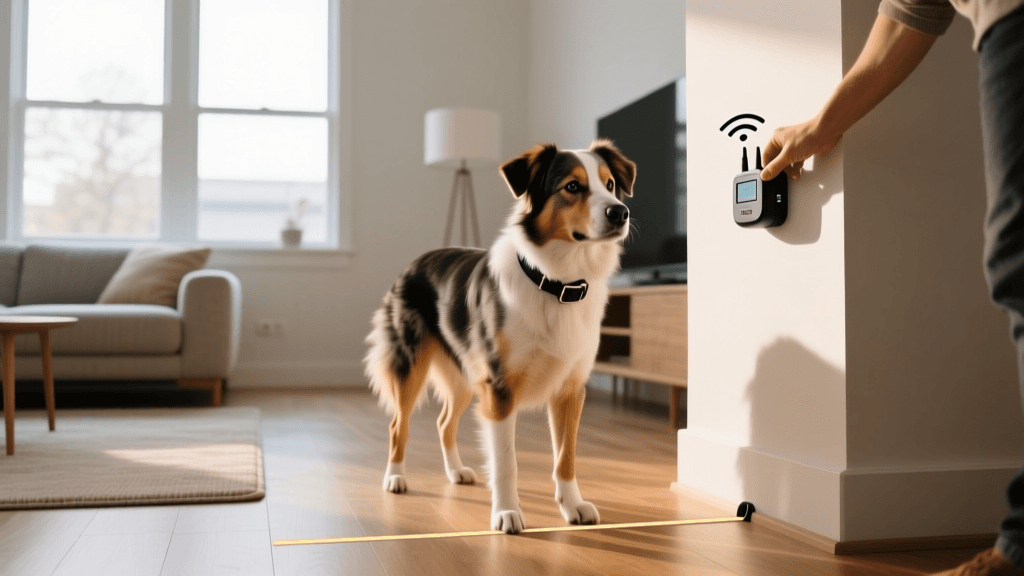
Historically, counterconditioning required a second person to drop treats for the dog as the owner left, or relied on static puzzle toys that the dog would ignore once the owner was gone. Smart treat tossers solve this by allowing you to remotely reward your dog for calm behavior after you have already left the house. In 2026, devices like the Furbo 4 Pro and Petcube Bites 3 utilize AI-driven bark alerts and automated treat-tossing schedules, allowing you to interrupt anxiety loops before they escalate into full-blown panic attacks. By delivering a treat the moment your dog settles onto their mat, you reinforce the exact behavior you want to see.
2026 Smart Treat Tosser Comparison Chart
Choosing the right hardware is critical for a seamless training experience. Below is a comparison of the top smart treat tossers available in 2026, evaluated on capacity, camera quality, and toss reliability.
| Device Model | Treat Capacity | Camera Resolution | Toss Distance | 2026 Est. Price |
|---|---|---|---|---|
| Furbo 4 Pro | 1.5 Liters | 2K HD with Night Vision | Up to 8 feet | $249.99 |
| Petcube Bites 3 | 1.2 Liters | 1080p HD Wide Angle | Up to 6 feet | $199.99 |
| Eufy Pet Smart Dispenser | 1.8 Liters | 2K HD with Pet Tracking | Up to 10 feet | $229.99 |
Editor's Note: The Furbo 4 Pro remains our top pick for separation anxiety protocols in 2026 due to its highly accurate AI bark detection, which can send you an alert the moment your dog begins to vocalize, allowing you to intervene with a treat toss and two-way audio before the anxiety spirals.
High-Value Treat Selection for Remote Training
A smart treat tosser is only as effective as the treats you load into it. For a dog experiencing genuine panic, standard dry kibble will not be enough to break through the cortisol barrier. You need high-value, aromatic rewards that trigger a strong dopamine release. Because most treat tossers require dry, non-sticky treats to prevent jamming, you must find the right balance between palatability and mechanical reliability.
- Freeze-Dried Liver: Single-ingredient beef or chicken liver is incredibly aromatic and breaks apart easily if the machine's mechanism chops it.
- Training-Sized Salmon Bites: Brands like Zuke's or Vital Essentials offer small, dry, but highly palatable fish treats that slide perfectly through tossing gears.
- Dehydrated Sweet Potato Chews: For dogs with protein allergies, small diced pieces of dehydrated sweet potato offer a sweet, high-value alternative that won't gum up the machinery.
Pro Tip: Never use moist, semi-soft treats or anything coated in glycerin, as these will inevitably jam the tossing mechanism and ruin your training session.
The 4-Week Systematic Desensitization Protocol
To successfully cure separation anxiety, you must follow a structured protocol. Do not rush these steps. If your dog shows signs of stress (panting, pacing, whining), you have moved too fast and must return to the previous step.
Phase 1: Desensitizing Departure Cues (Days 1-5)
Before you even use the smart tosser, you must neutralize your dog's trigger points. Pick up your keys, then sit back down and toss a treat from the machine. Put on your coat, then take it off and reward. Open the front door, close it, and reward. Do this 20 to 30 times a day until your dog no longer reacts to these cues with anticipation or panic. The goal is to make your departure cues entirely boring and predictable.
Phase 2: Micro-Departures with Tosser Rewards (Days 6-12)
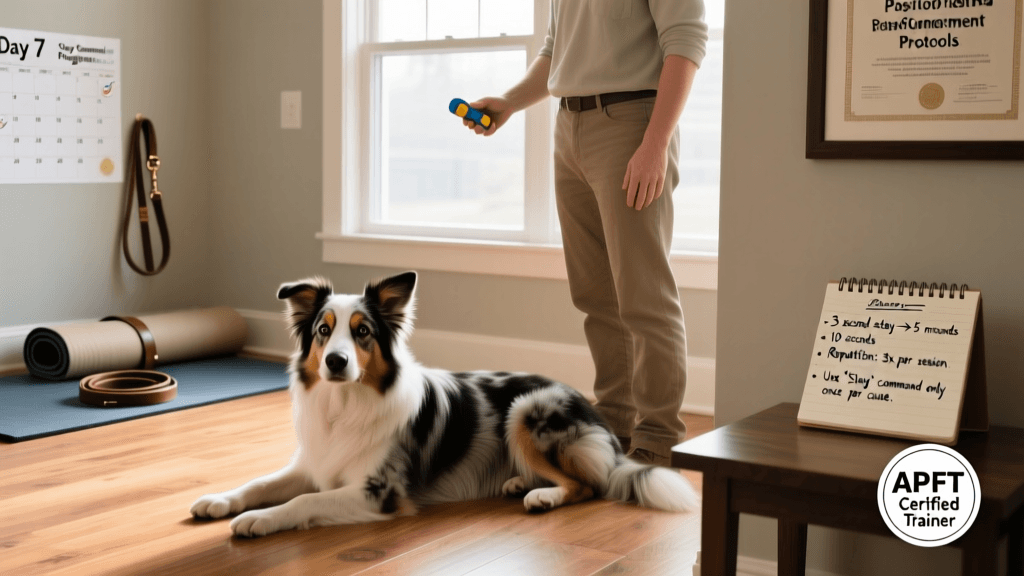
Now, integrate the smart camera. Set up the tosser in the room where your dog will be confined or safely gated. Step outside the front door, close it, and immediately use the app to toss a treat through the camera. Wait three seconds, step back inside, and ignore your dog. Repeat this, gradually increasing the time you stand outside from 3 seconds to 10 seconds, then 30 seconds. The treat tosser bridges the gap, proving to your dog that your absence predicts a reward.
Phase 3: Extending Duration and Adding Auto-Toss (Weeks 3-4)
Once your dog can comfortably handle 5 minutes of alone time without vocalizing or pacing, begin utilizing the auto-toss feature. Set the Furbo or Petcube to dispense a single treat every 3 to 5 minutes. Leave the house for 15 minutes, then 30 minutes, then an hour. The automated tossing keeps the dog engaged and reinforces calm settling behavior on their designated mat. If you receive a bark alert on your phone, wait for a 3-second pause in the barking before tossing a treat, ensuring you do not accidentally reward the vocalization itself.
Phase 4: Real-World Application (Week 5 and Beyond)
Begin leaving for actual errands. Leave the camera on, the auto-toss active, and a long-lasting chew (like a bully stick or yak cheese chew) on their mat. Monitor your dog's body language through the camera. A relaxed dog will chew, yawn, stretch, and eventually sleep. A stressed dog will pace, stare at the door, or ignore the high-value chew. Adjust your timeline based on their emotional threshold, not your schedule.
Crucial Rules for Success
While technology provides incredible support, the Humane Society emphasizes that management and routine are equally vital. To ensure your desensitization protocol succeeds, adhere to these core rules:
- Never Punish Anxiety: Scolding a dog for destroying a couch or having an accident after you return home only increases their overall anxiety. They cannot connect your anger to an action that happened hours ago.
- Keep Arrivals and Departures Boring:Do not make a grand spectacle of leaving or coming home. Ignore your dog for the first five minutes you return until they are calm and all four paws are on the floor.
- Enrichment Before Departure:Ensure your dog has received adequate physical exercise and mental enrichment (like sniffaris or scent work) before you begin your alone-time training. A tired dog has a lower baseline anxiety level.
When to Seek Professional Help
Smart treat tossers and systematic desensitization are highly effective for mild to moderate separation anxiety. However, if your dog engages in severe self-mutilation, breaks teeth attempting to escape crates, or exhibits extreme panic that prevents them from eating even high-value treats when you are gone, you must consult a certified veterinary behaviorist. In many severe cases, temporary anti-anxiety medication prescribed by your veterinarian is necessary to lower the dog's cortisol levels enough for the brain to be receptive to behavioral training. Technology is a powerful tool in 2026, but it works best when paired with compassionate, science-based veterinary guidance.
beth-carrasco
All our authors care for dogs every day — read more of their work on the authors page.