Furbo 360 Puppy Alone Time Desensitization Guide 2026
Learn how to use the Furbo Dog Camera and gradual desensitization to cure puppy separation anxiety. Includes a 2026 alone-time training schedule.
The Rise of Puppy Separation Anxiety in 2026
As hybrid work models continue to evolve in 2026, a new generation of puppies is experiencing the jarring transition from constant human companionship to sudden isolation. Separation anxiety remains one of the most challenging behavioral issues for new dog owners, often manifesting as destructive chewing, excessive vocalization, and inappropriate elimination when the puppy is left alone. According to the ASPCA, separation-related behaviors affect a significant percentage of dogs, and early intervention during the first 16 weeks of life is critical for long-term behavioral health.
Leaving a young puppy alone is not just about closing the door and walking away; it requires a structured, empathetic approach to desensitization. In 2026, smart pet technology—specifically two-way audio and treat-tossing cameras like the Furbo 360—has become an indispensable tool for behaviorists and owners alike. However, a camera is only as effective as the training protocol behind it. This comprehensive guide will show you how to leverage smart camera technology alongside a systematic alone-time desensitization schedule to build your puppy's confidence and independence.
Why Smart Cameras Are Essential Training Tools
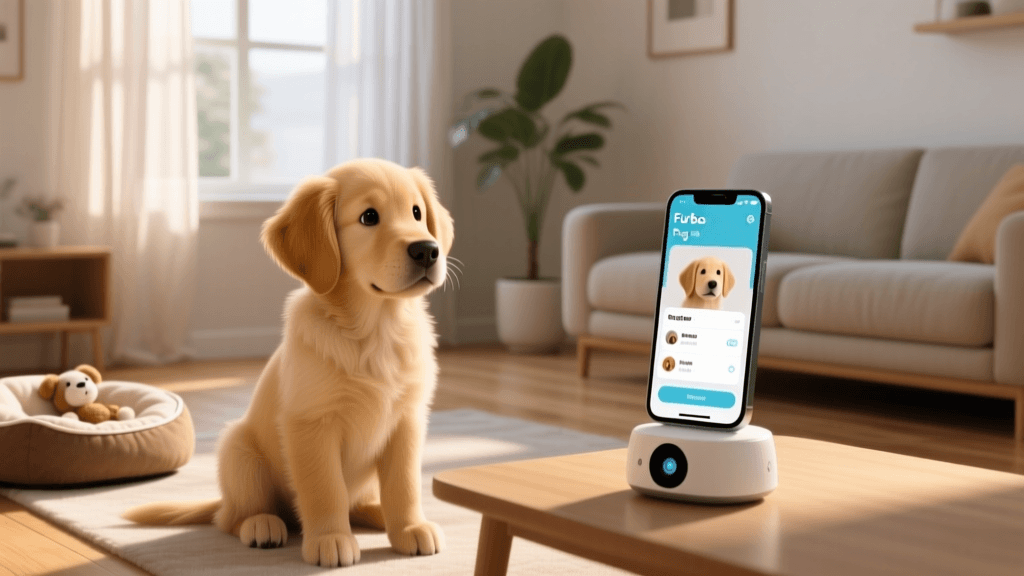
The Furbo 360 Dog Camera and similar devices like the Petcube Bites 2 Lite have revolutionized how we monitor and interact with our pets. Priced around $199 to $249 in 2026, the Furbo 360 offers a rotating lens, 1080p HD video, night vision, and an auto-toss treat feature. But its true value lies in its ability to provide real-time data on your puppy's stress levels.
Key Features for Alone-Time Training
- Bark and Crying Alerts: Push notifications allow you to gauge exactly when your puppy's anxiety peaks after you leave, helping you adjust your training durations.
- Two-Way Audio: While some puppies find their owner's voice calming, others may become more frustrated if they can hear you but not see you. The camera allows you to test your puppy's specific reaction to audio cues.
- Treat Tossing: Rewarding moments of calm behavior from afar reinforces that being alone is a positive, rewarding experience.
- 360-Degree Panning: Ensures you can monitor your puppy's safe space or crate no matter where they retreat in the room.
It is crucial to remember that the camera is a bridge, not a cure. Relying solely on tossing treats through the camera without gradually building up the puppy's tolerance to isolation can create a dependency on the device. The goal is to use the camera to monitor and reward, while systematically increasing the time your puppy spends comfortably alone.
The 4-Week Puppy Alone-Time Desensitization Schedule
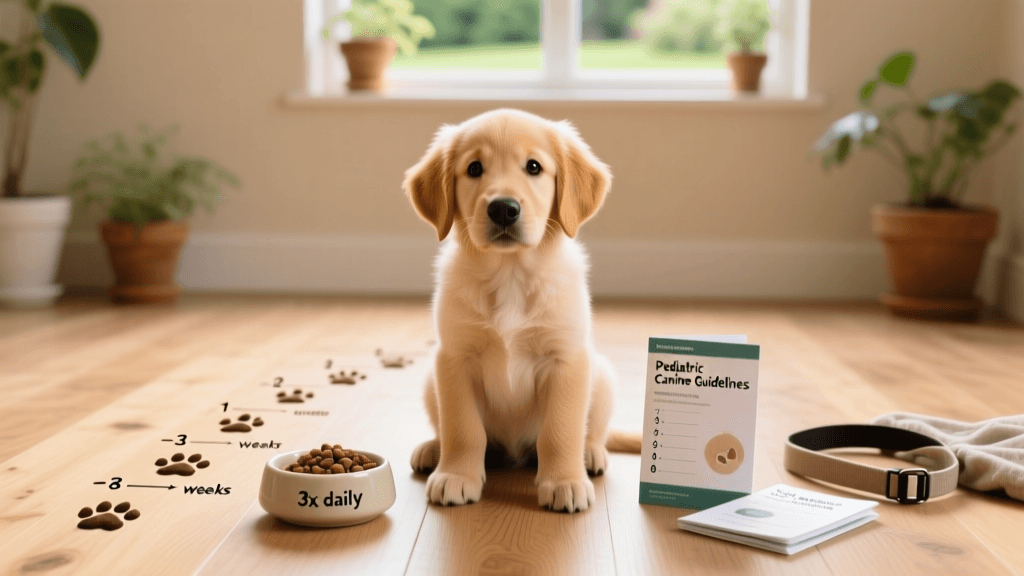
According to the American Kennel Club (AKC), puppies under 14 weeks of age have very limited bladder control and emotional regulation. The following schedule is designed for puppies aged 12 to 20 weeks. Always ensure your puppy has been properly exercised and has eliminated outside before beginning an alone-time session.
| Week | Target Duration | Camera Interaction | Enrichment Activity |
|---|---|---|---|
| Week 1 | 1 to 5 Minutes | Monitor only. Do not use audio or toss treats unless the puppy is visibly relaxing after a brief whine. | Frozen Kong Classic stuffed with puppy-safe peanut butter and kibble. |
| Week 2 | 5 to 15 Minutes | Toss a single high-value treat (e.g., Zuke's Mini Naturals) at the 5-minute mark if the puppy is lying down calmly. | Lick mat smeared with plain Greek yogurt, frozen overnight. |
| Week 3 | 15 to 30 Minutes | Use two-way audio to offer a calm 'good boy/girl' at the 10-minute mark, followed by a treat toss at 20 minutes. | Snuffle mat with hidden dry kibble to encourage natural foraging instincts. |
| Week 4 | 30 to 60 Minutes | Monitor via camera. Only interact if the puppy is engaging with their toy. Reward calm resting behavior intermittently. | Puzzle feeder toy (e.g., Outward Hound Puppy Hide N' Slide). |
Important Rule of Thumb
If your puppy panics, barks continuously, or exhibits signs of severe distress (panting, pacing, scratching at the door), you have pushed the duration too far too fast. Return to the room calmly without making a big fuss, wait for them to settle, and reduce the target duration by half for the next session. Never punish a puppy for anxiety-driven behaviors.
Pre-Departure Routines: Setting the Stage
Puppies are incredibly perceptive of environmental cues. The jingling of keys, the rustling of a jacket, and the squeak of a door can trigger a spike in cortisol before you even leave the house. Desensitizing these departure cues is just as important as the alone time itself.
Desensitizing Departure Cues
Throughout the day, perform your departure routines without actually leaving. Pick up your keys and sit back down on the couch. Put on your shoes and then take them off to make a cup of coffee. Open the front door, step out, and immediately step back in. By repeating these actions in a 2026 hybrid-work environment where you are frequently home, you strip these triggers of their predictive power. The puppy learns that jingling keys does not always mean abandonment.
The 'No Big Goodbyes' Policy
Anthropomorphizing our pets is a natural human tendency, but emotional, drawn-out goodbyes only serve to heighten a puppy's arousal levels. When it is time to leave, ignore your puppy for 5 to 10 minutes beforehand. Place them in their designated safe space or crate with their enrichment toy, and leave quietly. Save the enthusiastic greetings for when you return, and even then, wait until the puppy has all four paws on the floor and is calm before offering affection.
Creating a 2026 Sanctuary: Environment Setup
The physical environment where your puppy spends their alone time plays a massive role in their ability to self-soothe. A barren room with hard floors and echoing acoustics will amplify a puppy's stress.
- White Noise and Calming Audio: Use a smart speaker to play white noise, brown noise, or specifically designed canine calming music. Studies have shown that reggae and soft rock can lower heart rates in shelter dogs, and similar principles apply to puppies at home.
- Scent Association: Leave an article of your recently worn clothing (like a t-shirt or sock) in their bed. Your scent provides a powerful olfactory anchor that promotes feelings of security.
- Visual Barriers: If your puppy is easily triggered by people or other dogs walking past the window, use blackout curtains or apply frosted window film to the lower half of the glass. Removing visual stimuli reduces the likelihood of barrier frustration and reactive barking.
- Climate Control: Ensure the room is kept at a comfortable temperature, ideally between 68°F and 72°F. Puppies cannot regulate their body temperature as efficiently as adult dogs, and overheating can exacerbate panic.
What to Do If Your Puppy Panics on Camera
Despite your best efforts, setbacks will happen. You might be watching the Furbo live feed from your office and see your puppy pacing, whining, or attempting to escape their playpen. How you react in this moment dictates the future success of your training.
- Do Not Rush Back In Immediately: If you return while the puppy is in a state of high arousal, you inadvertently reinforce the panic. They learn that screaming and pacing brings you back.
- Wait for a Micro-Moment of Calm: Watch the camera closely. Wait for the puppy to stop pacing, take a breath, or lie down for even three seconds.
- Intervene Calmly: Once you see that brief window of calm, you can use the two-way audio to speak in a low, soothing tone, or toss a treat to redirect their brain from the amygdala (panic center) to the prefrontal cortex (problem-solving center).
- Adjust Future Sessions: Note the exact timestamp when the panic began. If your puppy panicked at 14 minutes, your next training session should only last 10 minutes. Build up in micro-increments of 1 to 2 minutes.
When to Seek Professional Help
While mild whining and brief periods of adjustment are normal for young puppies, true separation anxiety is a clinical behavioral condition. If your puppy is injuring themselves trying to escape their crate, refusing to eat high-value treats when left alone, or exhibiting extreme lethargy and depression upon your return, it is time to consult a professional.
In 2026, the gold standard for treating severe canine anxiety involves a combination of behavior modification protocols and, when necessary, veterinary-prescribed anti-anxiety medications like fluoxetine or trazodone. A certified veterinary behaviorist or a fear-free certified dog trainer can help you create a customized desensitization plan that may involve adjusting your smart camera protocols, introducing calming pheromones like Adaptil, and restructuring your puppy's daily cognitive load.
Conclusion: Patience is the Ultimate Tool
Raising a confident, independent puppy in a world where human schedules are constantly shifting requires patience, consistency, and the right tools. By combining the observational power of the Furbo 360 camera with a structured, empathetic desensitization schedule, you are giving your puppy the gift of self-assurance. Remember that alone time is a learned skill, much like potty training or leash walking. Celebrate the small victories, respect your puppy's emotional limits, and trust the gradual process of building their confidence in 2026 and beyond.
jonas-cole
All our authors care for dogs every day — read more of their work on the authors page.