2026 Puppy Alone-Time Training: Furbo 360 Setup & Desensitization
Master puppy alone-time training in 2026. Learn how to set up the Furbo 360 camera and follow a 4-week desensitization schedule to prevent separation anxiety.
The Reality of Bringing a Puppy Home in 2026
Bringing a new puppy home is one of the most exciting milestones in life, but the transition from a bustling breeder's home or a crowded shelter to your quiet house can be incredibly jarring for a young dog. As we navigate the fully normalized hybrid work schedules of 2026, many new dog owners find themselves working from home three days a week and heading into the office for the other two. While this flexibility is great for humans, it creates a confusing environment for puppies who struggle to understand why their owner is suddenly absent for eight hours after being present for the first two weeks of their life.
Separation anxiety is not simply a dog 'missing' their owner; it is a profound panic response that can lead to destructive behavior, excessive vocalization, and even self-injury. Preventing this anxiety requires proactive, structured alone-time training from the very first week your puppy crosses your threshold. In this comprehensive guide, we will explore how to leverage modern smart home technology—specifically the Furbo 360 Dog Camera—alongside a proven 4-week desensitization schedule to build your puppy's confidence and ensure they thrive when left to their own devices.
Understanding Puppy Separation Anxiety
Before diving into tech and training, it is crucial to understand the mechanics of canine anxiety. Puppies are biologically hardwired to stay close to their littermates and mother for survival. When isolated, their natural instinct is to vocalize (cry or bark) to summon help. If an owner consistently rushes back into the room the moment the puppy cries, the puppy learns that vocalizing controls the owner's proximity. Over time, this dependency solidifies into clinical separation anxiety.
According to the ASPCA's guide on Separation Anxiety, dogs with this condition exhibit extreme stress behaviors exclusively when left alone or separated from their primary guardians. The goal of early alone-time training is to teach the puppy that being alone is safe, predictable, and ultimately boring, rather than a cause for panic. By utilizing the critical socialization window (between 8 and 16 weeks of age), you can wire your puppy's brain to accept solitude as a normal, stress-free part of their daily routine.
Leveraging 2026 Smart Tech: Setting Up the Furbo 360
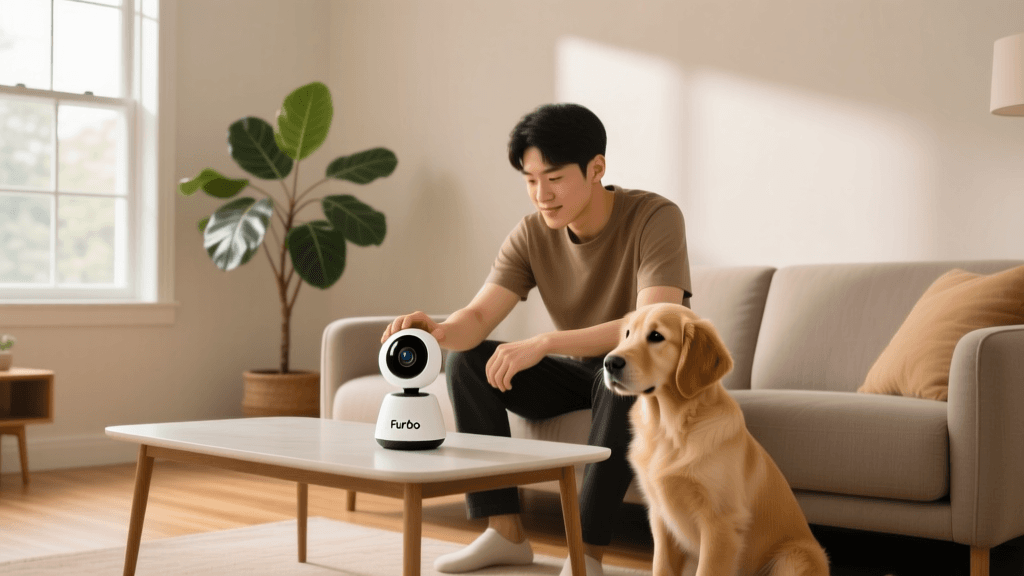
Smart pet cameras have evolved dramatically over the last few years. The Furbo 360 Dog Camera remains a top-tier choice for new owners in 2026, thanks to its panoramic auto-patrol feature, 1080p HD video, and advanced AI-driven audio alerts. Unlike older models that only alerted you to loud barking, the latest firmware updates include distress-whining detection and shadow-tracking, allowing you to monitor your puppy's subtle stress signals before they escalate into full-blown panic.
Optimal Camera Placement and Configuration
To get the most out of your Furbo 360 during the desensitization process, proper setup is essential:
- Height and Angle: Place the camera at your puppy's eye level when they are sitting or lying in their crate or designated pen area. Use the included 3M adhesive strips or a sturdy pet-camera stand to secure it, preventing curious paws from knocking it over.
- Treat Tossing Calibration: The Furbo's treat-tossing feature is a fantastic tool for positive reinforcement, but it must be calibrated correctly. Use small, low-calorie training treats (like Zuke's Mini Naturals) that fit the dispensing mechanism. Adjust the tossing distance in the app so the treat lands just outside the crate door, encouraging the puppy to engage with their environment rather than staring obsessively at the camera.
- Alert Customization: Turn on 'Dog Nanny' alerts but disable the standard 'bark' notifications during your initial training weeks. You want to be notified of sustained whining or pacing (signs of anxiety) without your phone buzzing every time your puppy playfully barks at a toy.
The 4-Week Puppy Desensitization Schedule
Desensitization is about gradually increasing the duration and distance of your absences while keeping the puppy under their stress threshold. Below is a structured 4-week schedule designed for a new puppy entering a home where the owners eventually need to leave for work or errands.
| Week | Focus Area | Duration of Absence | Owner Action & Tech Integration |
|---|---|---|---|
| Week 1 | Micro-Departures | 1 to 5 minutes | Step out of the room, close the door, and watch via the Furbo app. Return before the puppy whines. Toss a treat via the app upon successful quiet time. |
| Week 2 | Short Errands | 10 to 20 minutes | Leave the house entirely (take out trash, check mail). Provide a frozen Kong toy. Monitor the Furbo 360 auto-patrol to ensure the puppy settles after initial sniffing. |
| Week 3 | Workday Simulation | 1 to 2 hours | Simulate a morning routine (keys jingling, shoes on). Leave for a longer block. Use the Furbo's two-way audio sparingly—only to offer a calm 'good boy/girl' if they seem restless. |
| Week 4 | Full Independence | 3 to 4 hours | Leave for a half-day. Rely on the Furbo's AI distress alerts rather than constantly watching the live feed. Ensure the puppy has access to water and a safe chew toy. |
Week 1: Mastering the Micro-Departure
The biggest mistake new owners make is leaving the puppy alone for an hour on their first day. In Week 1, your goal is simply to prove that you always come back. Step out of the room, close the door, and watch the Furbo feed on your phone. If the puppy remains quiet for 60 seconds, toss a treat through the camera, wait another 30 seconds, and then re-enter the room calmly. If the puppy whines, wait for a three-second pause in the vocalization before re-entering so you do not accidentally reward the crying.
Week 2 & 3: Building Duration and Distraction
As you move into Weeks 2 and 3, you must introduce environmental enrichment. A puppy left in an empty room with nothing to do will naturally become bored and anxious. Introduce a snuffle mat or a Kong Wobbler filled with their daily kibble allowance. The Furbo 360's auto-patrol feature is incredibly useful here; it will slowly rotate to follow your puppy as they move around their pen, allowing you to verify that they are engaging with their enrichment toys rather than pacing the door.
Week 4: The Half-Day Test
By Week 4, your puppy should be comfortable being left alone for up to four hours. At this stage, you should stop watching the live feed constantly. Constant monitoring increases the owner's anxiety, which the dog can often sense upon your return. Instead, rely on the Humane Society's recommended protocols for monitoring: set your Furbo app to notify you only of sustained distress whining or destructive chewing sounds. If you receive no alerts, trust that your puppy is sleeping or playing quietly.
Environmental Enrichment: Beyond the Camera
Technology is a monitoring tool, not a substitute for a rich environment. In 2026, veterinary behaviorists highly recommend the use of synthetic pheromones to create a calming baseline in the puppy's safe space. The Adaptil Optimum diffuser, plugged into the outlet nearest the puppy's crate, releases a synthetic copy of the dog-appeasing pheromone, which has been clinically proven to reduce stress indicators in young dogs.
Combine pheromone therapy with rotating puzzle toys. Never leave all your puppy's toys out at once. Keep a rotation of three or four interactive toys (like the Outward Hound Dog Brick puzzle) and only provide them when you leave the house. This creates a positive association: 'Owner leaving means I get the special puzzle toys.'
Critical Mistakes to Avoid During the First Month
Even with the best technology and a strict schedule, owners often sabotage their progress with well-meaning but counterproductive behaviors. Avoid these common pitfalls:
- The Emotional Goodbye and Hello: Do not make a big fuss when leaving or returning. Keep departures boring and arrivals calm. Ignore your puppy for the first two minutes you walk through the door until they have all four paws on the floor and are calm.
- Using the Two-Way Audio Incorrectly: It is tempting to use the Furbo's speaker to say, 'Mommy will be home soon!' when your puppy barks. However, hearing your voice without seeing you can actually increase frustration and confusion. Use the speaker only to issue a calm, familiar cue like 'settle' or 'place' if you have already trained those commands.
- Rushing the Timeline: If your puppy panics at the 20-minute mark during Week 2, do not push to 30 minutes the next day. Drop back down to 10 minutes, rebuild their confidence, and increase the time in smaller two-minute increments.
- Punishing Anxiety: Never scold a puppy for destructive behavior or accidents that occurred while you were away. They cannot connect your anger upon returning with the action they took two hours ago. This only teaches them that your return is a scary event, worsening the anxiety cycle.
When to Call a Professional
While the vast majority of puppies respond beautifully to a structured desensitization schedule and smart monitoring, some dogs have genetic or neurochemical predispositions to severe anxiety. If your Furbo 360 footage shows your puppy engaging in self-mutilation (chewing their own paws or tail), frantic escape attempts that result in broken teeth or nails, or if they completely refuse to eat high-value treats while you are gone, it is time to seek professional help.
Consult a Certified Applied Animal Behaviorist (CAAB) or a board-certified veterinary behaviorist. In 2026, many of these professionals offer virtual consultations where you can simply upload your Furbo cloud recordings for them to analyze your dog's body language and stress triggers frame-by-frame. Early intervention with a professional, potentially combined with short-term anti-anxiety medication, can save your dog from a lifetime of chronic stress.
Conclusion
Getting a dog is a profound commitment, and teaching them to be comfortable alone is one of the greatest gifts you can give them. By combining the advanced monitoring capabilities of the Furbo 360 with a patient, incremental desensitization schedule, you set the foundation for a confident, well-adjusted adult dog. Remember that alone-time training is a marathon, not a sprint. Celebrate the small victories, trust the data your smart camera provides, and give your new puppy the grace and time they need to learn that being alone is perfectly safe.
priya-sutaria
All our authors care for dogs every day — read more of their work on the authors page.