Top Smart Treat Cameras for Dog Separation Anxiety in 2026
Discover the best smart treat cameras for dog separation anxiety in 2026. Compare Furbo 360 and Petcube, plus expert desensitization training tips.
Navigating Canine Separation Anxiety in the 2026 Hybrid-Work Era
As we settle into the flexible, hybrid work schedules of 2026, our dogs are experiencing a new wave of routine shifts. While working from home a few days a week is a blessing for pet parents, the alternating days in the office can trigger severe isolation distress and separation anxiety in our canine companions. Unlike the sudden lockdowns of the early 2020s, the modern challenge lies in the unpredictability of our departures. To combat this, the pet technology industry has released a new generation of smart treat cameras equipped with advanced AI behavior tracking, automated enrichment, and two-way audio. But which devices actually help alleviate your dog's panic, and which ones merely allow you to watch them suffer in high definition?
Understanding Separation Anxiety vs. Isolation Distress
Before investing in a smart camera, it is crucial to understand what your dog is experiencing. According to the American Society for the Prevention of Cruelty to Animals (ASPCA), true separation anxiety is a panic disorder triggered specifically by the absence of a primary attachment figure. Isolation distress, on the other hand, is a generalized fear of being left alone, which can often be mitigated by the presence of any human or even another well-bonded pet. VCA Animal Hospitals notes that dogs with true separation anxiety will often exhibit destructive behavior directed at exit points like doors and windows, excessive vocalization, pacing, and inappropriate elimination within minutes of the owner's departure. A smart camera is an invaluable diagnostic tool to differentiate between boredom, isolation distress, and clinical separation anxiety by allowing you to observe the exact timeline and nature of your dog's stress responses.
Top Smart Treat Cameras Reviewed for 2026
When selecting a camera specifically for separation anxiety, you need more than just a live video feed. You need interactive features that allow for counter-conditioning, robust AI alerts to notify you of panic behaviors, and reliable treat-tossing mechanisms. Here are the top contenders dominating the market in 2026.
1. Furbo 360 Dog Camera
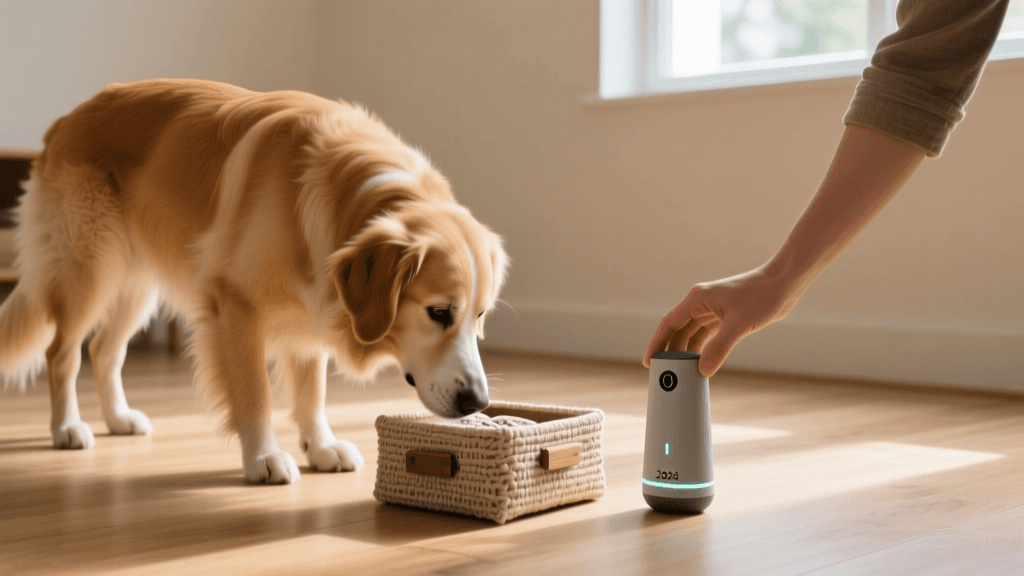
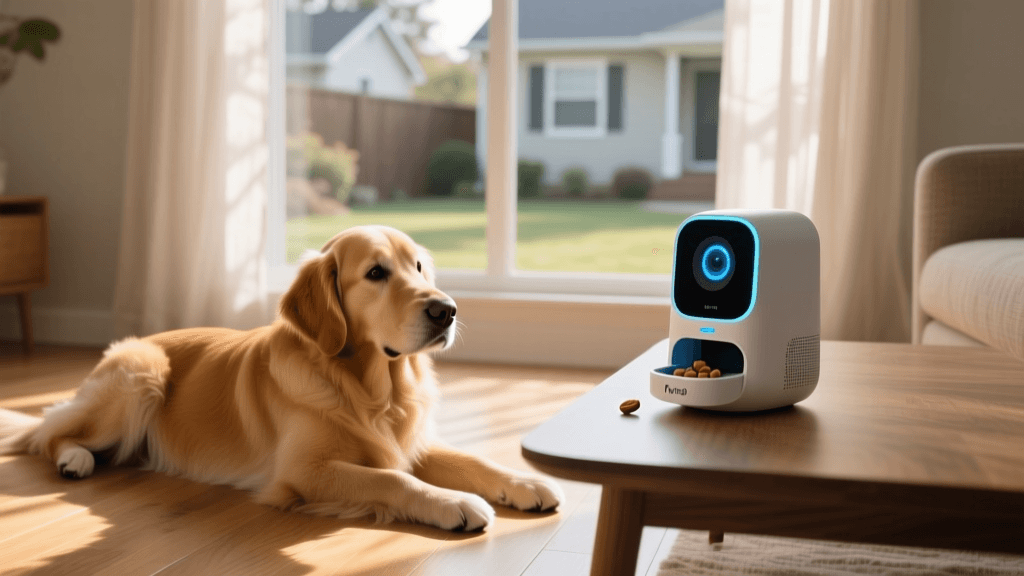
The Furbo 360 remains the gold standard for separation anxiety management. Its motorized base allows the camera to rotate a full 360 degrees, ensuring that no matter where your dog paces or hides, you can keep them in your line of sight. In 2026, Furbo's AI has been upgraded to distinguish between a dog casually barking at a delivery driver and the sustained, rhythmic barking associated with separation distress. The treat-tossing mechanism is highly reliable, allowing you to manually reward moments of calm behavior from your office desk. Furthermore, the 'Dog Nanny' feature automatically records and compiles a daily summary of your dog's activity, which is incredibly useful for sharing with a certified veterinary behaviorist.
2. Petcube Bites 2 Lite
For pet parents seeking a more budget-friendly option without sacrificing core interactive features, the Petcube Bites 2 Lite is an excellent choice. It features a built-in treat dispenser that can hold a substantial amount of kibble or small training treats. While it lacks the 360-degree rotation of the Furbo, its 1080p wide-angle lens covers most standard living rooms effectively. The Petcube app also integrates well with smart home ecosystems, allowing you to set up automated treat schedules. This is particularly useful for dogs who benefit from predictable, spaced-out enrichment while you are away, helping to break up the monotony of alone time.
3. Eufy Security Indoor Cam Pan & Tilt (with Treat Tossing Add-on)
Eufy has made massive strides in the pet space by prioritizing local storage and zero monthly fees, a major selling point for consumers in 2026. While originally a standard home security camera, the newer iterations and add-on modules now support treat tossing. The Pan & Tilt feature allows you to manually track your dog, and the onboard AI chip processes pet detection locally, ensuring faster alerts and enhanced privacy. If your dog's anxiety is triggered by the sound of your voice through a speaker (a common issue where the dog searches frantically for you after hearing two-way audio), Eufy's high-fidelity speaker allows for softer, more natural audio transmission.
Feature Comparison Chart
| Feature | Furbo 360 | Petcube Bites 2 Lite | Eufy Indoor Pan & Tilt |
|---|---|---|---|
| Video Resolution | 1080p HD | 1080p HD | 2K QHD |
| Field of View | 360° Rotating | 138° Wide Angle | 360° Pan & Tilt |
| Treat Capacity | ~100 pieces | ~100 pieces | Varies by module |
| AI Bark/Anxiety Alerts | Advanced (Panic detection) | Standard Sound Detection | Local Pet AI Detection |
| Monthly Subscription | Optional (Furbo Dog Nanny) | Optional (Petcube Care) | None (Local Storage) |
How to Use a Treat Camera for Desensitization Training
Buying a camera will not cure your dog's anxiety; it is merely a tool to facilitate a structured training protocol. The American Kennel Club (AKC) emphasizes that systematic desensitization and counter-conditioning are the most effective methods for treating separation-related behaviors. Here is how to integrate your new smart camera into a 2026 training regimen.
Step 1: Baseline Data Gathering
Before intervening, spend three days simply recording your dog's behavior when you leave for short, standard errands. Note the exact minute your dog begins to pace, pant, or vocalize. This establishes your dog's 'threshold time.' If your dog panics at the 12-minute mark, your training absences must initially remain under 10 minutes.
Step 2: Desensitizing Pre-Departure Cues
Dogs with separation anxiety often begin panicking before you even leave the house. Triggers like putting on shoes, jingling keys, or picking up a laptop bag are deeply ingrained predictors of your absence. Use your camera to watch your dog from another room inside the house. Pick up your keys, then sit back down on the couch. Repeat this until your dog no longer reacts to the sound of the keys. The camera allows you to monitor their subtle stress signals (lip licking, yawning, ear pinning) without you being physically present to skew their reaction.
Step 3: Graduated Absences and Treat Tossing
Begin leaving the house for micro-absences: 5 seconds, 10 seconds, 30 seconds, and 1 minute. Use your camera's treat-tossing feature to dispense a high-value reward the moment your dog settles onto their designated mat or bed while you are gone. This builds a positive emotional response to your absence. Crucial Rule: Never toss a treat if your dog is actively barking or scratching at the door, as this will inadvertently reinforce the panic behavior. Wait for a micro-moment of silence or a lowered head before hitting the toss button.
Step 4: Avoiding the 'Doom-Scrolling' Trap
A common pitfall for modern pet parents is becoming obsessed with the camera feed. Watching your dog whine in real-time spikes your own cortisol levels, which your dog can often sense when you return home, creating a feedback loop of anxiety. Use the AI alerts to notify you only of critical threshold breaches, and rely on the daily summary reports to track long-term progress rather than staring at a live feed.
Beyond the Camera: Building an 'Alone Time' Toolkit
Technology should be paired with physical enrichment to create a holistic alone-time routine. In 2026, veterinary behaviorists recommend creating a 'safe zone' that engages your dog's natural foraging instincts, which naturally lower their heart rate and promote relaxation.
- Automated Food Puzzles: Devices like the Kong Wobbler or West Paw Toppl can be frozen with bone broth and Greek yogurt the night before. The physical act of licking and chewing releases endorphins that soothe the canine nervous system.
- Scent Work Mats: Snuffle mats hide dry kibble within dense fleece strips, forcing your dog to use their nose. Fifteen minutes of intense sniffing is cognitively equivalent to an hour of physical exercise, helping to tire them out before you leave.
- Calming Pheromones: Plug-in diffusers like Adaptil release synthetic dog-appeasing pheromones (DAP) that mimic the comforting scent of a nursing mother. Place the diffuser near the camera's primary viewing zone to encourage your dog to rest in that specific area.
When Technology Isn't Enough
It is vital to recognize the limitations of consumer technology. If your dog is injuring themselves, breaking teeth on window frames, or exhibiting severe physiological signs of stress (such as drooling to the point of dehydration or refusing to eat high-value treats when alone), cameras and puzzles are not enough. True separation anxiety is a medical condition that often requires pharmacological intervention. In these cases, use the video footage gathered from your Furbo or Petcube to provide concrete data to a board-certified veterinary behaviorist. Medications like fluoxetine or clomipramine, paired with a modified desensitization protocol, can lower your dog's baseline anxiety enough for the training to actually take hold.
Conclusion
Managing canine separation anxiety in 2026 requires a blend of empathy, behavioral science, and smart technology. Devices like the Furbo 360 and Petcube Bites 2 Lite offer unprecedented insight into our dogs' emotional worlds, allowing us to intervene with precision and care. However, the camera is only as effective as the training protocol behind it. By using these tools to systematically desensitize your dog to your departures, pairing them with robust physical enrichment, and knowing when to seek professional veterinary help, you can help your canine companion find peace and confidence, even when you are miles away.
priya-sutaria
All our authors care for dogs every day — read more of their work on the authors page.