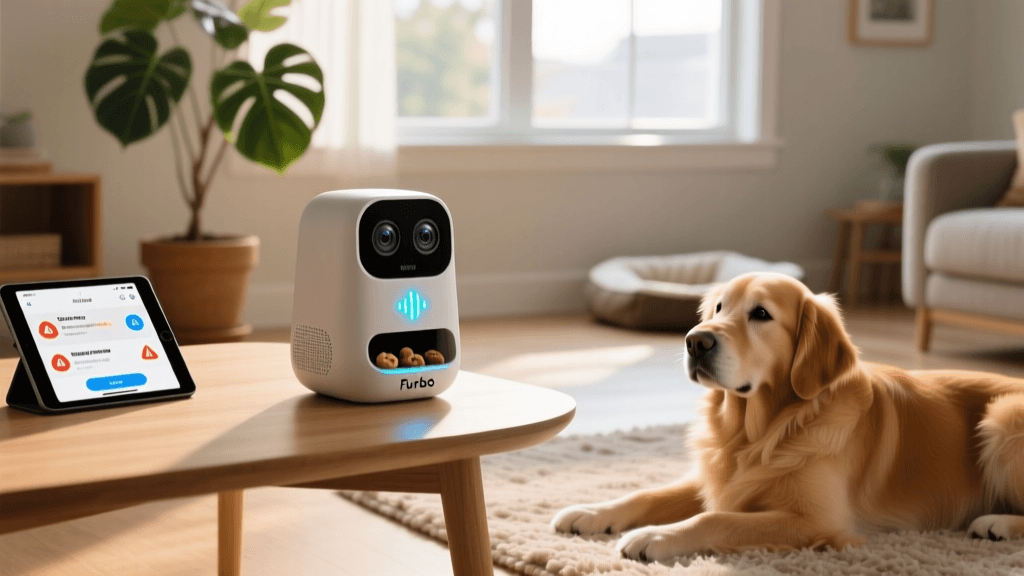
Best Smart Treat Cameras For Dog Separation Anxiety 2026
Compare top 2026 smart treat cameras like Furbo 360 and Petcube Bites 3 to soothe dog separation anxiety using AI alerts, treat tossing, and training plans.
Understanding Canine Separation Anxiety in 2026
As we navigate the landscape of pet ownership in 2026, separation anxiety remains one of the most pervasive and heartbreaking behavioral challenges for dog owners. With hybrid work models now fully cemented as the global norm, many dogs experience abrupt transitions between constant companionship and sudden, prolonged isolation. This inconsistency can trigger severe distress, manifesting as destructive chewing, excessive vocalization, inappropriate elimination, and even self-mutilation.
According to the ASPCA, separation anxiety is not simply a dog being 'naughty' or 'vengeful'; it is a genuine panic response triggered by the absence of their primary attachment figure. The neurobiology behind this involves a massive spike in cortisol and adrenaline, putting the dog into a state of fight-or-flight. While traditional desensitization training remains the gold standard, the integration of smart home technology—specifically AI-enhanced treat-tossing cameras—has revolutionized how veterinary behaviorists recommend managing mild to moderate cases of alone-time distress.
How Treat-Tossing Technology Interrupts the Anxiety Cycle
The core principle of using a smart camera for separation anxiety is 'interrupt and redirect.' When a dog begins to exhibit pre-panic behaviors (pacing, whining, or fixating on the door), the owner can use the camera's two-way audio and treat-tossing feature to break the dog's negative thought loop. By tossing a high-value treat, you shift the dog's brain from the amygdala (the fear center) to the prefrontal cortex (the problem-solving and reward center).
In 2026, the latest generations of these cameras utilize edge-computing AI to detect specific anxiety markers. Rather than requiring the owner to watch a live feed 24/7, the camera's AI recognizes the acoustic signature of distress whining or the visual pattern of frantic pacing, sending an instant push notification to the owner's smartwatch or phone. This allows for timely intervention before the dog crosses the threshold into a full-blown panic attack.
2026 Smart Camera Showdown: Furbo 360 vs. Petcube Bites 3 vs. Skymee Owl
Choosing the right hardware is critical. A camera with a jam-prone treat dispenser or a laggy audio feed can inadvertently increase a dog's frustration. Below is a comprehensive comparison of the top three treat-dispensing cameras dominating the market in 2026.
| Feature | Furbo 360 (2026 Edition) | Petcube Bites 3 | Skymee Owl Robot |
|---|---|---|---|
| Current Retail Price | $249.99 | $199.99 | $279.00 |
| Field of View | 360° Auto-Rotating Pan | 160° Wide Angle | 360° Floor Roaming |
| Treat Capacity | Up to 40 treats (varies by size) | Up to 30 treats | Up to 50 treats |
| AI Anxiety Alerts | Barking, Vomiting, Choking, Pacing | Smart Barking & Motion Filters | Motion Tracking & Barking |
| Subscription Required | Yes for cloud storage & advanced AI ($9.99/mo) | Yes for full history ($8.99/mo) | Optional for premium cloud ($7.99/mo) |
| Best For | Multi-room monitoring & severe pacers | Budget-conscious owners & laser play | High-energy dogs needing physical engagement |
Furbo 360 (2026 Edition): The Behaviorist's Choice
The Furbo 360 remains the premier recommendation among veterinary behaviorists this year. Its 2026 firmware update introduced multi-dog facial recognition, meaning the camera can now selectively toss treats only when your anxious dog is in frame, ignoring other pets in the household. The 360-degree auto-rotating base is a game-changer for dogs who pace in circles or move between rooms when left alone. The 'Pacing Alert' feature specifically tracks repetitive movement patterns, notifying you if your dog has been walking the same path for more than five minutes.
Petcube Bites 3: The Versatile Runner-Up
Petcube's Bites 3 offers a more static, wide-angle view but compensates with a built-in laser pointer and a highly reliable, jam-resistant treat dispenser. The audio quality is exceptionally crisp, which is vital for playing pre-recorded calming messages. If your dog's anxiety is rooted in boredom rather than pure panic, the laser-play feature can provide necessary mental stimulation during your midday break.
Skymee Owl Robot: The Interactive Distraction
Unlike stationary cameras, the Skymee Owl moves across your floor. For dogs who respond well to interactive play but become destructive when under-stimulated, this roaming robot can initiate a game of 'chase' or dispense treats from unexpected angles. However, it is not recommended for dogs with severe noise phobias, as the mechanical whirring of the wheels can startle highly sensitive animals.
The 4-Week Camera-Assisted Desensitization Protocol
Buying the camera is only step one. To effectively treat separation anxiety, you must pair the technology with a structured behavioral modification plan. The American Kennel Club emphasizes that technology should act as a bridge, not a permanent crutch. Follow this 4-week protocol to build your dog's confidence.
Week 1: Baseline Monitoring and Safe Space Association
Do not toss treats or use the two-way audio yet. Set up the camera in your dog's designated 'safe space' (e.g., a cozy corner with a Kong toy and an article of your worn clothing). Leave the house for very short durations (1 to 5 minutes). Review the footage to identify your dog's specific triggers. Do they panic the moment the door clicks shut, or do they settle down and then panic 20 minutes later? Establishing this baseline is crucial for timing your interventions in later weeks.
Week 2: Micro-Departures and Remote Rewarding
Begin leaving for 5 to 15 minutes. The moment you step out the door and your dog remains calm (or settles onto their mat), use the app to toss a single, high-value treat. The goal is to create a positive association with the sound of the door closing and the mechanical whir of the treat dispenser. If your dog begins to whine, wait for a brief pause in the vocalization before tossing the treat. Never reward active panicking, as this will only reinforce the distress.
Week 3: Extending Duration and Randomized Rewards
Increase your absence to 30–45 minutes. Transition from continuous rewarding to a variable ratio reinforcement schedule (tossing a treat randomly every 10 to 20 minutes, provided the dog is calm). This unpredictability keeps the dog engaged and waiting for a reward, effectively masking the passage of time. Utilize the camera's AI alerts to monitor for subtle signs of stress, such as lip licking or yawning, and intervene with a soothing voice command before the stress escalates.
Week 4: Real-World Simulation
Perform a full 'departure routine.' Put on your shoes, grab your keys, start the car, and leave for 1 to 2 hours. Use the camera to check in, but try to minimize your interventions. By week four, your dog should view your departure as a cue to settle into their safe space and wait for the occasional remote treat, rather than a cue to panic.
Recognizing the Limits: When to Call a Veterinary Behaviorist
While smart cameras and desensitization protocols are highly effective for mild to moderate separation anxiety, they are not a cure-all for severe psychological distress. If your dog is injuring themselves trying to escape crates or windows, refusing to eat treats when alone, or exhibiting extreme physiological signs like drooling, vomiting, or diarrhea upon your departure, technology alone will not suffice.
As noted by the Humane Society, severe separation anxiety often requires a multi-modal approach that includes prescription anti-anxiety medications (such as fluoxetine or clomipramine) alongside behavioral therapy. In these cases, the smart camera transitions from a training tool to a diagnostic tool, allowing your veterinary behaviorist to review footage and accurately adjust medication dosages based on your dog's unmedicated vs. medicated baseline behavior.
Conclusion
Managing a dog's separation anxiety in 2026 is a highly nuanced process that blends empathetic behavioral science with cutting-edge smart home technology. Devices like the Furbo 360 and Petcube Bites 3 offer unprecedented insight into our dogs' emotional states when we are away, allowing us to intervene with precision and compassion. However, it is vital to remember that these cameras are tools to facilitate training, not replacements for patience, consistency, and, when necessary, professional veterinary intervention. By combining the right tech with a structured desensitization protocol, you can help your dog transform their alone time from a period of panic into a peaceful, rewarding rest.
jonas-cole
All our authors care for dogs every day — read more of their work on the authors page.