Top Low-Stress Dog Breeds for Remote Workers in 2026
Discover the best low-stress, quiet dog breeds for remote workers in 2026. Boost your home office mental health with these calm, low-bark companions.
The Intersection of Remote Work and Canine Wellness in 2026
As remote and hybrid work models have fully solidified in 2026, the home office has become a permanent fixture for millions of professionals. While working from home offers unprecedented flexibility, it also brings unique mental health challenges, including isolation, blurred work-life boundaries, and chronic screen fatigue. Enter the canine companion. Dogs provide unparalleled emotional support, but not all breeds are suited for the delicate ecosystem of a home office. A high-energy, vocal breed can disrupt crucial video conferences and elevate your stress levels, defeating the very purpose of pet ownership.
For remote workers, the ideal dog is a low-stress, quiet companion that thrives on proximity rather than constant high-octane interaction. According to the American Veterinary Medical Association (AVMA), the human-animal bond significantly lowers cortisol levels and reduces blood pressure, but this therapeutic effect is maximized when the pet's temperament aligns with the owner's lifestyle. Below, we explore the best low-bark, low-anxiety dog breeds for remote workers, alongside their specific health and wellbeing profiles to ensure a harmonious home office.
The Science of Canine Companionship and Mental Health
Before diving into specific breeds, it is essential to understand why a calm dog is a biological hack for remote work productivity and mental wellness. Harvard Health Publishing notes that interacting with a calm, resting dog stimulates the production of oxytocin and dopamine—neurochemicals that combat the anxiety and depression often associated with isolated remote work. However, if a dog is prone to separation anxiety or excessive vocalization (barking at delivery drivers or neighborhood noises), it triggers the owner's sympathetic nervous system, inducing a fight-or-flight response that shatters deep-work focus.
Therefore, selecting a breed with a naturally low reactivity threshold and a moderate exercise requirement is paramount for maintaining both your psychological wellbeing and your professional reputation during virtual meetings.
Top 5 Low-Stress, Quiet Dog Breeds for the Home Office
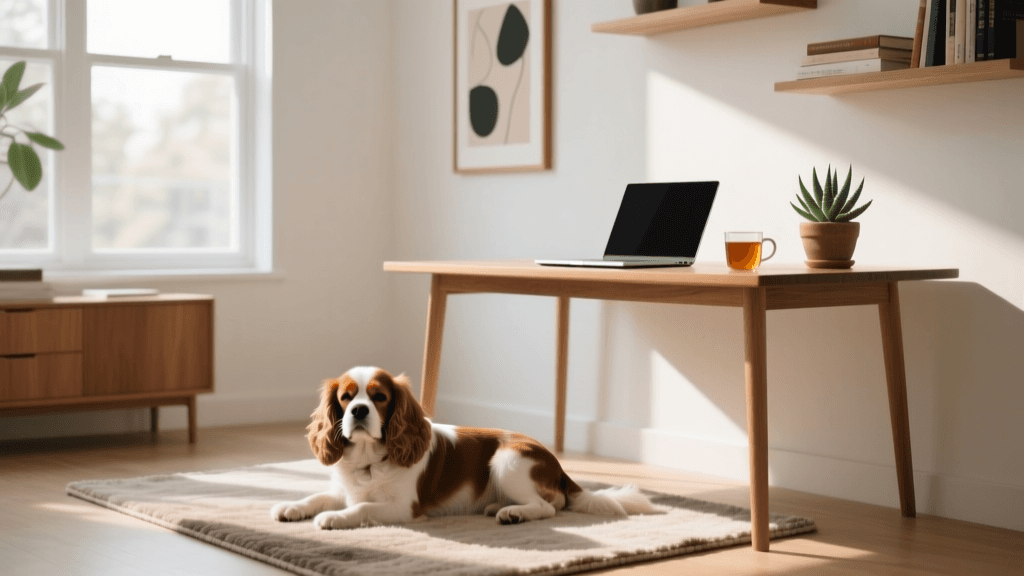
1. Cavalier King Charles Spaniel
The Cavalier King Charles Spaniel is the quintessential lap dog, renowned for its empathetic nature and profound quietness. They are deeply attuned to their owner's emotional state, making them exceptional emotional support animals during high-stress project sprints.
- Home Office Vibe: Will sleep quietly under your desk or on a nearby chair, occasionally offering a comforting nudge when you are stressed.
- Exercise Needs: 30–45 minutes of moderate walking daily.
- Health & Preventive Care: Cavaliers are predisposed to Mitral Valve Disease (MVD) and Syringomyelia. In 2026, responsible breeding has reduced some risks, but annual cardiac ultrasounds and neurological check-ups are mandatory. Maintaining a lean body weight is critical to reduce stress on their joints and heart.
2. Greyhound
Despite their reputation as racing dogs, Greyhounds are famously known as "45-mph couch potatoes." They are sprinters, not endurance athletes, meaning a quick 20-minute morning run is usually enough to satisfy their physical needs, leaving them to sleep for up to 18 hours a day.
- Home Office Vibe: Extremely quiet, rarely barking, and content to sprawl on a large orthopedic bed in the corner of your office.
- Exercise Needs: One short, intense sprint session followed by leisurely sniffing walks.
- Health & Preventive Care: Greyhounds have unique veterinary needs, including sensitivity to certain anesthetics and a higher risk of osteosarcoma and dental disease. Daily tooth brushing and annual comprehensive blood panels (including thyroid and bone health markers) are essential.
3. Basset Hound
With their grounded, heavy-boned build and famously laid-back demeanor, Basset Hounds are virtually immune to the frantic energy that plagues many modern breeds. They are highly independent and rarely suffer from the separation anxiety that can occur when you step away for a quick grocery run.
- Home Office Vibe: A stoic, grounding presence. They may snore softly during your Zoom calls, but they will not bark at the mail carrier.
- Exercise Needs: 30 minutes of slow, scent-driven walking.
- Health & Preventive Care: Their long, droopy ears require weekly cleaning with a vet-approved otic solution to prevent chronic yeast and bacterial otitis. Additionally, their long spines make them susceptible to Intervertebral Disc Disease (IVDD); use ramps to prevent them from jumping on and off high furniture.
4. Japanese Chin
For remote workers living in urban apartments or smaller home office spaces, the Japanese Chin is an ideal companion. Bred historically as aristocratic lap warmers, they are cat-like in their independence, fastidious cleanliness, and near-total silence.
- Home Office Vibe: Will observe you from a high perch or the back of your sofa. They do not demand constant entertainment, allowing for deep, uninterrupted focus blocks.
- Exercise Needs: 15–20 minutes of indoor play or short neighborhood strolls.
- Health & Preventive Care: As a brachycephalic (flat-faced) breed, they are sensitive to heat and humidity. Ensure your home office is climate-controlled. Regular veterinary eye exams are necessary to monitor for cataracts and corneal abrasions due to their prominent eyes.
5. Bernese Mountain Dog
If you have the space and desire a larger dog, the Bernese Mountain Dog offers a profound sense of security and psychological grounding. Their gentle, placid nature makes them excellent companions for remote workers who struggle with anxiety.
- Home Office Vibe: A gentle giant that leans against your leg while you work, providing deep-pressure therapy that naturally calms the nervous system.
- Exercise Needs: 45–60 minutes of moderate hiking or walking.
- Health & Preventive Care: Berners have a tragically short lifespan, largely due to a high predisposition to histiocytic sarcoma and other cancers. Proactive health screening, including bi-annual physicals, chest X-rays, and discussing early cancer detection blood tests with your oncologist-focused veterinarian in 2026, is vital.
Breed Comparison Chart for Remote Workers
| Breed | Noise Level | Daily Exercise | Space Required | Primary Health Focus |
|---|---|---|---|---|
| Cavalier King Charles Spaniel | Very Low | 30-45 mins | Small / Apartment | Cardiac & Neurological |
| Greyhound | Low | 20 min sprint + walk | Medium / Large | Dental & Bone Health |
| Basset Hound | Low (Occasional Baying) | 30 mins | Medium / Yard | Ear Care & Spine (IVDD) |
| Japanese Chin | Virtually Silent | 15-20 mins | Small / Apartment | Respiratory & Ocular |
| Bernese Mountain Dog | Low | 45-60 mins | Large / House | Oncology & Joint Dysplasia |
Optimizing Your Home Office for Canine Wellness
Choosing the right breed is only half the equation; creating an ergonomically and psychologically sound environment for your dog is equally important for their wellbeing and your productivity.
1. Ergonomic Resting Zones
Dogs, especially larger or older breeds like Greyhounds and Bernese Mountain Dogs, need proper orthopedic support to prevent joint stiffness while you work. The Casper Dog Bed remains a top-tier choice in 2026 due to its dual-layer foam system that mimics human mattress technology, providing essential pressure relief. Place the bed just outside your immediate peripheral vision so your dog feels included in the "pack" without becoming a tripping hazard during your standing desk sessions.
2. Quiet Enrichment for Deep Work Blocks
When you need two hours of uninterrupted coding or writing, rely on silent mental enrichment rather than noisy squeaky toys. The KONG Classic, stuffed with frozen plain pumpkin puree and low-sodium chicken broth, provides up to 45 minutes of silent, licking-based enrichment. Licking is a naturally soothing behavior for dogs that releases endorphins, keeping them calm and occupied.
3. The Pomodoro Potty & Play Routine
Align your dog's care with the Pomodoro Technique (25 minutes of focused work, 5 minutes of rest). Use your 5-minute breaks to engage in micro-interactions: a quick game of tug, a potty break in the yard, or a brief training session. This prevents the guilt many remote workers feel about ignoring their pets and ensures your dog's physical and mental needs are met in manageable increments without derailing your workday.
4. Managing Occasional Office Days
Even in 2026, hybrid schedules require occasional commutes to a physical office. To prevent separation anxiety, utilize smart home pet monitors like the Furbo 360 Dog Camera. Its AI-driven alerts can distinguish between normal movement and stress-induced pacing, allowing you to toss a treat and speak through the two-way audio to reassure your dog. Gradually acclimating your dog to your absence by practicing "fake departures" on weekends is a crucial preventive behavioral health strategy.
Conclusion
Integrating a dog into your remote work life is a profound investment in your mental health and daily joy. By selecting a low-stress, quiet breed like the Cavalier King Charles Spaniel, Greyhound, or Japanese Chin, and proactively managing their specific veterinary and environmental needs, you create a sanctuary of productivity and peace. Remember to consult with a licensed veterinarian or a certified applied animal behaviorist to ensure your chosen companion is set up for a long, healthy, and happy life by your side.
beth-carrasco
All our authors care for dogs every day — read more of their work on the authors page.