Top No Pull Dog Harness for Puppies in 2026: Fit & Training
Discover how to fit and use a front-clip no pull dog harness for your puppy in 2026. Stop leash pulling safely with our step-by-step training guide.
The Crucial First Months: Protecting Your Puppy's Trachea
Bringing a new puppy home is one of life's greatest joys, but the reality of early leash training can quickly turn those joyful walks into a frustrating game of tug-of-war. As we navigate puppy care in 2026, veterinary behaviorists and canine orthopedic specialists strongly advise against using traditional flat neck collars for leash training. Puppies possess incredibly fragile tracheas and developing cervical spines. When a puppy pulls against a standard collar, the concentrated pressure on their throat can lead to tracheal collapse, chronic coughing, and long-term respiratory issues. Furthermore, the sudden jerking motions caused by a puppy hitting the end of a leash while wearing a collar can cause micro-traumas to their developing neck vertebrae.
To protect your growing pup while still maintaining control during those chaotic outdoor socialization sessions, transitioning to a dedicated no pull dog harness is not just a recommendation; it is a fundamental requirement for responsible puppy ownership. However, not all harnesses are created equal, and understanding the biomechanics of a front-clip design is essential for success.
Why a Front-Clip No Pull Dog Harness is the 2026 Standard
The market is flooded with back-clip harnesses, which are excellent for car safety and hiking but terrible for leash training. When a puppy pulls on a back-clip harness, it engages their natural opposition reflex—the instinct to pull harder against pressure. Essentially, a back-clip harness turns your puppy into a sled dog, giving them the mechanical advantage to drag you down the street.
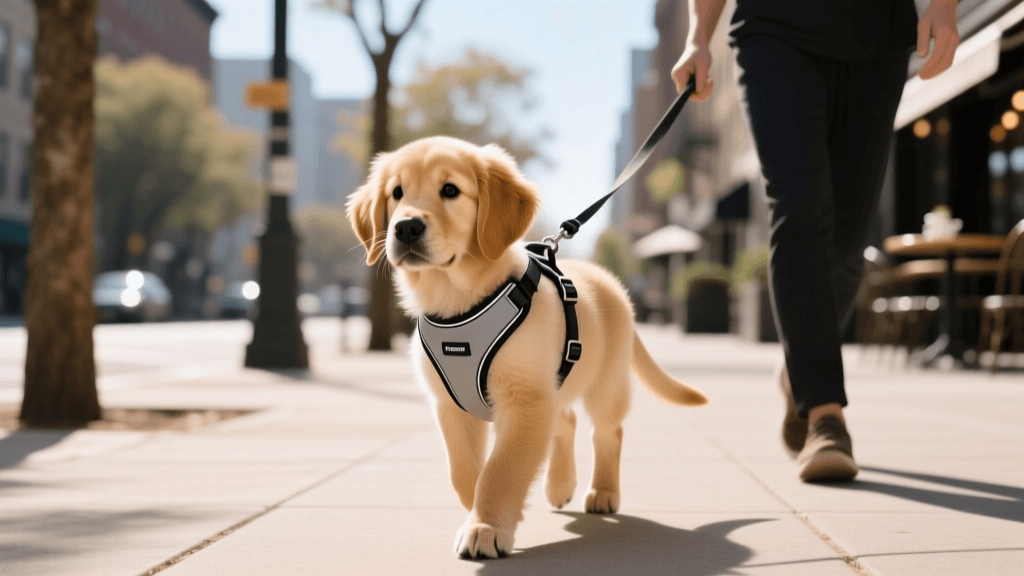
A front-clip no pull dog harness features a leash attachment ring located on the chest strap. According to the AKC veterinary advice on harness versus collar safety, this frontal attachment point completely alters the biomechanics of the walk. When the puppy pulls forward, the front clip gently redirects their center of gravity sideways, turning them back toward you. This eliminates their leverage, naturally discouraging pulling without causing pain or requiring harsh leash corrections. It is a humane, force-free method that aligns perfectly with modern positive reinforcement training protocols.
Top 3 No Pull Harness Models for Growing Puppies
Choosing the right gear in 2026 means looking for adjustability, durability, and comfort. Puppies grow at an astonishing rate, meaning you need a harness with multiple adjustment points to accommodate their changing proportions. Below is a comparison of the top-rated no pull dog harnesses for puppies this year.
| Brand & Model (2026) | Avg. Price | Clip Style | Best For |
|---|---|---|---|
| Rabbitgoo No-Pull Harness | $26.99 | Front & Back | Budget-conscious owners & rapid growers |
| Kurgo Tru-Fit Smart Harness | $44.99 | Front & Back | Car safety, hiking, and broad-chested breeds |
| 2 Hounds Design Freedom | $39.95 | Front & Back | Sensitive skin, escape artists, and barrel chests |
1. Rabbitgoo No-Pull Dog Harness
The Rabbitgoo remains a top seller in 2026 due to its incredible value and four-point adjustment system. It features a breathable mesh lining that prevents chafing on sensitive puppy skin. The front chest ring is reinforced with heavy-duty nylon, ensuring it won't snap when your Labrador mix decides to lunge at a passing squirrel. It is highly recommended for fast-growing breeds where you may need to size up within a few months.
2. Kurgo Tru-Fit Smart Harness
If you plan on taking your puppy on road trips, the Kurgo Tru-Fit is the gold standard. Its 2026 updated model features an all-steel Nesting Buckle system based on rock-climbing harnesses. The front clip is slightly lower on the sternum, which provides excellent steering control for strong pullers. It also includes a 10-inch seatbelt tether, making it a dual-purpose tool for walking and vehicular safety.
3. 2 Hounds Design Freedom No-Pull Harness
This harness features a unique Swiss velvet lining behind the leg straps, completely eliminating the armpit chafing that plagues many other brands. It connects the front and back clips simultaneously using a specialized dual-clip leash (included), giving you ultimate steering control. It is the premier choice for stubborn breeds like French Bulldogs or Corgis who tend to back out of standard harnesses.
How to Properly Measure and Fit a No Pull Harness
Even the best no pull dog harness will fail if it is fitted incorrectly. A harness that is too loose will allow the puppy to slip out and escape, while one that is too tight will restrict shoulder movement and alter their natural gait, potentially causing joint issues. Follow these steps every two weeks during your puppy's first year:
- Measure the Girth: Use a soft tailor's tape measure to wrap around the widest part of your puppy's ribcage, just behind the front legs. This is the most critical measurement.
- Measure the Neck: Measure the base of the neck where it meets the shoulders, not where a collar would sit.
- The Two-Finger Rule: Once the harness is on, you should be able to comfortably slide exactly two fingers under any strap. If you can fit more, it is too loose. If you cannot fit two fingers, it is too tight.
- Check the Shoulders: Ensure the front straps do not cross over the shoulder blades. The harness should sit below the scapula to allow for a full range of motion during the trot and gallop.
Step-by-Step Leash Training with a Front-Clip Harness
Gear alone will not teach your puppy to walk politely. The front-clip harness is a management tool that facilitates training. To build a reliable loose-leash walk, you must pair the harness with positive reinforcement. The Humane Society's positive reinforcement leash training resource emphasizes that consistency and patience are the keys to reshaping canine behavior.
Step 1: Desensitization and Harness Acceptance
Before attaching a leash, let your puppy wear the harness indoors for short periods. Feed them high-value treats like boiled chicken or freeze-dried liver while putting it on. This builds a positive emotional response, ensuring they do not freeze or panic when the gear comes out.
Step 2: The 'Be a Tree' Method
Attach a standard 4-to-6-foot flat leash to the front chest ring. Avoid retractable leashes entirely, as they teach the puppy that pulling equals more freedom. Begin walking in a low-distraction environment like your backyard. The moment the leash goes taut, stop walking immediately. 'Be a tree.' Do not yank the leash, do not scold the puppy. Simply stand still.
Step 3: Rewarding the Slack Leash
Wait for your puppy to turn back and look at you, or take a step backward to relieve the tension on the front clip. The moment the leash forms a 'J' shape (indicating slack), mark the behavior with a clicker or a verbal 'Yes!' and deliver a treat right at your knee seam. This teaches the puppy that the reward zone is next to your leg, not at the end of a taut leash.
Step 4: The 180-Degree Turn
If your puppy is highly distracted and pulling toward a specific trigger (like another dog), use the front clip to gently guide them in a 180-degree turn away from the trigger. Reward them heavily when they catch up to your side. This builds engagement and teaches them to check in with you rather than forging ahead.
Common Puppy Leash Training Mistakes to Avoid
Even with the perfect no pull dog harness, owners often sabotage their own progress through inconsistent handling. Avoid these common pitfalls:
- Inconsistent Tension: If you allow your puppy to pull toward a fire hydrant to sniff it, you are intermittently reinforcing the pulling behavior. The leash must be slack for them to move forward.
- Using the Harness as a Timeout Tool: Never grab the front ring or the harness straps to physically restrain or correct your puppy. This can cause chafing and creates a negative association with the gear.
- Skipping the Decompression Walk: Puppies need time to sniff and explore. Use the back-clip ring for designated 'sniffaris' in safe, enclosed areas where pulling is not an issue, allowing their brain to process environmental enrichment.
For further reading on behavioral adjustments, the American Kennel Club's guide on stopping leash pulling offers excellent insights into managing adolescent regression, which commonly occurs around the 6-to-9-month mark.
Conclusion: Building a Lifelong Walking Bond
Investing in a high-quality front-clip no pull dog harness in 2026 is one of the best decisions you can make for your puppy's physical health and behavioral development. By protecting their delicate trachea, removing their mechanical leverage, and pairing the gear with consistent, reward-based training, you are setting the foundation for a lifetime of enjoyable, stress-free walks. Remember that puppyhood is a fleeting developmental window; the habits you establish in these first few months will define your walking dynamic for the next decade. Measure carefully, fit securely, train patiently, and enjoy the journey of exploring the world together.
jonas-cole
All our authors care for dogs every day — read more of their work on the authors page.