No-Pull Harness Training Guide 2026: Stop Leash Pulling Fast
Learn how to stop leash pulling in 2026 using a front-clip no-pull harness. Step-by-step training guide for loose-leash walking and better behavior.
Why Leash Pulling Happens and Why 2026 Training Methods Favor Harnesses
Leash pulling remains one of the most common behavioral challenges reported by dog owners. When a dog pulls, it is usually not out of defiance, but rather a natural response to environmental stimulation and a phenomenon known as the opposition reflex. When pressure is applied to the front of a dog's body (such as from a traditional flat collar), their instinct is to push against that pressure, making pulling worse. In 2026, force-free behavioral conditioning has completely shifted away from aversive tools like prong or choke collars. Instead, certified veterinary behaviorists and professional trainers overwhelmingly recommend the front-clip no-pull harness as the premier management and training tool for loose-leash walking.
A no-pull harness is not a magic wand that instantly cures pulling; it is a highly effective biomechanical tool that facilitates communication. When paired with positive reinforcement training, a front-clip harness gives you the leverage needed to guide your dog back to your side without causing tracheal damage or spinal stress. According to the American Kennel Club, utilizing a front-attachment harness is one of the most humane and effective ways to redirect a pulling dog's momentum, allowing the handler to gently turn the dog's chest back toward them when tension occurs on the leash.
How a Front-Clip No-Pull Harness Actually Works
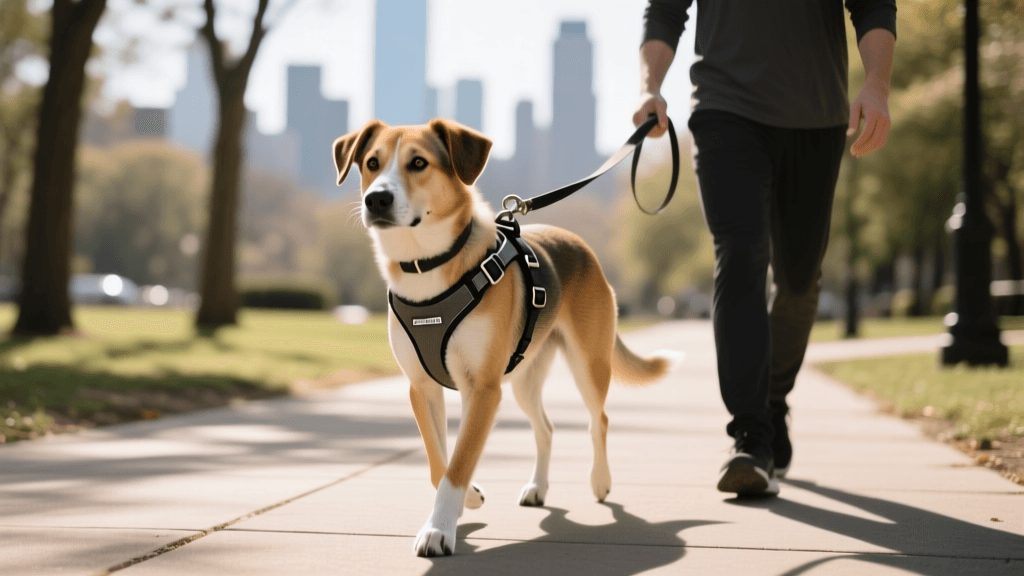
The mechanics of a front-clip harness are rooted in canine biomechanics. A dog's center of gravity is located in their chest. When the leash is attached to a D-ring located on the sternum (the front clip), any forward pulling creates a pivot point. Instead of moving forward, the dog's body is gently rotated sideways toward the handler. This disrupts their forward momentum and naturally breaks their focus from the distraction ahead. Furthermore, modern 2026 harness designs feature Y-shaped chest straps that ensure the shoulder joints have full extension, preventing the gait restriction that plagued older, restrictive harness models.
2026 Harness Comparison Chart: Finding the Right Clip Configuration
Not all harnesses are created equal. When shopping for a training harness this year, it is vital to understand the difference between clip configurations. Below is a comparison of the most common walking setups available in 2026.
| Harness Type | Clip Location | Pros | Cons | Best For |
|---|---|---|---|---|
| Front-Clip No-Pull | Sternum (Chest) | Redirects momentum; stops opposition reflex; protects trachea. | Can twist on the dog if not fitted perfectly; leash can get caught under front legs. | Active pullers; dogs in active obedience training. |
| Back-Clip Standard | Between Shoulders | Easy to put on; keeps leash away from legs; great for running. | Encourages pulling (sled dog effect); offers zero steering control. | Brachycephalic breeds; dogs that already walk perfectly on leash. |
| Dual-Clip (Front & Back) | Sternum & Back | Versatile; allows dual-leash training for advanced steering. | Heavier; more expensive; excess hardware can irritate sensitive dogs. | Large, powerful breeds; professional trainers. |
| Head Halter | Snout | Maximum steering control for giant breeds. | Requires extensive desensitization; risk of neck injury if dog lunges. | Giant breeds with severe pulling issues; temporary management. |
Step-by-Step No-Pull Harness Training Protocol
To achieve loose-leash walking, you must combine the mechanical advantage of the front-clip harness with a structured behavioral conditioning plan. Follow this 2026-approved protocol to transform your dog's walking habits.
Phase 1: Desensitization and Positive Association (Days 1-3)
Many dogs exhibit "harness freeze" or try to bite the chest strap when it is first put on. Before you even attach a leash, you must build a positive emotional response to the gear.
- The Treat Loop: Hold the neck hole open and feed high-value treats (like boiled chicken or freeze-dried liver) through the hole. Let the dog push their head through to get the reward.
- Clipping Practice: Once the harness is on, immediately give a treat, unclip it, and remove it. Repeat this 10 times in a row. The harness predicts amazing things.
- Indoor Wear: Have your dog wear the harness during meal times or play sessions indoors for 15-minute intervals so it becomes a normal, comfortable sensation.
Phase 2: The Engagement Game (Days 4-7)
Before stepping outside, your dog must learn that engaging with you is more rewarding than the environment.
- Eye Contact Marker: With the harness and leash on indoors, wait for your dog to look at you. The second they make eye contact, mark the behavior with a clicker or a verbal "Yes!" and deliver a treat right at the seam of your pants (this keeps their head down and in the heel position).
- Follow the Leader: Take three steps backward. When your dog follows to stay close, mark and reward. This teaches them that moving *with* you yields rewards, while pulling away yields nothing.
Phase 3: The "Be a Tree" and U-Turn Methods (Outdoors)
When you transition to the real world, distractions will trigger pulling. This is where the front-clip harness shines. The Humane Society of the United States emphasizes that consistency in stopping forward movement when tension occurs is the key to curing leash pulling.
- The "Be a Tree" Method: The millisecond you feel tension on the leash, stop walking completely. Do not yank the dog back; simply anchor yourself. Because the leash is attached to the front of the chest, the dog will feel the gentle pivot. Wait for the leash to slacken (even if they just take one step back or look at you). Mark the slack leash with "Yes!" and reward.
- The 180-Degree U-Turn: If your dog is locked onto a distraction (like a squirrel or another dog) and pulling heavily, say a cheerful "Let's go!", turn 180 degrees, and walk the opposite way. The front-clip will gently swing their body around to follow you. When they catch up to your side, reward them heavily. This teaches them that pulling toward a distraction actually makes the distraction move further away.
Essential Gear Features to Look for in 2026
The pet industry has innovated significantly over the last few years. When purchasing a front-clip harness in 2026, ensure the model you choose includes the following modern safety and comfort features:
- Y-Shaped Chest Strap: Avoid horizontal straps that cross the shoulder joints, as they restrict the natural gait and can cause long-term orthopedic issues. A Y-shape allows full shoulder extension.
- Martingale Backup Loop: For escape artists, look for a harness that features a martingale loop on the back. If the dog backs up and tries to slip the harness, the loop tightens slightly to prevent them from backing out of the gear.
- Biodegradable or Recycled Materials: Sustainability is a major trend in 2026 pet care. Many top-tier brands now use recycled ocean plastics or breathable, eco-friendly hemp blends that prevent chafing and overheating.
- Reflective Stitching and LED Compatibility: Safety during early morning or late-night walks is paramount. Ensure the harness has integrated reflective threading and a loop to attach an LED safety light.
Common Training Mistakes to Avoid
Even with the best front-clip harness, human error can sabotage your training progress. Avoid these common pitfalls:
- Using a Retractable Leash: Retractable leashes teach dogs that pulling extends the leash, which directly contradicts your no-pull training. Always use a standard 4-to-6-foot static leash made of leather, biothane, or nylon.
- Inconsistent Thresholds: If you let your dog pull you to the mailbox on Tuesday, but scold them for pulling to the park on Wednesday, the dog will never understand the criteria. The rule must be absolute: tension on the leash means forward progress stops.
- Poor Harness Fit: A harness that is too loose will twist sideways when the dog pulls, causing chafing and rendering the front-clip useless. You should be able to slide exactly two fingers under any strap on the harness. No more, no less.
When to Seek Professional Help
If your dog exhibits leash reactivity (barking, lunging, or snapping at other dogs or people) while on the harness, the pulling may be rooted in fear or barrier frustration rather than simple excitement. In these cases, a no-pull harness is an excellent safety measure to prevent escape, but you should consult a certified professional dog trainer (CPDT) or a veterinary behaviorist. They can help you implement desensitization and counter-conditioning protocols to address the underlying emotional triggers.
Conclusion
Stopping leash pulling is a journey that requires patience, high-value rewards, and the right equipment. By utilizing a well-fitted, Y-shaped front-clip no-pull harness and consistently applying the "Be a Tree" and U-Turn methods, you can teach your dog that walking politely by your side is the most rewarding way to explore the world. Stick to the 2026 force-free training standards, celebrate the small victories, and enjoy the bond that comes from a harmonious, tension-free walk.
aaron-whyte
All our authors care for dogs every day — read more of their work on the authors page.