No-Pull Dog Harness Joint Health: 2026 Veterinary Guide
Discover how front-clip no-pull dog harnesses impact canine shoulder joints and tracheal health in 2026, with veterinary insights and fitting tips.
The Evolution of Canine Walking Gear in 2026
As we navigate through 2026, the veterinary consensus regarding canine locomotion and walking equipment has reached a definitive turning point. For decades, dog owners relied on standard flat collars or back-clip harnesses to manage their pets during daily walks. However, modern veterinary orthopedic specialists and canine physical therapists now heavily favor the front-clip no-pull dog harness as the gold standard for preserving musculoskeletal health. The shift is driven by a deeper understanding of canine biomechanics, specifically how force distribution affects the shoulder joints, spinal alignment, and tracheal integrity over a dog's lifetime. In this comprehensive guide, we will explore the anatomical benefits of no-pull harnesses, compare the top 2026 models, and provide a veterinary-approved fitting protocol to ensure your dog's long-term health and wellbeing.
The Biomechanics of the Front-Clip No-Pull Harness
When a dog pulls on a traditional back-clip harness, the force is distributed across the chest and shoulders in a way that actually encourages the dog to lean forward and pull harder. This phenomenon is rooted in the canine opposition reflex—an instinctual response where a dog pushes against pressure. While back-clip harnesses are excellent for running or hiking with a trained dog, they are counterproductive for leash training and can place undue strain on the supraspinatus and biceps brachii muscles over time.
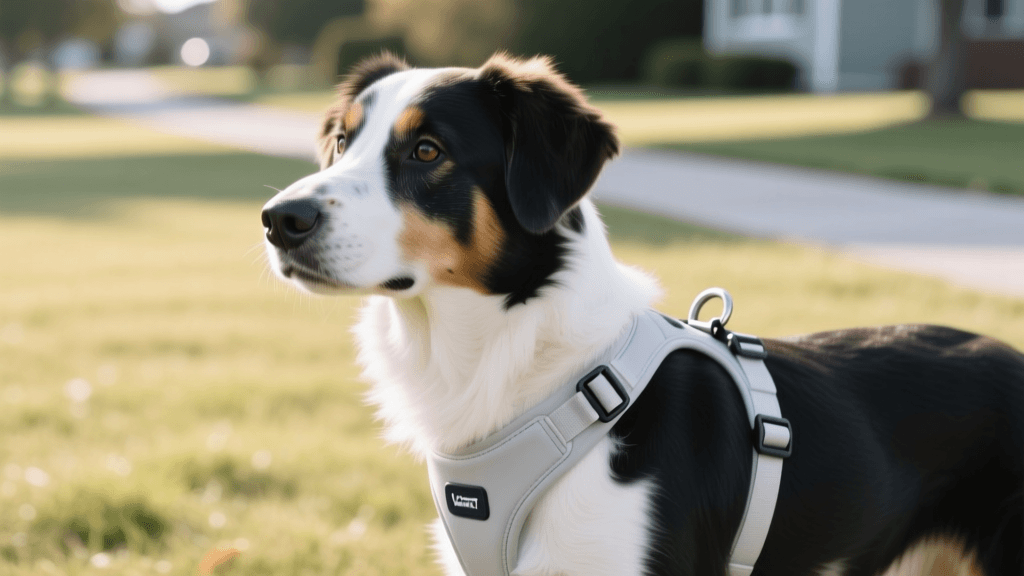
A front-clip no-pull harness fundamentally alters this biomechanical equation. By positioning the leash attachment point at the center of the dog's chest (the sternum), any forward tension is redirected laterally. When the dog pulls, the harness gently pivots the dog's chest and shoulders back toward the handler. This redirection disrupts the opposition reflex without applying painful pressure or restricting the natural gait of the dog's front limbs. In 2026, advanced gait-analysis studies confirm that high-quality front-clip harnesses do not alter a dog's natural stride length or shoulder extension, provided they are fitted correctly and feature anatomically designed Y-shaped chest straps.
Protecting the Trachea: The End of the Flat Collar Era
One of the most critical health concerns associated with traditional walking gear is tracheal trauma. The trachea, or windpipe, is composed of cartilaginous rings that can easily become damaged, inflamed, or collapsed when subjected to the sudden, forceful pressure of a dog pulling against a flat collar. This is especially prevalent in small and toy breeds such as Pomeranians, Yorkshire Terriers, and Chihuahuas, but large breeds are not immune to cervical spine injuries and thyroid gland compression.
According to the American Kennel Club, "Harnesses are generally better at preventing pulling because they don't put pressure on the dog's neck and trachea, distributing the force across a larger area of the body."
By eliminating neck strain entirely, the no-pull harness acts as a vital preventive care tool. Veterinary pulmonologists in 2026 routinely prescribe the immediate cessation of collar-walking for any dog exhibiting signs of tracheal collapse, chronic coughing, or cervical disc disease, recommending a front-clip harness as the only safe alternative for outdoor exercise.
2026 Veterinary-Approved No-Pull Harness Comparison
Selecting the right harness requires balancing durability, anatomical design, and material safety. Below is a comparison of the top three no-pull harnesses recommended by canine physical therapists this year.
| Harness Model | Clip Placement | Padding Material | Best For | 2026 Avg Price |
|---|---|---|---|---|
| Ruffwear Front Range | Front & Back | Closed-cell foam | Active dogs, hiking | $45.00 |
| Kurgo Tru-Fit Smart | Front & Back | Neoprene chest | Deep-chested breeds | $35.00 |
| Haqihana H-Harness | Front & Back | Fleece-lined straps | Sensitive skin, sighthounds | $55.00 |
Ruffwear Front Range: The 2026 iteration of this classic harness features an updated, more breathable closed-cell foam that resists moisture buildup, reducing the risk of bacterial skin infections in the axillary (armpit) region. Its Y-shaped front design ensures zero restriction on shoulder joint articulation.
Kurgo Tru-Fit Smart: Designed with input from engineers who study automotive crash safety, this harness features a wide, padded chest plate that excels at dispersing kinetic energy. It is highly recommended for deep-chested breeds like Greyhounds and German Shepherds who are prone to localized pressure points.
Haqihana H-Harness: For dogs with severe sensory sensitivities, alopecia, or thin coats (such as Sighthounds), the fleece-lined straps of the Haqihana provide unparalleled comfort. It is fully adjustable across five points, allowing for a custom fit that accommodates asymmetrical body shapes or post-surgical swelling.
Step-by-Step Fitting Protocol for Joint Safety
Even the most ergonomically advanced no-pull harness can cause musculoskeletal harm or severe chafing if fitted improperly. A poorly fitted harness can compress the bursae in the shoulder or restrict the scapula's natural rotation. Follow this 2026 veterinary fitting protocol:
- The Neck Opening: Slip the harness over the dog's head. The neck strap should sit low on the chest, resting on the manubrium (the top of the sternum), never high on the throat.
- The Girth Strap: Buckle the strap behind the front legs. You should be able to slide exactly two fingers flat between the strap and the dog's ribcage. Any tighter will restrict lung expansion; any looser will cause the harness to shift and chafe the axillary skin.
- The Y-Shape Check: Observe the dog from the front. The straps should form a perfect 'Y' shape, leaving the shoulder joints completely bare and unrestricted. If the strap cuts horizontally across the biceps, the harness is structurally unsound for daily walking.
- The Clearance Test: With the dog standing naturally, ensure there is at least two inches of clearance behind the armpit to prevent friction burns during prolonged walks.
Recognizing Harness-Induced Chafing and Joint Strain
As a responsible dog owner, monitoring your pet's physical response to their gear is an ongoing process. After every long walk, run your hands along your dog's chest, armpits, and behind the front elbows. Look for signs of erythema (redness), hair loss, or localized heat, which are early indicators of friction dermatitis. Additionally, observe your dog's gait when they are off-leash in a safe environment. If you notice a shortened stride, a slight limp, or reluctance to jump onto furniture, the harness may be restricting their range of motion or causing deep tissue soreness. In such cases, immediately discontinue use and consult a canine rehabilitation therapist.
Behavioral Integration: Pairing Gear with Positive Reinforcement
While a front-clip no-pull harness is a miraculous piece of biomechanical engineering, it is not a standalone cure for behavioral pulling. The ASPCA emphasizes that gear alone will not teach a dog to walk politely on a leash. A front-clip harness is a management tool that must be paired with positive reinforcement training to achieve long-term behavioral changes and reduce the physical strain associated with chronic pulling.
When the harness pivots your dog toward you, use that moment of eye contact to mark the behavior with a clicker or a verbal "yes," and reward with a high-value treat. Over time, your dog will learn that maintaining a loose leash and staying by your side yields better rewards than forging ahead. This combination of ergonomic safety and behavioral science creates a harmonious walking experience that protects both the dog's body and the handler's shoulders.
Long-Term Musculoskeletal Monitoring
Finally, regular veterinary check-ups should include a discussion about your dog's walking equipment. As dogs age, their cartilage thins, and their muscle mass naturally decreases. A harness that fit perfectly in 2024 may sit differently on an aging dog's frame in 2026 due to changes in body condition score or spinal curvature. Furthermore, the Humane Society of the United States notes that using the right equipment is fundamental to ensuring your dog's walks are both mentally stimulating and physically safe, particularly for brachycephalic breeds and senior dogs prone to joint degradation. By staying vigilant, upgrading gear as your dog's body changes, and prioritizing front-clip biomechanics, you are actively investing in your dog's mobility, comfort, and overall quality of life for years to come.
tom-renshaw
All our authors care for dogs every day — read more of their work on the authors page.