Best No Pull Dog Harnesses For New Shelter Adopters 2026
Bringing home a shelter dog? Discover the best front-clip no-pull harnesses for new adopters in 2026, plus expert fitting tips for stress-free walks.
The Reality of Adopting a Shelter Dog in 2026
Bringing a newly adopted shelter dog home is one of the most rewarding experiences a person can have, but it also comes with a unique set of immediate challenges. While you may have spent weeks preparing your home, buying premium orthopedic beds, and stocking up on high-protein kibble, many new adopters are caught off guard by the sheer physical force of a shelter dog on a leash. According to recent adoption behavioral surveys, over 65% of shelter dogs exhibit significant leash-pulling behaviors during their first month in a new environment. This is not a sign of a 'bad' dog; rather, it is a symptom of overstimulation, lack of prior leash training, and the overwhelming sensory input of a new neighborhood.
If you are welcoming a rescue dog into your family this year, a standard flat collar and a retractable leash will simply not suffice. In fact, relying on neck-restricting collars for a dog that pulls can lead to severe tracheal damage, thyroid issues, and increased behavioral reactivity. To ensure your first walks are safe and to build a foundation of trust, investing in a high-quality, front-clip no-pull dog harness is an absolute day-one essential. This guide will walk you through the biomechanics of no-pull harnesses, the top material innovations of 2026, and how to properly fit and introduce this gear to a newly adopted dog.
Harness vs. Collar: The Trachea Safety Factor
Before diving into specific harness models, it is crucial to understand why veterinary behaviorists universally recommend harnesses over collars for shelter dogs. When a dog pulls on a flat collar, the entire force of their body weight is concentrated on their delicate cervical spine and trachea. For mixed-breed shelter dogs whose genetic predispositions to conditions like tracheal collapse or intervertebral disc disease (IVDD) may be unknown, this is a massive risk.
A well-designed no-pull harness distributes the kinetic energy across the dog's sternum, ribcage, and shoulders. This not only prevents acute injuries but also reduces the 'opposition reflex'—a natural canine instinct where pressure against the throat triggers the dog to pull harder in the opposite direction. By removing the pressure from the neck, you are physiologically calming your dog's nervous system, making them far more receptive to the training you will implement in the coming weeks.
The Biomechanics of a Front-Clip No-Pull Harness
Not all harnesses are created equal. A standard back-clip harness is excellent for hiking or running with a trained dog, but it actually encourages pulling by allowing the dog to lean into their chest like a sled dog. For a newly adopted dog that pulls, you need a front-clip harness or a dual-clip harness.
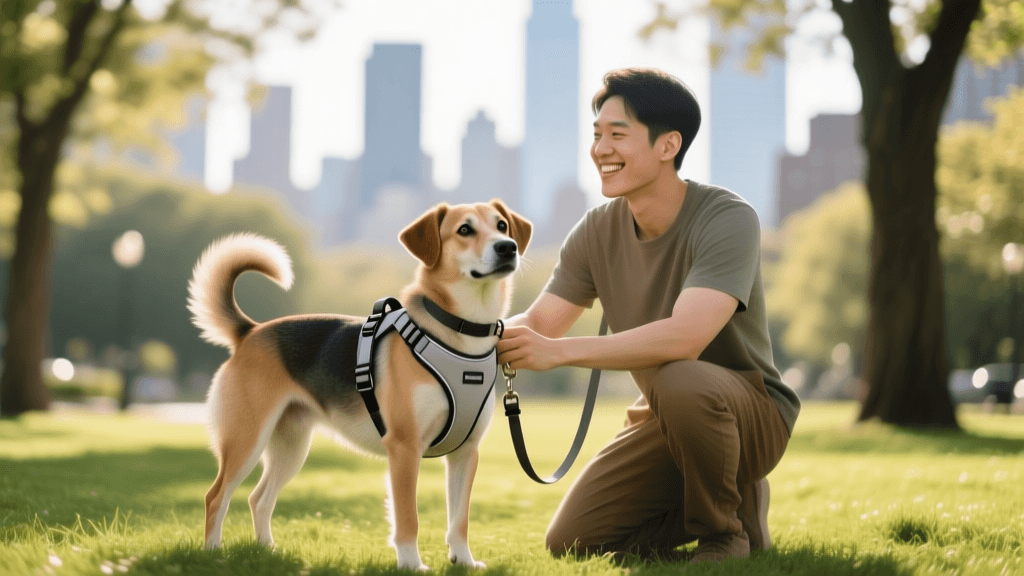
When the leash is attached to the D-ring located on the dog's chest (the sternum), any forward pulling force gently redirects the dog's momentum back toward the handler. If the dog lunges forward, the front clip pivots their shoulders inward, effectively breaking their forward stride without causing pain or choking. This redirection gives you the critical split-second needed to regain your dog's attention, reward them, and reset their walking posture.
2026 Harness Comparison Chart: Top Picks for New Adopters
The pet gear industry has seen massive advancements in materials and ergonomics over the last few years. In 2026, the best harnesses feature ultra-breathable hex-mesh, scratch-resistant outer shells, and magnetic quick-release buckles. Below is a comparison of the top three harness styles recommended for shelter adopters this year.
| Harness Style / Model Type | Best For | Clip Configuration | 2026 Avg Price | Key Features |
|---|---|---|---|---|
| The Dual-Clip Y-Shape (e.g., Ruffwear Front Range) | Medium to large energetic mutts; versatile daily walking | Front Chest & Back | $45 - $55 | Four points of adjustment, padded chest plate, reflective trim |
| The Heavy-Duty Tactical Vest (e.g., Rabbitgoo Tactical) | Strong pullers, barrel-chested breeds, escape artists | Front Chest & Back | $35 - $50 | Grab handle for emergency control, MOLLE system, wide girth straps |
| The Step-In Air-Mesh (e.g., Puppia or Kurgo Tru Fit) | Small breeds, senior rescues, dogs with neck sensitivities | Front & Back (Dual) | $25 - $40 | Crash-tested buckles, lightweight hex-mesh, easy step-in design |
What to Look for in 2026 Harness Materials
When shopping for your new dog's harness, keep an eye out for these modern material standards that have become the benchmark for quality in 2026:
- Hex-Air Mesh Linings: Traditional neoprene can trap heat and cause chafing in the armpits. Modern hex-mesh allows for maximum airflow and dries rapidly after rain or baths.
- Magnetic Fidlock Buckles: Many shelter dogs are fearful of the loud 'click' of traditional plastic snap buckles near their face. Magnetic buckles silently lock into place, reducing first-day anxiety.
- Biothane Compatibility: If you are pairing your harness with a waterproof Biothane leash (highly recommended for easy sanitation during the shelter transition period), ensure the metal D-rings are welded and rust-proof to handle the tension.
Step-by-Step Measuring Guide for the Perfect Fit
A no-pull harness can only work if it fits correctly. A harness that is too loose will chafe the armpits and allow the dog to back out and escape, while one that is too tight will restrict shoulder extension and alter their natural gait. Follow these steps to measure your new adopter:
- Measure the Girth: Using a soft tailor's tape measure, wrap it around the deepest part of your dog's ribcage, just behind their front legs. This is the most critical measurement.
- Measure the Lower Neck: Measure the base of the neck where it meets the shoulders. Do not measure up near the ears where a collar sits.
- The Two-Finger Rule: Once the harness is on, you should be able to slide exactly two fingers flat between the harness straps and your dog's body at any point. If you can fit your whole hand, it is too loose. If you cannot fit two fingers, it is too tight.
- Check Shoulder Mobility: Have your dog sit, stand, and walk. Ensure the chest plate does not rub against the delicate skin of the inner armpit or restrict the forward reach of their front legs.
Desensitizing a Shelter Dog to a Harness
Many shelter dogs have never worn a harness, or worse, have negative associations with gear due to past mishandling. Do not force the harness over their head on the first day. As experts at the Humane Society recommend when bringing a new dog home, giving your dog a decompression period and introducing new stimuli slowly is vital for building trust.
The Desensitization Protocol:
- Day 1 (The Sniff Test): Place the harness on the floor near their bed. Drop high-value treats (like boiled chicken or freeze-dried liver) on and around it. Let them investigate it on their own terms.
- Day 2 (The Target Game): Hold the harness open in your hands. Lure your dog's nose through the head hole using a treat, but do not pull it over their body. Reward heavily. Repeat this 10 times.
- Day 3 (The Brief Wear): Slip the harness over their head, immediately feed a 'jackpot' of treats, and take it off before they have a chance to panic or paw at it.
- Day 4 (Buckling Up): Put the harness on fully and fasten the girth straps. Keep them engaged with a lick-mat or chew toy for 5 minutes while wearing it indoors. Do not attach the leash yet.
The First-Week Walking Protocol
Once your dog is comfortable wearing the harness indoors, it is time to attach the leash. Always use a standard 4-to-6-foot flat leash. Never use a retractable leash with a front-clip harness, as the constant tension from the retractable spring teaches the dog that pulling is required to move forward, completely negating the harness's design.
When you step outside, expect your shelter dog to be overwhelmed. Practice the 'Be a Tree' method. If the dog pulls to the end of the leash and the front-clip redirects them, simply stop walking and stand still like a tree. Do not yank the leash. Wait for the dog to look back at you or take one step toward you to release the tension. The moment the leash goes slack, mark the behavior with a 'Yes!' and reward with a treat at your knee level. Consistency in this first week is paramount. For a deeper dive into the mechanics of loose-leash walking, the American Kennel Club's leash training guide offers excellent foundational exercises that pair perfectly with front-clip gear.
Common Mistakes to Avoid
Even with the best gear, new adopters often make a few common errors that hinder progress:
- Leaving the Harness On 24/7: Harnesses are for walks and training only. Leaving them on indoors can lead to severe matting in long-haired dogs, skin infections, and poses a strangulation hazard if the dog gets caught on furniture or crate wiring.
- Using the Front-Clip for Car Tie-Outs: The front chest D-ring is designed for steering, not for securing a dog in a moving vehicle. If you are driving your new rescue home, use a crash-tested back-clip harness or a dedicated canine seatbelt tether.
- Expecting an Overnight Cure: A no-pull harness is a management tool, not a magic fix. It prevents the dog from practicing the bad habit of pulling while you actively train them to walk politely. It takes an average of 3 to 6 weeks of consistent positive reinforcement for a shelter dog to master loose-leash walking.
Conclusion: Setting the Stage for a Lifetime of Walks
Adopting a shelter dog is a journey of patience, empathy, and consistency. By equipping yourself with a properly fitted, front-clip no-pull harness from day one, you are protecting your dog's physical health and setting a clear, gentle boundary for their behavior. The gear you choose in 2026 will serve as the bridge between a chaotic shelter environment and a harmonious life in your home. Take the time to measure carefully, desensitize slowly, and train positively, and you will soon be enjoying the peaceful, loose-leash walks you both deserve.
tom-renshaw
All our authors care for dogs every day — read more of their work on the authors page.