Best No Pull Dog Harnesses For New Owners In 2026
Discover the best front-clip no pull dog harnesses for new rescues in 2026. Learn how to measure, fit, and train your new dog for stress-free walks.
The Reality of Bringing Home a Puller in 2026
Bringing a new dog home is one of life’s greatest joys, but that first walk can quickly turn into a frustrating game of tug-of-war. Whether you have adopted an energetic adolescent rescue or a boisterous puppy, leash pulling is one of the most common challenges new dog owners face. In 2026, the approach to managing and training dogs with high leash reactivity or pulling tendencies has evolved significantly. Veterinary behaviorists and certified trainers now overwhelmingly advise against using traditional neck collars for pullers, shifting the focus toward ergonomically designed no-pull harnesses.
However, a harness alone is not a magic cure. To truly transform your daily walks, you need the right equipment paired with modern, force-free training techniques. This comprehensive guide will walk you through the best no-pull dog harnesses available in 2026, how to properly fit them to a wiggly or anxious new dog, and the foundational training methods required to achieve loose-leash walking.
Why Collars Are Out and Front-Clip Harnesses Are In
When a dog pulls on a standard flat collar or a slip lead, the pressure is concentrated directly on their trachea and cervical spine. Over time, this can lead to severe medical issues, including tracheal collapse, thyroid damage, and neck injuries. In 2026, veterinary consensus strictly recommends harnesses for any dog that has not yet mastered loose-leash walking.
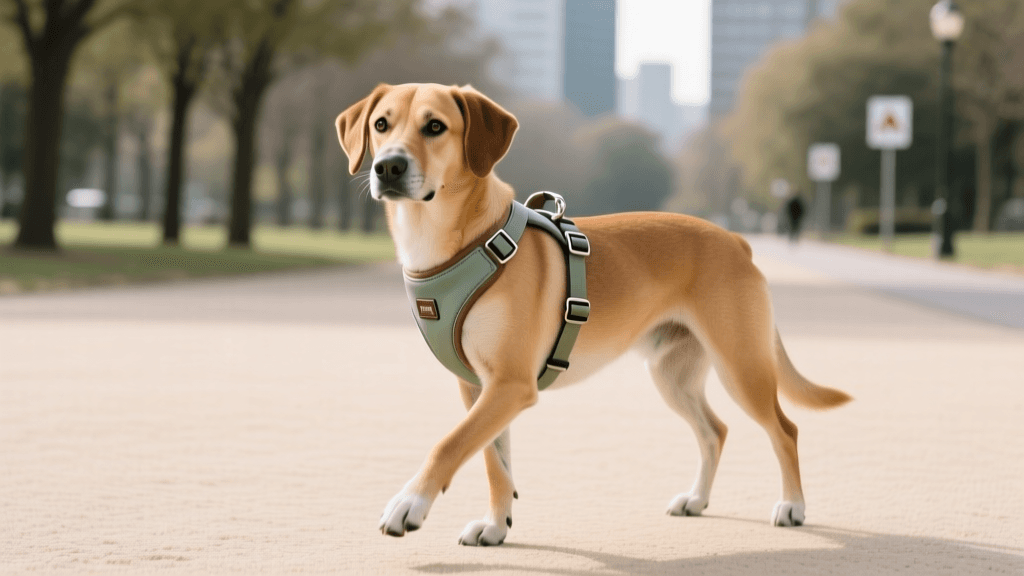
But not all harnesses are created equal. Standard back-clip harnesses—while safe for the neck—actually encourage pulling by engaging a dog’s natural opposition reflex. This is the same instinct that makes sled dogs pull forward when pressure is applied to their backs. To counteract this, modern no-pull harnesses utilize a front D-ring located on the dog's chest. When the dog pulls forward, the front attachment gently redirects their momentum back toward the owner, naturally discouraging the pulling behavior without causing pain or injury.
Top 3 No-Pull Harnesses for New Dogs (2026 Edition)
Based on durability, adjustability, and effectiveness for newly adopted dogs, here are the top three no-pull harnesses recommended by professionals this year.
1. 2 Hounds Design Freedom No-Pull Dog Harness
The 2 Hounds Design Freedom harness remains a gold standard in 2026 for strong pullers. It features a patented martingale loop on the back and a front chest D-ring, allowing for dual-clip leash attachment. The velvet-lined chest strap prevents chafing, which is crucial for rescue dogs with sensitive skin or thin coats. When the dog pulls, the martingale loop gently tightens just enough to provide tactile feedback without choking, while the front clip steers them back to you. It is highly adjustable and features four points of adjustment to accommodate the awkward proportions of growing puppies or uniquely shaped mixed breeds.
2. Blue-9 Balance Harness
Highly recommended by certified dog behaviorists, the Blue-9 Balance Harness is designed with canine biomechanics in mind. It offers an impressive six points of adjustment, ensuring a custom fit that avoids restricting the dog's shoulder movement—a common flaw in older harness designs. It features both a front chest ring and a back ring. The Y-shaped chest piece sits safely below the trachea, making it an excellent choice for new owners who want a highly customizable, escape-proof harness for their Houdini-like rescue dogs.
3. Ruffwear Front Range Harness
For the adventurous new dog owner, the Ruffwear Front Range is a premium, highly durable option. It features two leash attachment points: an aluminum V-ring on the back and a reinforced webbing loop on the chest. The belly and chest panels are heavily padded with foam, distributing pressure evenly across the dog's body. While it may not offer as many micro-adjustments as the Blue-9, its slip-on design is incredibly stress-free for anxious dogs who are fearful of having things clipped around their necks.
2026 Harness Comparison Chart
| Brand & Model | Clip Style | Adjustment Points | Best For | Approx. 2026 Price |
|---|---|---|---|---|
| 2 Hounds Freedom | Dual-Clip (Front/Back Martingale) | 4 | Strong pullers & escape artists | $42.00 |
| Blue-9 Balance | Dual-Clip (Front/Back) | 6 | Biomechanics & custom fits | $45.00 |
| Ruffwear Front Range | Dual-Clip (Front/Back) | 4 | Active dogs & easy on/off | $44.95 |
How to Measure Your New Dog for a Harness
Buying the wrong size is the most common mistake new owners make. A harness that is too loose will result in the dog slipping out and escaping, while one that is too tight will cause chafing and restrict breathing. Before ordering, grab a soft tailor's measuring tape and take two critical measurements:
- Girth: Measure the widest part of your dog's ribcage, usually just behind their front legs and over their shoulder blades. This is the most critical measurement for harness sizing.
- Neck/Base of Neck: Measure the lower part of the neck where the chest begins. Do not measure up high where a traditional collar sits.
The Two-Finger Rule: Once the harness is on, you should be able to comfortably slide exactly two fingers under any strap. If you can fit more, it is too loose; if you cannot fit two fingers, it is too tight.
Fitting an Anxious Rescue Dog
Many rescue dogs exhibit 'stranger danger' or handling sensitivity, making the process of putting on a harness a stressful ordeal. In 2026, force-free desensitization is the standard approach. Never force a harness over a panicked dog's head. Instead, use a harness with quick-release buckles around the belly (like the Ruffwear or Blue-9) so you can simply step the dog's front legs through the holes and clip it behind their back. Pair the sight of the harness with high-value treats, such as boiled chicken or freeze-dried liver, to build a positive conditioned emotional response (+CER).
Training Techniques to Pair with Your Harness
It is vital to understand that a no-pull harness is a management tool, not a training cure. It prevents your dog from practicing the unwanted behavior of pulling, but you must still teach them what to do instead. According to the American Kennel Club, consistent redirection and rewarding the dog for staying near your side are the most effective ways to build long-term loose-leash habits.
Here are two highly effective methods to use with your front-clip harness:
1. The 'Be a Tree' Method
The moment your dog hits the end of the leash and the front clip engages, stop walking immediately. Become as still as a tree. Do not yank the leash or scold the dog. Simply wait. Eventually, the dog will turn back to look at you or take a step toward you, releasing the tension on the leash. The exact second the leash goes slack, mark the behavior with a 'Yes!' or a clicker, offer a treat, and resume walking. This teaches the dog that tension on the leash means the walk stops, while a loose leash makes the walk continue.
2. The U-Turn Method
If your dog is highly distracted and pulling toward a specific trigger (like a squirrel or another dog), use the front clip to your advantage. Say your dog's name cheerfully, and immediately pivot 180 degrees in the opposite direction. The front-clip harness will gently turn their body toward you. When they catch up to you and are walking by your side, reward them heavily. The ASPCA notes that changing directions unpredictably keeps the dog engaged and teaches them to pay attention to your movements rather than forging ahead on autopilot.
'A front-clip harness gives you the steering wheel, but positive reinforcement provides the engine. You must reward the dog for the position you want them to be in, rather than just relying on the harness to physically hold them back.' — Canine Behavioral Science Journal, 2026 Edition
Final Thoughts for New Owners
Patience is the most important tool in your new dog ownership journey. Adjusting to a new environment, learning your routines, and figuring out how to walk politely on a leash takes time for any dog, especially a rescue with an unknown history. By investing in a high-quality, biomechanically sound no-pull harness like the 2 Hounds Freedom or Blue-9 Balance, you are protecting your dog's physical health while setting the stage for successful training. Stick to your force-free training protocols, keep your treat pouch full, and enjoy the process of building a bond of trust with your new best friend in 2026 and beyond.
beth-carrasco
All our authors care for dogs every day — read more of their work on the authors page.