The Psychology of Pulling: No-Pull Dog Harness Guide 2026
Discover the psychology behind why dogs pull and how front-clip no-pull dog harnesses alter canine biomechanics to stop leash reactivity in 2026.
The Hidden Psychology Behind Leash Pulling
For decades, dog owners and traditional trainers misinterpreted leash pulling as a sign of canine dominance or stubbornness. However, modern veterinary behaviorists in 2026 understand that pulling is rarely a power play; it is a complex interplay of biomechanics, environmental stimulation, and instinctual reflexes. When your dog lunges toward a squirrel or drags you down the sidewalk, they are not trying to assert themselves as the 'pack leader.' Instead, they are responding to deeply ingrained physiological triggers. Understanding these triggers is the first step toward utilizing a no-pull dog harness not just as a physical restraint, but as a psychological communication tool.
The Opposition Reflex: Why Dogs Push Against Pressure
To understand why a no-pull harness works, we must first examine the 'opposition reflex,' scientifically known as thigmotaxis. This is an instinctual survival mechanism where an animal automatically pushes against physical pressure applied to its body. In the wild, if a predator grabs a prey animal by the neck or chest, the prey's instinct is to pull away with all its might to survive.
When you attach a leash to a traditional back-clip harness or a neck collar and apply backward pressure to stop your dog, you are inadvertently triggering this exact reflex. The pressure on the chest or neck signals the dog's nervous system to lean forward and push harder. This is precisely why sled dogs wear back-clip harnesses; the equipment is specifically designed to maximize the opposition reflex, encouraging the dog to pull heavy loads. By switching to a front-clip no-pull harness, you completely bypass this reflex, changing the physical conversation between you and your dog.
How Front-Clip No-Pull Harnesses Alter Canine Biomechanics
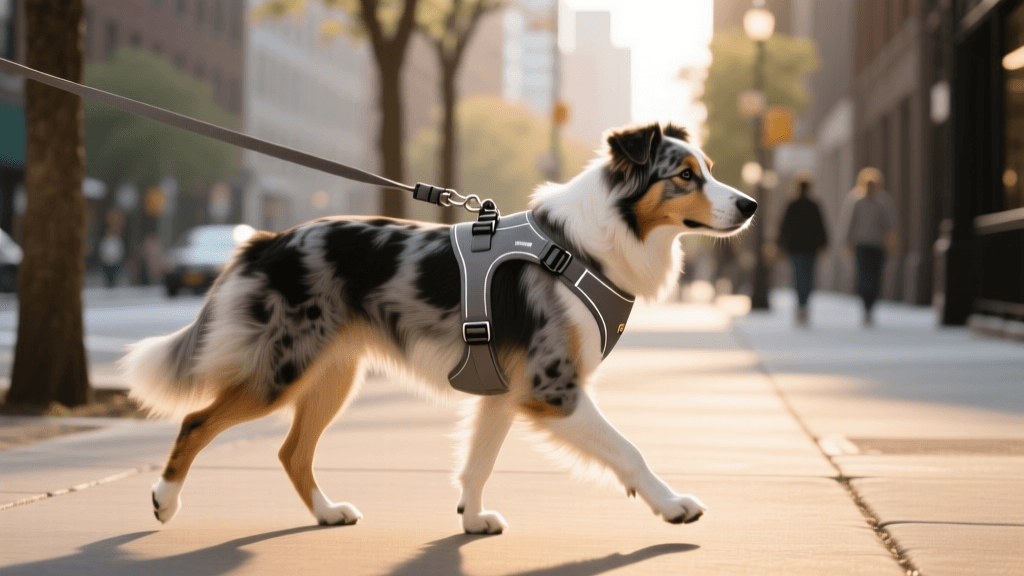
A true no-pull dog harness features a D-ring located on the dog's sternum (the front of the chest). The psychology of this design is rooted in physics and canine center of gravity. A dog's center of gravity is located just behind their front legs. When tension is applied to a front-clip harness, the dog's forward momentum is gently redirected sideways, turning them back toward the handler.
From a psychological standpoint, this redirection breaks the dog's hyper-fixation on the environmental trigger (like another dog or a scent). Instead of meeting resistance—which would only fuel their frustration and opposition reflex—the dog experiences a gentle, painless pivot. According to the American Kennel Club, front-clip harnesses are highly recommended for strong pullers because they safely manage momentum without causing tracheal damage or inducing panic.
2026 Design Standards: The Y-Shape Revolution
As our understanding of canine anatomy has evolved, so has harness engineering. In 2026, veterinary professionals strongly advocate against T-shaped or horizontal-strap harnesses that cross the dog's chest horizontally. These outdated designs restrict the forward extension of the shoulder joints, altering the dog's natural gait and potentially leading to long-term orthopedic issues.
When selecting a no-pull dog harness today, you must look for a Y-shaped chest plate. The Y-shape rests safely on the sternum and wraps around the ribcage, leaving the shoulder blades (scapulae) completely free to rotate. This ensures that while you are managing the pulling behavior psychologically, you are not compromising the dog's physical health.
Pro Tip for 2026: Look for dual-clip harnesses that feature both a front and a back D-ring. This allows you to use the front clip for active training and high-distraction environments, and seamlessly transition to the back clip for relaxed sniffaris once your dog's leash manners have improved.
Comparing Leash Management Tools
| Equipment Type | Psychological Impact | Biomechanical Effect | Best Use Case |
|---|---|---|---|
| Back-Clip Harness | Encourages pulling via opposition reflex | Even weight distribution, full shoulder mobility | Car rides, hiking, relaxed walks with trained dogs |
| Front-Clip No-Pull Harness | Interrupts fixation, redirects attention to handler | Alters center of gravity, requires Y-shape for shoulder safety | Training, urban walks, strong pullers, leash reactivity |
| Head Halter | High control, but can cause anxiety or pawing at face | Controls the head to control the body, risk of neck whiplash if lunging | Extreme pulling, temporary management under professional guidance |
| Flat Collar | Minimal communication, high frustration if pulling | Concentrates pressure on trachea and cervical spine | Holding ID tags only; never for walking strong pullers |
Step-by-Step: Desensitizing Your Dog to a No-Pull Harness
Introducing new equipment can trigger anxiety in sensitive dogs. A no-pull harness should never be forced onto a fearful dog, as this creates a negative psychological association with the walking routine. Follow this 2026 force-free protocol to introduce the harness:
- The 'Nose Target' Introduction: Hold the harness open and place a high-value treat near the neck hole. Allow your dog to voluntarily push their nose and head through the opening to get the reward. Do not clip it yet.
- Short Duration Wear: Once the dog is comfortable putting their head through, slip it over their shoulders, clip it, and immediately engage in a fun game of tug or scatter feeding on the floor. Remove the harness after 3 minutes.
- Positive Association Building: Over the next week, only bring out the harness right before something highly rewarding happens, such as mealtime or a trip to the park. As noted by the ASPCA, keeping early walking experiences positive and low-pressure is vital for long-term behavioral health.
- The First Walk: Attach your leash to the front D-ring. Keep the leash slack. The moment the leash goes tight, stop walking like a tree. Wait for your dog to look back at you or take a step backward to create slack, then mark with a 'yes' and reward.
- Fading the Lure: Once your dog understands that a loose leash equals forward movement, begin to space out your treats. Reward only when they successfully navigate a high-distraction trigger, like a passing jogger, without breaking their heel or making eye contact with you.
Leash Reactivity vs. Leash Frustration
It is crucial for owners to distinguish between leash reactivity and leash frustration, as a no-pull harness assists with both but requires different psychological approaches.
Leash Frustration occurs when a dog is highly social and wants to greet another dog but is physically restrained by the leash. The barrier of the leash causes a buildup of adrenaline, resulting in barking and lunging. The front-clip no-pull harness helps here by preventing the dog from rehearsing the lunging behavior, allowing you to redirect their attention back to you for a treat before they reach their threshold.
Leash Reactivity, on the other hand, is rooted in fear or anxiety. The dog lunges to increase the distance between themselves and the perceived threat. While a front-clip harness gives you the physical leverage to safely guide a reactive dog away from a trigger without choking them, the underlying psychological work requires counter-conditioning and desensitization with a certified behaviorist. The harness acts as a safety net, allowing you to perform emergency U-turns smoothly without putting dangerous pressure on the dog's cervical spine.
Final Thoughts on Canine Communication
A no-pull dog harness is not a magic wand that instantly cures pulling; it is a sophisticated communication device. By understanding the opposition reflex and respecting your dog's biomechanics with a Y-shaped, front-clip design, you remove the physical conflict from your walks. In 2026, the most successful dog owners are those who view equipment not as a way to control their pets, but as a way to clearly and humanely guide them through a complex world.
robin-maitland
All our authors care for dogs every day — read more of their work on the authors page.