Top No-Pull Dog Harnesses For Joint Health In 2026
Discover how front-clip no-pull dog harnesses protect canine joint health in 2026. Compare top biomechanical designs for large breeds to prevent strain.
The Biomechanics of Pulling: Why Harness Choice Matters in 2026
As we navigate through 2026, the intersection of canine biomechanics and everyday pet gear has never been more thoroughly researched. Veterinary orthopedists and canine physical therapists now emphasize that the equipment you use for daily walks directly impacts your dog's long-term joint health, spinal alignment, and overall musculoskeletal wellbeing. For dogs that pull on the leash, the wrong harness can exacerbate underlying conditions like hip dysplasia, shoulder instability, and cervical spine strain.
According to recent veterinary guidelines published this year, chronic leash pulling generates immense kinetic force. When a 70-pound dog lunges forward, the sudden deceleration caused by a traditional collar or poorly fitted back-clip harness can transmit hundreds of pounds of pressure directly into the cervical vertebrae and the glenohumeral (shoulder) joint. This is why transitioning to a specialized no-pull dog harness is no longer just a training preference; it is a critical preventive health measure.
Front-Clip vs. Back-Clip: Orthopedic Impacts on Canine Joints
The Danger of Back-Clip Harnesses for Pullers
Back-clip harnesses are excellent for brachycephalic breeds or dogs with tracheal collapse, as they remove pressure from the neck. However, for a dog that actively pulls, a back-clip design triggers the 'opposition reflex.' This is the same biomechanical instinct that allows sled dogs to lean into a harness and pull heavy loads. When the point of resistance is on the dog's back, their natural instinct is to lean forward and push harder, placing continuous, grinding stress on the shoulder joints and the thoracolumbar spine.
How Front-Clip Designs Redistribute Force
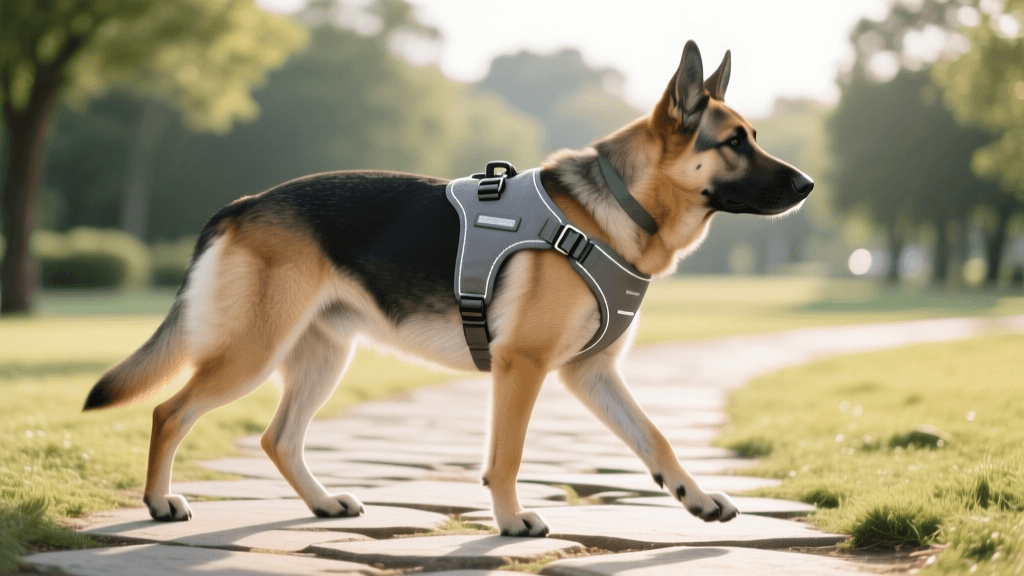
Front-clip no-pull harnesses feature a leash attachment ring located on the sternum (chest). When a dog pulls forward and the leash becomes taut, the front-clip gently redirects the dog's center of mass back toward the handler. Instead of allowing the dog to drive forward with their hindquarters, the front-clip turns the dog slightly sideways, neutralizing their forward momentum without applying dangerous torque to the joints. This biomechanical redirection is widely recommended by behaviorists and orthopedic specialists alike to protect the structural integrity of large and giant breeds.
Top No-Pull Harnesses for Joint Health (2026 Veterinary Picks)
Based on the latest 2026 material advancements, ergonomic testing, and veterinary feedback, here are the top-rated no-pull harnesses designed to prioritize joint protection.
1. Kurgo Tru-Fit Smart Harness (2026 Orthopedic Edition)
The 2026 Orthopedic Edition of the Kurgo Tru-Fit has set a new industry standard for joint-conscious pet owners. Kurgo has integrated high-density, temperature-responsive memory foam into the chest and belly panels. This ensures that when the harness engages during a pull, the force is distributed over a wider surface area, preventing localized pressure points on the sternum and ribs. The V-ring front clip is positioned optimally low on the chest to encourage natural redirection without chafing the axillary (armpit) region, which is crucial for protecting the brachial plexus nerves.
2. Ruffwear Front Range (2026 Update)
Ruffwear's 2026 update to the beloved Front Range harness introduces a bio-based recycled mesh that offers superior breathability while maintaining structural rigidity. The dual-clip system (front and back) allows handlers to transition seamlessly between training and casual walking. The front chest ring is reinforced with anodized aluminum, ensuring it will not warp under the sudden force of a large breed's lunge. The foam-padded straps are specifically contoured to avoid impinging on the dog's natural shoulder extension, making it a top choice for active dogs recovering from orthopedic surgery.
3. Rabbitgoo No-Pull Pro (2026 Model)
For budget-conscious owners who refuse to compromise on joint health, the 2026 Rabbitgoo No-Pull Pro offers exceptional value. It features a four-point adjustable strap system that allows for a highly customized fit, preventing the harness from shifting sideways during sudden movements. The 2026 model includes upgraded reflective bio-thane edging and a wider chest plate lined with veterinary-grade neoprene to cushion the sternum during high-tension moments.
Comparison Chart: 2026 No-Pull Harnesses for Large Breeds
| Brand & Model | Primary Clip Type | Padding Material | Best For | 2026 Est. Price |
|---|---|---|---|---|
| Kurgo Tru-Fit (2026) | Front V-Ring | Memory Foam | Dogs with chest sensitivity | $45.99 |
| Ruffwear Front Range | Dual (Front/Back) | Contoured EVA Foam | Active, athletic breeds | $44.95 |
| Rabbitgoo No-Pull Pro | Front O-Ring | Neoprene Lining | Broad-chested breeds | $28.99 |
| 2 Hounds Freedom | Front & Back Martingale | Velvet-lined straps | Escape artists & pullers | $39.95 |
How to Fit a No-Pull Harness to Prevent Chafing and Shoulder Strain
Even the most advanced 2026 orthopedic harness will cause joint and tissue damage if fitted incorrectly. A poorly fitted harness can restrict the scapula's natural rotation, leading to altered gait patterns and premature joint wear. Follow these steps to ensure a biomechanically sound fit:
- The Two-Finger Rule: You should be able to slide exactly two fingers snugly under any strap. If you can fit more, the harness is too loose and will shift; if you can fit fewer, it will restrict blood flow and muscle expansion.
- Check the Axillary Region: Ensure the straps behind the front legs sit high enough in the armpit to avoid rubbing, but low enough that they do not press into the delicate lymph nodes and nerves of the shoulder joint.
- Observe the Gait: Watch your dog trot away from you. The shoulder blades (scapulae) should move freely and symmetrically. If the harness restricts the forward reach of the front paws, the chest plate is too wide or the neck strap is too tight.
Training Tips to Maximize Joint Protection
A no-pull harness is a tool, not a cure. To truly protect your dog's joints, you must pair the equipment with positive reinforcement training. The American Kennel Club recommends the 'be a tree' method: the moment your dog pulls and the leash goes taut, stop walking completely. Wait for your dog to look back at you or release the tension on the leash, then mark the behavior with a 'yes' and reward them before continuing the walk.
By consistently rewarding a loose leash, you reduce the frequency of high-impact lunging, thereby minimizing the repetitive micro-traumas to your dog's hips and shoulders. Over time, the front-clip harness acts as a gentle physical cue, while your training builds the neurological habit of walking politely by your side.
When to Consult a Veterinary Orthopedist
If your dog continues to pull aggressively despite proper harness fitting and training, or if you notice signs of joint discomfort such as limping, reluctance to jump, or a 'bunny-hopping' gait in the hind legs, it is time to consult a professional. Conditions like hip dysplasia are highly prevalent in large breeds and require early intervention. According to experts at the Cornell University College of Veterinary Medicine, early diagnosis and management of joint laxity can significantly alter the progression of osteoarthritis.
Furthermore, resources from VCA Animal Hospitals highlight that managing a dog's environment—including the type of walking equipment used and the surfaces they walk on—plays a vital role in conservative orthopedic management. Always discuss your dog's specific walking gear with your veterinarian during their annual wellness exam to ensure it aligns with their unique musculoskeletal needs in 2026 and beyond.
aaron-whyte
All our authors care for dogs every day — read more of their work on the authors page.