Force-Free Recall Training 2026: BioThane Long Line Guide
Master force-free recall training in 2026 using a BioThane long line. Learn positive reinforcement steps to build a reliable, joyful emergency recall.
The Shift to Force-Free Recall in 2026
As we navigate through 2026, the dog training community and veterinary professionals continue to overwhelmingly reject aversive tools like shock collars and prong collars in favor of humane, science-backed methods. Teaching a reliable recall—often considered the most critical safety cue a dog can learn—is no exception. A force-free recall relies on classical and operant conditioning to teach your dog that returning to you is the most rewarding experience in their environment. Instead of using fear or pain to enforce compliance, positive reinforcement (R+) builds a joyful, enthusiastic response that holds up even in highly distracting situations.
According to the American Veterinary Society of Animal Behavior (AVSAB), reward-based training is the most effective and humane approach for dogs, significantly reducing the risk of fear-based aggression and anxiety. When we pair this modern behavioral science with the right physical management tools, we can safely grant our dogs the freedom they crave while maintaining complete control over their safety.
Why the BioThane Long Line is the Ultimate R+ Tool
To train a reliable recall without an electronic collar, you must prevent the dog from rehearsing the behavior of ignoring you. If a dog learns they can blow past your recall cue and chase a squirrel, that self-rewarding behavior becomes deeply ingrained. A long line acts as a physical boundary that prevents the dog from successfully ignoring the cue, allowing you to gently guide them back and reward them heavily. In 2026, the undisputed gold standard for long lines is BioThane, a coated webbing material that has revolutionized force-free management.
| Material | Durability & Weather Resistance | Grip & Handling (Handler Safety) | Maintenance & Cleaning | Overall R+ Suitability |
|---|---|---|---|---|
| BioThane (Coated Webbing) | Waterproof, rot-proof, UV resistant | Smooth, no rope burn, easy to loop | Wipe clean with a damp cloth | Excellent (Top Choice for 2026) |
| Cotton Webbing | Absorbs water, heavy when wet, rots | Can cause severe rope burn if pulled | Requires machine washing, slow dry | Poor |
| Nylon Paracord | Durable but tangles easily | Thin profile causes rope burn | Hand wash, holds dirt and oils | Fair |
| Leather Lunge Line | Degrades if wet, requires oiling | Good grip but extremely heavy | Requires leather conditioner | Poor (Too heavy for small/med dogs) |
BioThane provides the perfect balance of safety for the handler and comfort for the dog. It does not snag on brush, it does not absorb mud or swamp water, and it glides smoothly through your hands, preventing the friction burns commonly associated with nylon or cotton lines when a dog suddenly bolts.
Step-by-Step Positive Recall Shaping Protocol
Building a bombproof recall requires breaking the behavior down into manageable, highly rewarded steps. Never rush this process. The goal is to make the recall cue a predictor of incredible things, rather than the end of fun.
Phase 1: The Name Game and Engagement (Weeks 1-2)
Before adding distance, your dog must understand that orienting toward you is highly profitable. Start in a low-distraction indoor environment or a fenced yard. Attach a standard 6-foot leash or a 10-foot BioThane line. Say your dog's name or your chosen recall cue (e.g., 'Come' or a specific whistle trill) exactly once. The moment they turn their head toward you, mark the behavior with a clicker or a verbal 'Yes!' and deliver a high-value treat directly to their mouth. Repeat this 20 to 30 times per session. You are classically conditioning the cue to mean 'treats are coming.'
Phase 2: Adding Distance and the 'Catch Me' Game (Weeks 3-5)
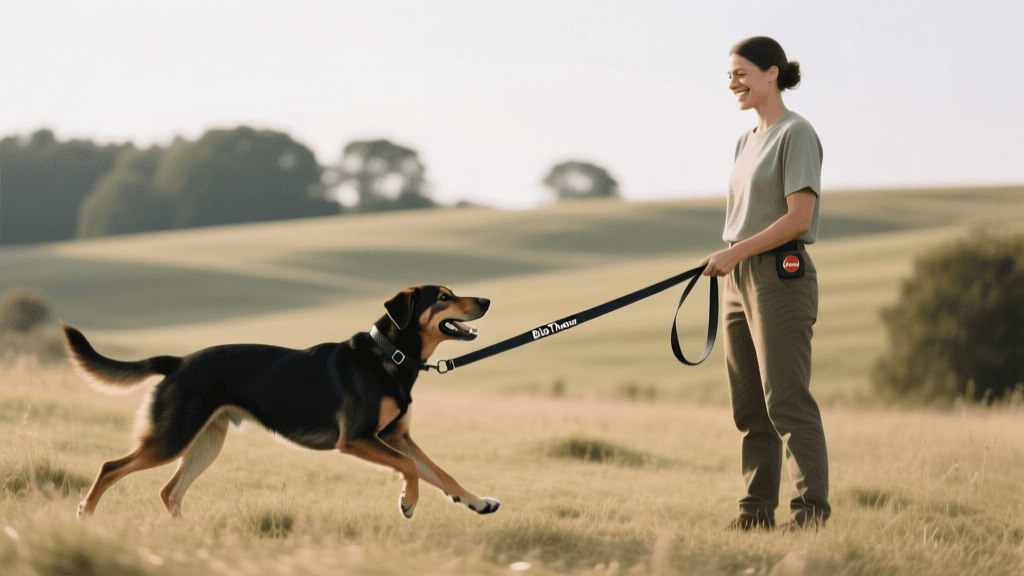
Move to a secure outdoor space and upgrade to a 15-foot or 20-foot BioThane long line. Allow the line to drag loosely behind you, stepping on it occasionally to prevent the dog from reaching the end at a full sprint. Give your recall cue when the dog is mildly distracted (e.g., sniffing a bush). If they turn and move toward you, immediately turn and jog away from them, encouraging them to 'catch' you. This taps into a dog's natural prey drive and chase instinct, making the recall feel like a game rather than a chore. When they catch up to you, reward with a 'jackpot' of 3 to 5 small treats fed one by one to prolong the reward event.
Phase 3: Proofing with High-Value Distractions (Weeks 6+)
Once your dog is reliably returning from 20 feet away, upgrade to a 30-foot BioThane line. Begin introducing controlled distractions. Have a friend stand at a distance holding a mildly interesting toy. Give your recall cue. If the dog returns, reward with something of higher value than the toy (e.g., real meat or cheese). If the dog ignores the cue and pulls toward the toy, do not repeat the cue. Instead, apply gentle, steady pressure on the BioThane line to guide them back toward you without jerking. When they yield and move toward you, mark and reward. This teaches the dog that ignoring the cue does not result in access to the distraction, but returning to you always does.
Selecting the Right High-Value Reinforcers
In 2026, the pet nutrition market offers an incredible array of training treats that are both highly motivating and nutritionally sound. For recall training, dry kibble will rarely suffice when competing against environmental distractions like wildlife or other dogs. You need what trainers call 'currency.' Excellent options include freeze-dried raw minnows, Ziwi Peak air-dried beef, or small cubes of low-sodium deli turkey. Keep these treats in a dedicated training pouch that your dog only sees during focused sessions. The unpredictability and high value of the reward will keep your dog engaged and eager to return.
Troubleshooting Common Recall Failures
Even with the best force-free methods, dogs will occasionally test boundaries. The Humane Society of the United States emphasizes that consistency and patience are key when a dog struggles with a cue. Here is how to troubleshoot common issues without resorting to punishment:
- The Dog Ignores the Cue: Never repeat the cue ('Come! Come! Come!'). This teaches the dog that the word is merely background noise. Say it once. If they do not respond, use a 'kissy' noise or clap your hands to get their attention, then reward when they look at you.
- The Dog Comes but Stops Just Out of Reach: This often happens if the dog has a history of being grabbed by the collar and immediately leashed to leave the park. To fix this, practice 'collar grabs' where you gently touch the collar, feed a treat, and then release the dog back to play. This decouples the recall from the end of freedom.
- The Dog is Too Distracted to Eat: If your dog refuses high-value treats, you are too close to the distraction, and their nervous system is over-aroused. Increase the distance from the trigger using your BioThane line until your dog can comfortably accept food, then gradually decrease the distance over multiple sessions.
Furthermore, the ASPCA's official dog training guidelines remind owners to never call a dog to you for something they perceive as negative, such as a bath, nail trim, or being put into a crate. If you must do these things, go to the dog and gently guide them, preserving the sanctity and joy of your recall cue.
Conclusion
Training a reliable, force-free recall is one of the greatest gifts you can give your dog. It grants them the freedom to explore the world safely and strengthens the bond of trust between you. By utilizing a high-quality BioThane long line, selecting irresistible reinforcers, and adhering to the proven principles of positive reinforcement, you can build a recall that is not just compliant, but genuinely joyful. As we continue to advance our understanding of canine cognition in 2026, leaving aversive methods in the past and embracing compassionate, science-based training ensures our dogs thrive both physically and emotionally.
beth-carrasco
All our authors care for dogs every day — read more of their work on the authors page.