2026 Canine OA Treatment: Training for Mobility Aids
Learn how to train your dog to accept osteoarthritis treatments, mobility aids, and low-impact therapy exercises for better joint health in 2026.
The 2026 Landscape of Canine Osteoarthritis Treatment
Osteoarthritis (OA) is a progressive, degenerative joint disease that affects a vast majority of senior dogs and many large breeds well before their senior years. As of 2026, the veterinary consensus has firmly shifted away from relying solely on daily NSAIDs. Today, the gold standard for canine OA treatment is a multimodal approach combining anti-NGF monoclonal antibodies (like monthly Librela injections), regenerative therapies, targeted physical rehabilitation, and environmental modifications. However, a critical and often overlooked component of this multimodal strategy is behavioral training. Dogs experiencing chronic pain can develop handling sensitivities, fear of veterinary equipment, and reluctance to use necessary mobility aids. According to the U.S. Food and Drug Administration, managing canine OA effectively requires comprehensive care that addresses both the physical pain and the behavioral stress associated with chronic treatment routines.
At Paws-Tales, we recognize that training is not just for puppies learning to sit; it is a vital therapeutic tool for aging dogs. By utilizing desensitization, counter-conditioning, and low-impact trick training, you can drastically improve your dog's compliance with OA treatments and enhance their overall quality of life. Below is a comprehensive guide to training your dog to accept OA treatments, mobility aids, and physical therapy exercises in 2026.
Desensitization to Veterinary OA Treatments
Modern OA treatments often require frequent veterinary visits or at-home care that can be stressful for a dog in pain. Training your dog to willingly participate in these treatments reduces their cortisol levels, which in turn helps prevent pain flare-ups.
1. The 'Chin Rest' for Monthly Injections
Monoclonal antibody injections, such as bedinvetmab (Librela), have revolutionized OA pain management in 2026. Administered once a month at the vet clinic (typically costing between $120 and $180 per dose depending on the dog's weight), these injections require the dog to remain still while the scruff or loose skin over the shoulders is pinched. You can train a 'Chin Rest' behavior at home to make this seamless.
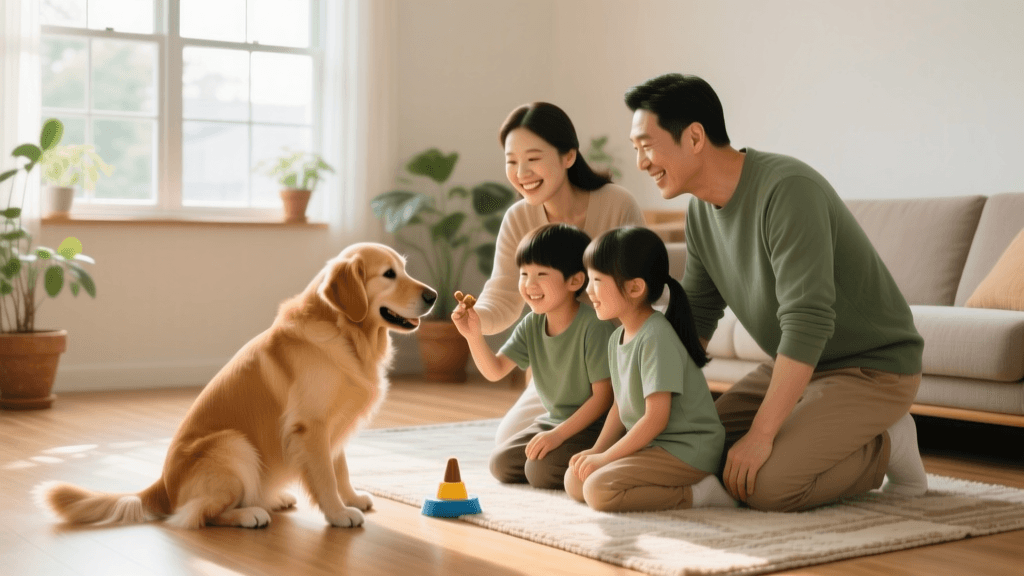
- Step 1: Hold a small target (like a sticky note or a specialized target stick) in your hand. Reward your dog with a high-value treat (like freeze-dried liver) every time their nose or chin touches it.
- Step 2: Move the target to rest gently on your knee or a low stool. Cue 'Rest' and reward sustained contact for 3 to 5 seconds.
- Step 3: Introduce gentle handling. While the dog maintains the chin rest, lightly touch their shoulder and back, rewarding heavily. This mimics the vet's preparation for a subcutaneous injection.
- Step 4: Practice with a blunt, capped syringe or a pen, gently pressing against the shoulder skin while the chin rest is maintained. This builds a positive conditioned emotional response (+CER) to the sensation of an injection.
2. Mat Settlement for Laser and PEMF Therapy
Class IV Laser Therapy and Pulsed Electromagnetic Field (PEMF) loops are staple 2026 therapies for reducing joint inflammation. These sessions require the dog to lie still on a mat for 10 to 20 minutes while the equipment hums and emits light. Train a 'Place' or 'Mat Settle' command using a specific orthopedic mat. Start in a quiet room, rewarding calm, down-stay behavior. Gradually introduce the sound of a white noise machine or a vibrating massager nearby to simulate the sensory experience of veterinary therapy equipment, ensuring your dog remains relaxed before ever stepping foot in the clinic.
Training for Mobility Aid Acceptance
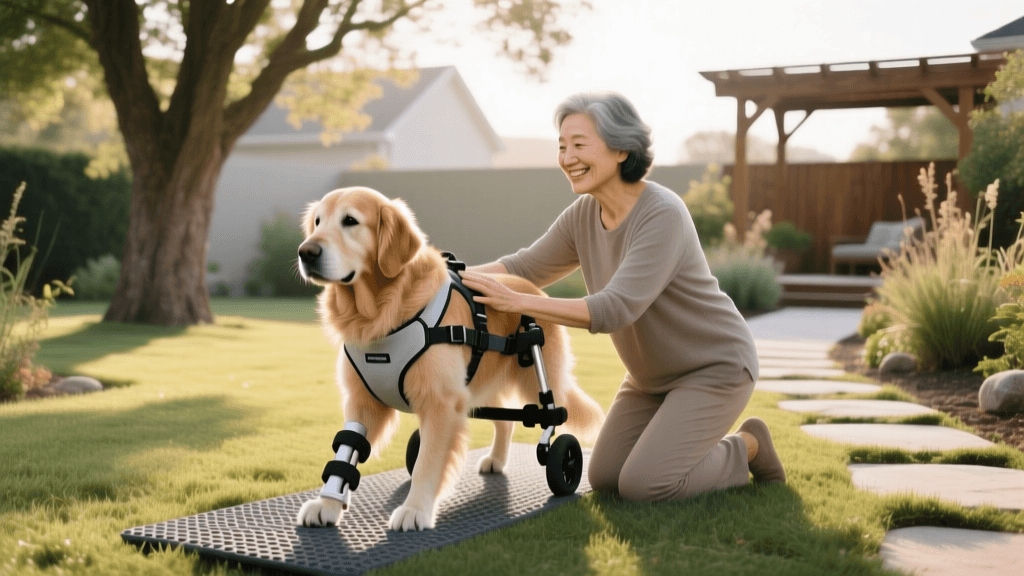
As OA progresses, environmental modifications become mandatory. However, dogs do not intuitively understand how to use ramps or wear supportive harnesses. Forcing a dog onto a ramp or into a wheelchair can cause panic, exacerbating joint stress and creating lasting behavioral aversions. The Washington State University College of Veterinary Medicine emphasizes that gradual, positive introduction to mobility aids is crucial for long-term compliance and safety.
1. Ramp and Stair Targeting
Products like the PetSafe Solvit UltraLite Ramp are excellent for protecting the spine and hips when entering vehicles. To train ramp acceptance:
- Flat Introduction: Lay the ramp completely flat on the grass or carpet. Use a target stick or a treat lure to encourage your dog to walk across it. Reward all four paws on the surface.
- Slight Incline: Elevate the ramp just a few inches using a sturdy box or the lowest step of a staircase. Lure the dog up and down, rewarding heavily at the top and bottom.
- Traction Confidence: Many dogs slip on plastic ramps, which terrifies them. Apply a strip of high-traction grip tape or use a ramp with a built-in high-friction surface. Reward slow, deliberate steps rather than rushing.
- Vehicle Loading: Once the dog is confident on a low incline, attach the ramp to your vehicle. Use a sturdy support harness with a dorsal handle (like the Help 'Em Up Harness) to provide gentle upward guidance and prevent falls during the learning phase.
2. Support Harness Conditioning
Full-body support harnesses are vital for dogs with severe hip dysplasia or posterior weakness. Because these harnesses require strapping around the belly and chest, they can trigger handling sensitivity. Spend two weeks desensitizing your dog to the harness. Leave it near their bed, feed meals on top of it, and practice touching the buckles and velcro straps without fastening them. Only fasten the harness for 10-second intervals indoors before attempting to use it for outdoor walks or stair assistance.
Low-Impact Trick Training and Mental Enrichment
Dogs with OA still require mental stimulation. In fact, cognitive engagement is a proven way to boost endorphins, which act as natural painkillers. However, traditional obedience and trick training often involve repetitive, high-impact movements like sitting, jumping, or spinning, which are contraindicated for arthritic joints. According to experts in canine rehabilitation and physical therapy, adapting training to focus on isometric exercises and scent work is essential for aging dogs.
1. Scent Work (Nosework)
Scent work is the ultimate low-impact enrichment. It requires zero jumping and allows the dog to work at their own pace. Hide birch or anise-scented cotton swabs in low, easily accessible locations (under a rug corner, behind a low stool leg). This engages the dog's olfactory cortex, providing deep mental fatigue without placing mechanical load on the elbows or stifles.
2. Isometric Pressure Training
Isometric exercises involve muscle contraction without joint movement, making them perfect for maintaining muscle mass around arthritic joints without causing pain.
- Hand Targeting for Weight Shifting: Teach your dog to press their nose firmly into your palm. By moving your hand slightly to the left or right, you can encourage the dog to shift their weight from one front limb to the other, engaging the shoulder stabilizers without taking a step.
- Paw Targeting on a Disc: Have the dog place one front paw on a low, non-slip balance disc. Reward them for holding the position. This builds core and shoulder stability while the dog remains mostly stationary.
OA-Adapted Training Modifications Chart
When adjusting your training curriculum for a dog with osteoarthritis, it is vital to swap high-impact tricks for joint-safe alternatives. Use the table below as a quick reference guide for your 2026 training sessions.
| Traditional Trick / Command | OA-Safe Alternative | Therapeutic Benefit |
|---|---|---|
| Sit Pretty / Beg | Chin Rest on a Stool | Protects the lumbar spine and hip flexors from compressive forces. |
| Roll Over | Side Settle / Lateral Down | Avoids the spinal torsion and hip splay required to roll over. |
| Jump through a Hoop | Target Nose to Hoop Edge | Maintains targeting focus without the concussive landing impact. |
| Weave Poles | Slow-Motion Scent Tracking | Eliminates sharp lateral spinal bending while providing mental fatigue. |
| Fetch (Tennis Balls) | Flirt Pole (Ground Level) | Prevents sudden stops and skidding; allows controlled, straight-line movement. |
Conclusion: Patience and Observation in 2026
Training a dog with osteoarthritis requires a profound shift in perspective. Success is no longer measured by the speed of compliance or the flashiness of a trick, but by the dog's comfort, willingness, and pain-free movement. Always observe your dog's body language for subtle signs of pain, such as lip licking, yawning, whale eye, or a sudden reluctance to take treats. If a training session causes hesitation, lower your criteria, increase your rate of reinforcement, and consult with a certified canine rehabilitation therapist. By integrating these specialized training protocols with your veterinary OA treatment plan, you can ensure your senior companion remains confident, comfortable, and engaged in their golden years.
anouk-beaumont
All our authors care for dogs every day — read more of their work on the authors page.