Force-Free Puppy Bite Inhibition Training Guide 2026
Discover force-free puppy bite inhibition techniques for 2026. Learn positive redirection using KONG toys, snuffle mats, and reward-based timing.
The Evolution of Puppy Training in 2026
Welcome to the modern era of dog training. As of 2026, the veterinary and behavioral communities are more unified than ever in their condemnation of aversive, dominance-based training methods. When it comes to puppy bite inhibition—the process of teaching your puppy to control the force of their mouthing—force-free and positive reinforcement methods have proven to be not only more humane but significantly more effective. Puppies explore the world with their mouths, and teaching them a 'soft mouth' requires patience, timing, and the right enrichment tools. In this comprehensive guide, we will explore the science-backed, force-free techniques that leading behaviorists recommend for raising a well-adjusted, gentle companion.
Understanding Puppy Mouthing vs. Aggression
Before diving into training protocols, it is crucial to understand why puppies bite. According to the American Society for the Prevention of Cruelty to Animals (ASPCA), puppy mouthing is a normal, developmental behavior. Puppies use their mouths to investigate their environment, relieve the discomfort of teething, and engage in social play with their littermates. It is rarely rooted in malice or aggression. When a puppy bites your hand, they are not trying to assert dominance; they are simply practicing natural canine play behaviors. Our goal in 2026 is not to suppress this natural instinct through fear, but to redirect it toward appropriate outlets while teaching bite inhibition through positive feedback.
Core Force-Free Bite Inhibition Techniques
Force-free training relies on rewarding desired behaviors and managing the environment to prevent unwanted ones. Here are the three foundational techniques for teaching bite inhibition without causing fear or pain.
1. The 'Trade Up' Game (Redirection)
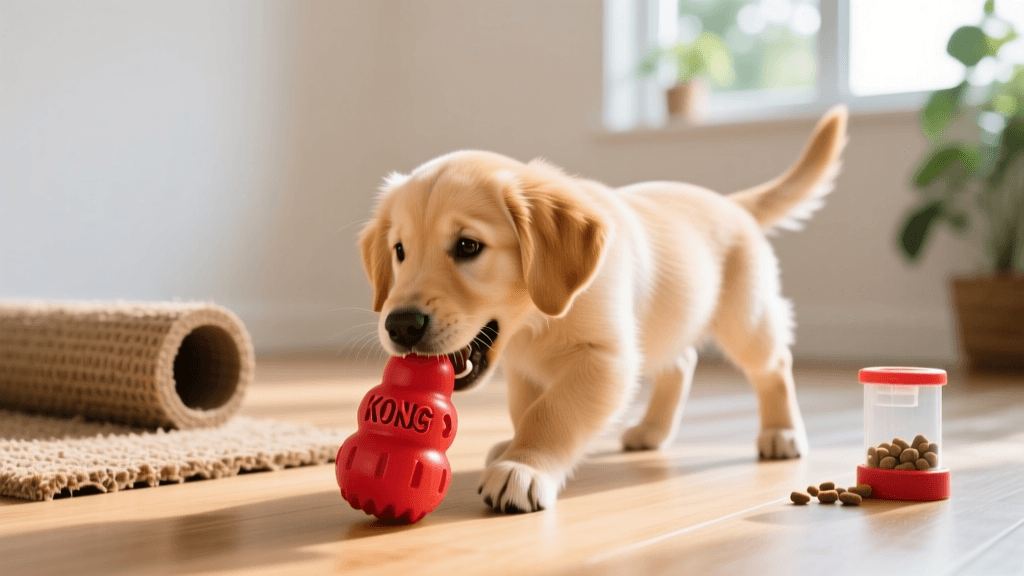
Redirection is the cornerstone of force-free puppy care. When your puppy's teeth make contact with your skin, immediately stop the interaction and offer a high-value, appropriate chew toy. The moment the puppy's mouth leaves your skin and touches the toy, mark the behavior with a clicker or a verbal 'Yes!' and offer praise. This teaches the puppy that human skin yields no reward, while chewing on toys results in positive attention. In 2026, trainers emphasize the 'Trade Up' concept: the toy you offer must be more interesting than your hand. If your puppy is highly aroused, a bland rubber toy might not suffice; you may need a toy stuffed with frozen bone broth or peanut butter.
2. Differential Reinforcement of Incompatible Behavior (DRI)
DRI involves rewarding a behavior that cannot physically occur at the same time as the unwanted behavior. For puppy biting, this often means rewarding 'four paws on the floor' or 'sit' when the puppy approaches. If a puppy is jumping and nipping out of excitement, asking for a 'sit' and immediately rewarding with a treat or a toss of a toy makes the biting physically impossible while fulfilling the puppy's need for engagement.
3. The Force-Free 'Reset' (Time-In)
Historically, trainers recommended harsh 'time-outs' or physical corrections for hard bites. Today, we use a force-free 'reset.' If a puppy bites too hard during play, the consequence is simply the withdrawal of attention. Stand up, cross your arms, and look away for three to five seconds. This mimics how littermates naturally teach bite inhibition: when a puppy bites too hard, the other puppy stops playing. If the puppy continues to bite, calmly step over a baby gate or leave the room for ten seconds. This teaches the puppy that biting makes the fun stop, without introducing intimidation or physical handling.
Top 2026 Enrichment Tools for Bite Redirection
Having the right tools on hand is essential for successful redirection. The 2026 market offers incredible, durable, and mentally stimulating enrichment toys designed specifically to satisfy a puppy's urge to chew and forage. Below is a comparison of the top force-free redirection tools currently recommended by certified behaviorists.
| Tool Name | Best For | Material | 2026 Price Estimate |
|---|---|---|---|
| KONG Classic (Puppy Pink/Blue) | Soothing teething pain & long-duration chewing | Soft, durable natural rubber | $14 - $18 |
| West Paw Toppl | Interactive feeding & moderate chewing | Zogoflex (non-toxic, recyclable) | $20 - $25 |
| Snuffle Mat (Heavy Duty) | Pre-bite arousal reduction & foraging | Fleece & anti-slip canvas base | $25 - $35 |
| Flirt Pole with Bungee Cord | Redirecting prey drive away from hands/ankles | Fiberglass pole & reinforced webbing | $30 - $45 |
Maximizing Your Enrichment Tools
To get the most out of these tools, preparation is key. The American Veterinary Society of Animal Behavior (AVSAB) consistently highlights the importance of mental enrichment in reducing hyperactive and destructive behaviors. Keep at least three KONG toys pre-stuffed with a mixture of puppy kibble, plain pumpkin puree, and low-sodium chicken broth, frozen solid. When your puppy enters the 'witching hour' (typically early evening when puppies become overly tired and bitey), proactively hand them a frozen KONG before they have the chance to nip at your ankles.
A Step-by-Step Positive Reinforcement Scenario
Let us walk through a common scenario: Your 14-week-old puppy is playing with you on the living room rug. Suddenly, they latch onto your pant leg and begin to bite your ankle.
- Step 1: Freeze and Disengage. Do not yank your leg away, as rapid movement triggers the puppy's prey drive and makes the game more exciting. Become a 'tree.'
- Step 2: Redirect. Calmly reach into your nearby treat pouch or grab a pre-stuffed West Paw Toppl from the side table. Present it near the puppy's nose.
- Step 3: Mark and Reward. The moment the puppy releases your pant leg to investigate the toy, say 'Yes!' in an upbeat tone.
- Step 4: Engage in Appropriate Play. Once the puppy is chewing the toy, engage them in a gentle game of tug-of-war using a long fleece tug toy. This keeps your hands far away from their mouth while satisfying their urge to bite and pull.
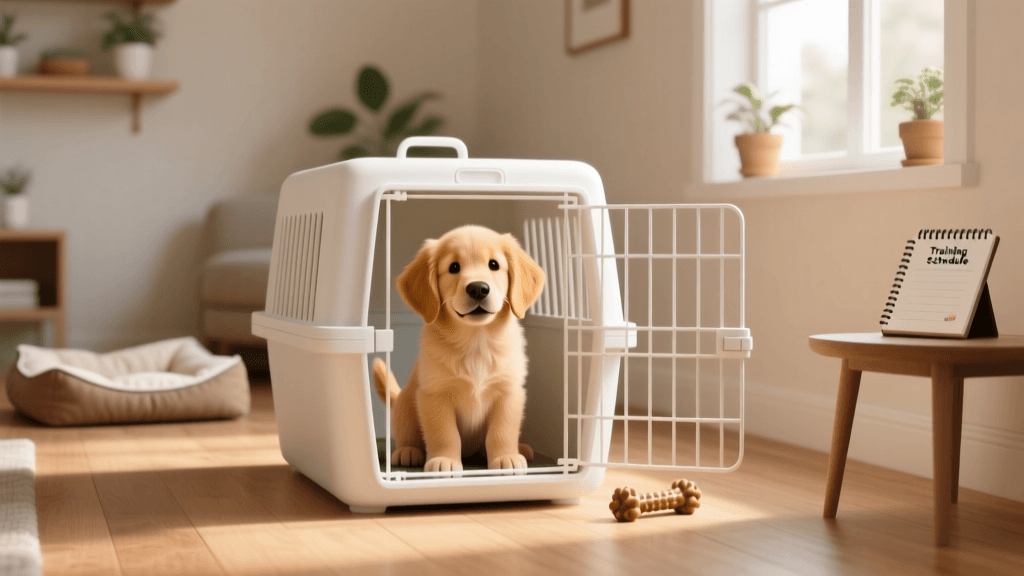
- Step 5: Enforce a Nap. If the puppy immediately drops the toy and returns to biting your ankle with hard, frantic bites, they are likely overtired. Calmly guide them to their crate or a quiet pen with a snuffle mat for a mandatory nap.
What to Avoid: Outdated Aversive Methods
Despite the overwhelming scientific consensus supporting force-free methods, outdated advice still circulates on social media. To protect your puppy's behavioral development and your bond, strictly avoid the following aversive techniques:
- Holding the Mouth Shut: This causes fear, damages trust, and often leads to defensive aggression or increased hand-shyness.
- Tapping the Nose or Flicking the Snout: Physical punishment creates negative associations with human hands reaching toward the dog's face, which can result in fear-biting later in life.
- Loud Yelping: While older literature suggested yelping like a littermate to teach bite inhibition, modern 2026 behavioral studies show that loud yelping often over-arouses puppies, causing them to bite harder and become more frantic.
- Alpha Rolls: Forcing a puppy onto its back is a dangerous dominance myth that has been thoroughly debunked by the American Kennel Club (AKC) and veterinary behaviorists worldwide.
Final Thoughts on Raising a Soft-Mouthed Dog
Teaching bite inhibition is a marathon, not a sprint. Puppies go through multiple teething phases, and it is entirely normal for mouthing to increase around 16 weeks and again at 6 months when adult teeth fully settle. By consistently applying force-free redirection, utilizing high-value 2026 enrichment tools, and managing your puppy's sleep schedule, you will guide them through this developmental phase with their confidence intact. Positive reinforcement builds a foundation of trust, ensuring that your puppy grows into an adult dog who chooses to engage with the world gently and thoughtfully.
priya-sutaria
All our authors care for dogs every day — read more of their work on the authors page.