Force-Free Dog Nail Trimming: Scratch Boards & Dremels 2026
Discover force-free dog nail trimming techniques for 2026. Learn cooperative care using scratch boards and Dremels for a stress-free grooming routine.
The 2026 Standard: Cooperative Care and Force-Free Grooming
Welcome to 2026, where the days of pinning down a terrified dog for routine grooming are firmly in the past. As our understanding of canine cognition and stress responses has deepened, the veterinary and behavioral communities have universally embraced cooperative care. Force-free methods prioritize the dog's emotional well-being, recognizing that a stressed dog cannot learn and that forced handling damages the human-animal bond. Nail trimming, historically one of the most dreaded tasks for both dogs and their owners, has been completely revolutionized by positive reinforcement (R+) techniques.
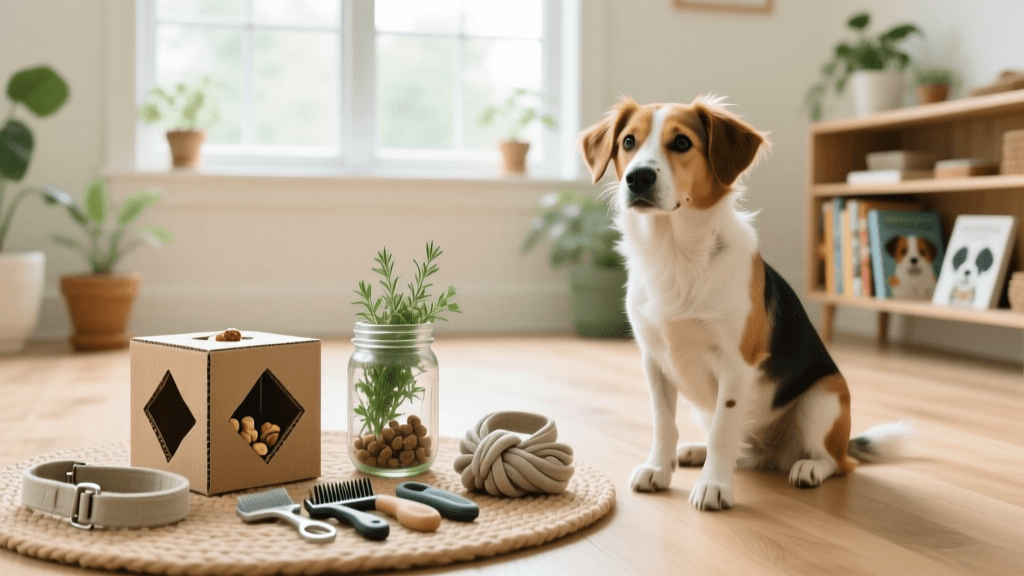
Cooperative care is a force-free philosophy where the dog is given a voice and a choice in their handling. By using tools like scratch boards and rotary grinders (commonly known as Dremels), paired with high-value reinforcers, we can teach dogs to actively participate in their own nail care. This comprehensive guide will walk you through the modern, force-free protocols for maintaining your dog's paw health without fear, force, or intimidation.
Understanding the Canine Nail Quick and Stress Signals
Before introducing any tool, it is crucial to understand the anatomy of the dog's nail. The 'quick' is the sensitive, blood-rich nerve core inside the nail. Cutting or grinding into the quick causes pain and bleeding, which can instantly create a lasting fear response. According to the American Kennel Club (AKC), the quick is easily visible in dogs with light-colored nails but is completely hidden in dogs with dark or black nails, making conservative, frequent trimming the safest approach.
Force-free grooming also requires fluency in reading canine body language. Signs of stress include lip licking, yawning, whale eye (showing the whites of the eyes), trembling, and freezing. In a cooperative care model, if a dog displays these calming signals or attempts to leave the grooming station, the session is immediately paused. We never use slip leads, muzzles as punishment, or physical restraint to force compliance.
Top Force-Free Nail Care Tools for 2026
The market for force-free grooming tools has expanded significantly. Here is a breakdown of the most effective tools for positive reinforcement nail care, alongside a comparison to traditional methods.
| Tool Type | Examples (2026 Models) | Force-Free Suitability | Best For |
|---|---|---|---|
| Scratch Boards | ScratchPaws Pro, DIY Sandpaper Boards | Excellent (Dog is in full control) | Dogs terrified of having paws handled |
| Rotary Grinders | Dremel PawControl 7760, Casfuy 6-Speed | Very Good (Requires desensitization) | Thick nails, dark nails, precision work |
| Guillotine Clippers | Resco Original, Millers Forge | Poor (High risk of crushing/quicking) | Not recommended for force-free care |
| Scissor Clippers | Boshel Dog Nail Clippers | Fair (Requires steady handling) | Quick touch-ups on cooperative dogs |
| Lick Mats | Hyper Pet IQ Treat Mat, Sodapup | Excellent (Distraction and soothing) | Pairing with grinding or clipping |
As noted by the ASPCA's grooming guidelines, keeping nails short is vital for proper posture and joint health. However, the method used to achieve this short length should never cause psychological distress. Scratch boards and rotary tools allow for millimeter-by-millimeter removal, drastically reducing the risk of quicking.
Step-by-Step Scratch Board Training Protocol
A scratch board is a piece of wood covered in high-grit sandpaper (usually 60 to 80 grit for initial training, moving to 120 grit for finishing). It allows the dog to file their own front nails while standing securely. This is the ultimate force-free tool because the dog dictates the pace and pressure.
Phase 1: Targeting the Board
Place the scratch board flat on the ground. Have a pouch full of high-value treats (like Inaba Churu or freeze-dried beef liver). The moment your dog sniffs or looks at the board, click a marker (a clicker or a verbal 'Yes!') and toss a treat away from the board. This resets the dog and builds anticipation.
Phase 2: Capturing the Paw Swipe
Wait for the dog to offer a paw swipe toward the board. You can lure this initially by placing a treat on the board, but fade the lure quickly. When the paw makes contact with the sandpaper, mark and reward heavily. We want the dog to associate the scratching sound and sensation with a massive payoff.
Phase 3: Shaping Duration and Angle
Once the dog is confidently swiping, begin rewarding only the swipes that are deliberate and use a flat paw. To target specific nails, you can prop the board up at a 45-degree angle against a wall or a sturdy box. Teach the dog to target the board with one paw at a time, which helps balance their weight and ensures even filing.
Desensitizing Your Dog to the Rotary Grinder
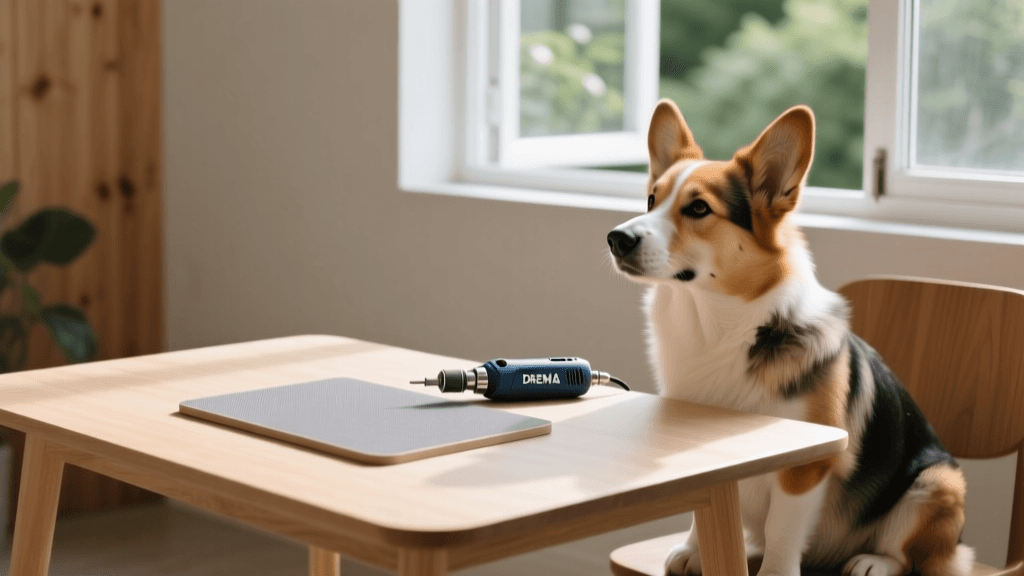
While scratch boards are excellent for front nails, they cannot be used for hind dewclaws or back nails. For a complete trim, a rotary grinder is the 2026 gold standard. However, the sound and vibration can be frightening. We use a systematic desensitization and counter-conditioning (DS/CC) protocol.
- Step 1: Visual Exposure (Power Off). Place the grinder on the floor next to a lick mat smeared with peanut butter or goat's milk. Let the dog eat the high-value treat while simply looking at the tool. Do not turn it on.
- Step 2: Sound at a Distance. Turn the grinder on in another room or at the lowest speed setting while the dog is eating a meal or chewing a long-lasting enrichment item (like a stuffed Kong). The sound predicts good things, but the tool is far away.
- Step 3: Proximity and Vibration. Bring the powered-on grinder closer, but do not touch the dog. Touch the grinder to your own hand or a piece of wood so the dog hears the grinding sound, then immediately feed a treat.
- Step 4: Touch and Grind. Gently touch the side of the grinder (not the spinning head) to the dog's shoulder or back, mark, and reward. Finally, introduce the spinning head to the very tip of the nail for one second. Mark and reward. Keep early sessions under three minutes.
The goal is to change the dog's emotional response from 'fear' to 'joy' by pairing the trigger (the grinder) with something the dog loves. The Fear Free Pets organization emphasizes that taking the time to build this positive association will save you hours of struggle in the long run.
High-Value Reinforcers and Consent Testing
In positive reinforcement training, the 'reinforcer' is defined by the receiver, not the giver. Dry kibble is rarely sufficient for a high-stress activity like nail care. In 2026, professional force-free groomers rely on lickable treats (like Churu or squeeze tubes of wet food), real meats, and novel proteins to keep the dog engaged and below their stress threshold.
Equally important is the concept of 'Consent Testing' or 'Start Buttons.' You can teach your dog a start button behavior, such as resting their chin on a specific mat or targeting a yoga block with their nose. If the dog removes their chin from the mat or turns their head away from the target, they are withdrawing consent. When consent is withdrawn, the tool is immediately lowered, and the dog is given a break. This autonomy drastically reduces defensive aggression and anxiety.
Building a Weekly Force-Free Routine
Consistency is the key to maintaining the quick at a short length. The quick will recede only if the nail is constantly kept short. Instead of one traumatic, hour-long session every six weeks, aim for three to five minutes of positive, force-free nail care twice a week.
By integrating scratch board sessions into your dog's regular enrichment routine and using the Dremel for quick touch-ups while they enjoy a lick mat, nail care transforms from a battleground into a bonding exercise. Embracing these force-free methods in 2026 ensures your dog remains physically sound and emotionally secure, proving that patience and positive reinforcement always yield the best results.
beth-carrasco
All our authors care for dogs every day — read more of their work on the authors page.