Force-Free Decompression Zone Setup for New Rescue Dogs 2026
Learn how to set up a force-free decompression zone for your new rescue dog in 2026. Discover positive reinforcement gear, layouts, and timelines.
The Importance of a Force-Free Decompression Zone
Bringing a new rescue dog home is one of the most rewarding experiences in life, but the transition from a shelter or foster environment to a permanent home can be incredibly overwhelming for a canine. As we navigate dog ownership in 2026, modern veterinary behaviorists and certified force-free trainers overwhelmingly advocate for the creation of a dedicated decompression zone. Unlike outdated methods that relied on forced isolation or strict crate confinement to establish dominance, a force-free decompression zone is a sanctuary built on positive reinforcement, choice, and environmental enrichment.
According to the Humane Society of the United States, the first few days in a new home are critical for a shelter dog. The sensory overload of a new environment can trigger a fight-or-flight response. By providing a safe, low-demand space where the dog can voluntarily retreat and engage in calming enrichment activities, you actively lower their cortisol levels and build a foundation of trust. This guide will walk you through setting up the ultimate force-free decompression station for your new dog in 2026, complete with specific gear recommendations, spatial measurements, and a 72-hour timeline.
The Philosophy Behind Force-Free Decompression
Force-free training and care revolve around the principle of giving the dog agency. In a traditional setup, a new dog might be immediately subjected to a barrage of introductions, forced handling, and rigid confinement. In a force-free setup, we prioritize the dog's emotional baseline. The decompression zone serves as a neutral, low-stress basecamp. It is never used as a time-out or punishment area. Instead, it is a place where good things happen: meals are scattered, calming chews are provided, and the dog is allowed to observe the household without the pressure of direct interaction.
True behavioral rehabilitation and bonding begin when a dog feels they have the autonomy to choose rest and safety over forced socialization.
By utilizing positive reinforcement—such as pairing the decompression zone with high-value treats and calming activities like licking and sniffing—you trigger the parasympathetic nervous system. This neurological shift helps the dog process the trauma of their past and the stress of their transition, aligning with the latest AVMA guidelines on canine behavioral health.
Choosing and Preparing the Ideal Location
The physical location of your decompression zone is just as important as the gear inside it. You want to select an area that is quiet but not entirely isolated from the family's presence, allowing the dog to feel part of the pack without being in the center of the action.
Optimal Measurements and Layout
- Size: Aim for a minimum of 4x6 feet. This provides enough room for a bed, a water bowl, and space to stretch out without feeling trapped.
- Traffic Flow: Avoid high-traffic corridors like the main hallway or directly in front of the exterior doors. A corner of a living room, a quiet study, or a sectioned-off part of a kitchen works best.
- Visual Barriers: Use a freestanding pet barrier or a baby gate draped with a breathable fabric to soften the visual stimuli. This allows the dog to see out if they choose, but blocks sudden movements that might trigger reactivity.
- Acoustics: Keep the zone away from loud appliances like washing machines or televisions. Consider adding a white noise machine set to 50 decibels to mask unpredictable household sounds.
Essential 2026 Force-Free Gear Guide
To create a truly enriching environment, you need tools that promote natural, stress-relieving canine behaviors. Sniffing and licking are scientifically proven to lower a dog's heart rate. Here are the top-rated, force-free products for your 2026 decompression zone setup:
1. Paw5 Wooly Snuffle Mat (Approx. $48)
Sniffing is a mentally exhausting activity that mimics natural foraging. The Paw5 Wooly Snuffle Mat is made from sustainable, machine-washable materials. By hiding a portion of your dog's daily kibble or freeze-dried treats within the thick fleece strands, you encourage 15 to 20 minutes of focused, calming scent work. This is vastly superior to feeding from a stainless steel bowl, which takes seconds and offers no mental stimulation.
2. Hyper Pet Lickimat Soother (Approx. $14)
Licking releases endorphins in a dog's brain, acting as a natural self-soothing mechanism. The Lickimat Soother features textured nodules that hold soft spreads like plain pumpkin puree, goat's milk, or xylitol-free peanut butter. Freeze the mat for 30 minutes before offering it in the decompression zone to extend the activity and provide a cooling, calming effect.
3. Best Friends by Sheri Calming Shag Bed (Approx. $55 for Medium)
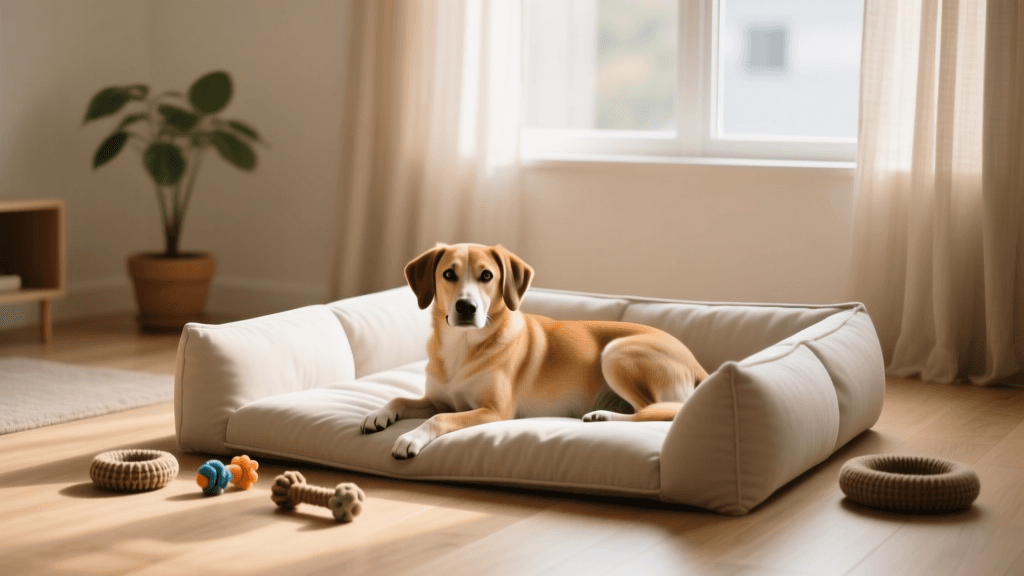
Dogs need a bed that mimics the feeling of burrowing into a den. The raised rim of this donut-style bed provides a sense of physical security and supports the neck, while the faux shag fur offers comforting tactile feedback. Ensure the bed is sized so the dog can stretch out fully, measuring from the base of their tail to the tip of their nose and adding 12 inches.
4. Kong Classic Red Rubber Toy (Approx. $18)
Stuff a Kong with a mixture of wet dog food and low-sodium chicken broth, then freeze it solid. This provides a long-lasting, force-free chewing outlet that satisfies the urge to gnaw without destroying household items.
Step-by-Step Positive Association Setup
Never physically place the dog into the decompression zone and close the gate. This creates a negative association and feelings of entrapment. Instead, use classical conditioning to make the space the dog's favorite spot in the house.
- Scent Swapping: Before the dog arrives, place an unwashed t-shirt you have worn in the bed. Your familiar scent will provide a baseline of comfort.
- Treat Scattering: When the dog first enters the home, casually toss high-value treats (like boiled chicken or freeze-dried liver) toward the zone. Let them eat and leave. Do not close the gate.
- Meal Relocation: Feed their first few meals near the entrance of the zone, gradually moving the bowl deeper inside over the course of the first day.
- Voluntary Entry: Once the dog enters voluntarily to investigate the snuffle mat or lickimat, offer calm, low-pitched verbal praise. Avoid loud clapping or excited petting, which can overstimulate a decompressing dog.
Comparison: Force-Free Zone vs. Traditional Confinement
| Feature | Force-Free Decompression Zone | Traditional Crate-Only Setup |
|---|---|---|
| Primary Goal | Emotional regulation and autonomy | Physical containment and housebreaking |
| Dog's Choice | Dog can enter and exit freely via open gate | Dog is locked inside until released by owner |
| Enrichment | High (snuffle mats, lickimats, varied textures) | Low (usually just a flat bed and water bowl) |
| Stress Response | Lowers cortisol through foraging and licking | Can elevate cortisol if dog feels trapped |
| Space | Expansive (e.g., 4x6 ft pen or room section) | Confined to exact dimensions of the crate |
The First 72 Hours: A Force-Free Timeline
The ASPCA and leading rescue organizations frequently reference the 3-3-3 rule (3 days to decompress, 3 weeks to learn the routine, 3 months to feel at home). Here is how to manage the crucial first 3 days using positive reinforcement.
Day 1: The Observation Phase
Keep household noise to a minimum. Do not invite friends or neighbors over to meet the new dog. Allow the dog to explore the decompression zone at their own pace. Offer a frozen Lickimat and let them sleep. Expect the dog to sleep heavily; shelter environments are chronically sleep-depriving. If the dog paces, scatter kibble in the zone to redirect their energy into foraging.
Day 2: Routine and Scent Mapping
Begin establishing a predictable routine. Dogs thrive on predictability. Take them out for a brief, low-pressure potty break on a long line (15 feet) in a quiet area of the yard. Return to the decompression zone and offer a stuffed Kong. Introduce family members one at a time, having them sit quietly on the floor near the zone, tossing treats without making direct eye contact.
Day 3: Gentle Engagement
By day three, you should see the dog's true personality beginning to emerge. They may initiate play or seek physical affection. Continue to use the decompression zone for all meals and high-value chews. Begin introducing short, 5-minute positive reinforcement training sessions (like hand-targeting or 'sit') just outside the zone to build confidence and communication.
Conclusion
Setting up a force-free decompression zone is one of the most impactful investments you can make when getting a new dog. By prioritizing your dog's emotional well-being, providing species-appropriate enrichment, and respecting their need for autonomy, you are laying the groundwork for a resilient, confident, and deeply bonded companion. As you move forward in 2026, remember that patience and positive reinforcement will always yield better behavioral outcomes than force and confinement. Welcome your new dog home with empathy, and watch them flourish in their new sanctuary.
jonas-cole
All our authors care for dogs every day — read more of their work on the authors page.