Force-Free Desensitization For Canine Noise Phobia 2026
Discover force-free desensitization protocols for canine noise phobia in 2026. Learn positive reinforcement techniques and top treat-dispensing tech.
Understanding Canine Noise Phobia in the Modern Era
Canine noise phobia—whether triggered by thunderstorms, fireworks, construction equipment, or urban sirens—is one of the most pervasive behavioral challenges faced by dog guardians today. As we navigate the behavioral science landscape of 2026, the veterinary and animal behavior communities have reached a definitive consensus: force-free, positive reinforcement methods are not merely a preference; they are the most scientifically validated, effective, and humane approach to treating fear-based behaviors. Outdated aversive techniques, such as 'flooding' (forcing a dog to endure the noise until they stop reacting) or the use of electronic shock collars to interrupt panic, have been conclusively proven to exacerbate fear, damage the human-animal bond, and increase the risk of fear-based aggression.
Noise phobia is not a sign of disobedience or a lack of training; it is a profound emotional and physiological response. When a dog experiences a phobic trigger, their sympathetic nervous system initiates a massive 'fight, flight, or freeze' response. In this state of acute panic, the dog's brain is flooded with cortisol and adrenaline, rendering them entirely incapable of learning new commands or responding to traditional obedience cues. Therefore, the goal of any 2026 behavioral modification protocol is not to demand compliance, but to fundamentally alter the dog's emotional response to the trigger through Desensitization and Counter-Conditioning (DS/CC).
The Neuroscience of Fear and Positive Reinforcement
To understand why force-free methods work, we must look at the canine limbic system, specifically the amygdala, which processes fear and threat detection. When a noise-phobic dog hears a thunderclap, the amygdala instantly signals danger. Traditional punishment-based methods attempt to suppress the outward symptoms of this fear (panting, pacing, hiding) by introducing a secondary aversive stimulus. However, this does not change the amygdala's initial threat assessment; it merely adds a second layer of trauma.
Conversely, positive reinforcement and counter-conditioning aim to rewire the brain's associative pathways. By systematically pairing a sub-threshold (mild, non-triggering) version of the scary noise with a profoundly high-value reward, we engage the brain's reward center, the nucleus accumbens. Over time, the brain begins to predict the arrival of the reward upon hearing the noise, effectively bypassing the amygdala's fear response. According to the American Veterinary Society of Animal Behavior (AVSAB), reward-based training is the gold standard for addressing behavioral issues because it addresses the underlying emotional state without inducing additional stress or fear.
The 2026 Force-Free Desensitization and Counter-Conditioning Protocol
Implementing a successful DS/CC protocol requires patience, precise timing, and meticulous environmental management. Below is the step-by-step force-free protocol recommended by certified fear-free professionals for the current year.
Step 1: Establish a Sub-Threshold Baseline
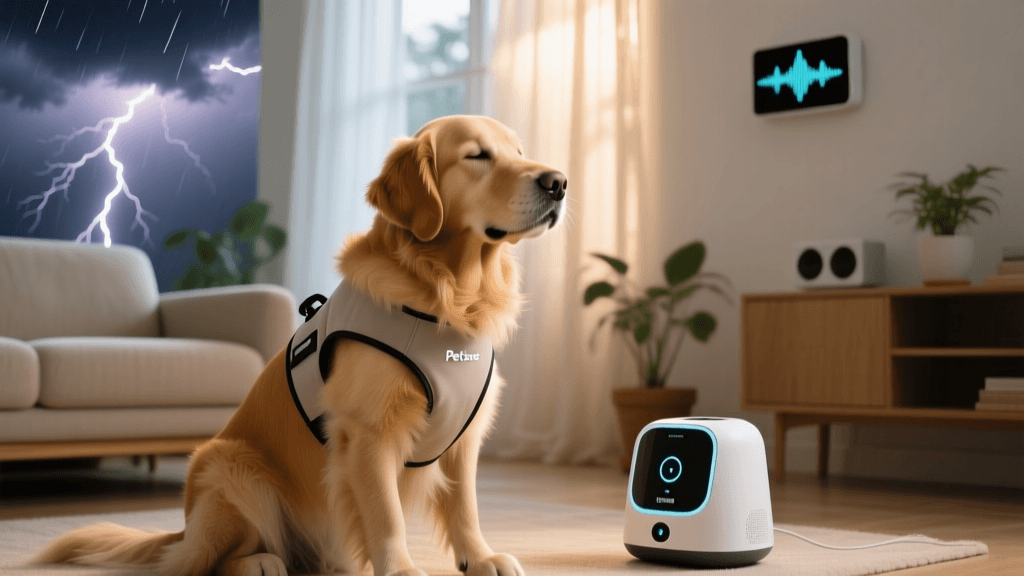
The most critical rule of desensitization is that the dog must remain 'sub-threshold'—meaning the noise is present but faint enough that it does not trigger a fear response. If your dog is panting, refusing treats, pacing, or hiding, they are over threshold, and no learning can occur. Begin by creating a dedicated 'safe haven' in your home. This should be an interior room with minimal windows, equipped with sound-dampening acoustic panels, a white noise machine (such as the Hatch Restore 3, which offers customized soundscapes for pets), and a familiar, scent-soaked bed. Using a high-quality audio system or specialized canine desensitization apps, play the triggering sound (e.g., fireworks) at a volume so low that your dog barely registers it—often between 10 and 15 decibels.
Step 2: The 0.5-Second Pairing Rule
Once the audio is playing at a sub-threshold volume, the counter-conditioning begins. The timing of your reinforcement is paramount. Within 0.5 seconds of the audio trigger occurring on the track, you must deliver a high-value reward. This could be a lick mat smeared with frozen bone broth and goat's milk, a Kong stuffed with Ziwi Peak Venison, or hand-fed pieces of K9 Natural Beef. The sequence must always be: Sound happens -> Treat appears. Never present the treat before the sound, as this can inadvertently cause the dog to associate the appearance of the treat with the impending scary noise. If the sound stops, the treat stops. This builds a clear, predictable association.
Step 3: Micro-Increment Volume Progression
Only when your dog shows zero signs of stress and eagerly anticipates the treat upon hearing the faint noise should you increase the volume. In 2026, behaviorists recommend micro-increments of no more than 2 to 3 decibels per session. Sessions should be kept short—no longer than 3 to 5 minutes—to prevent cognitive fatigue. If at any point your dog exhibits a fear response, you have increased the volume too quickly. Simply turn the volume back down to the last successful level and resume the pairing process.
Top Smart Treat Dispensers for Remote DS/CC in 2026
Technology has vastly improved the precision of remote counter-conditioning. If you need to desensitize your dog while you are in another room or away from home, modern smart treat dispensers allow for exact timing and low-stress delivery. Below is a comparison of the top force-free compatible dispensers available this year.
| 2026 Smart Dispenser Model | Capacity | Key Force-Free Feature | Est. Price |
|---|---|---|---|
| Furbo 360 Pro (2026 Edition) | 400g | AI Bark Alert & Auto-Treat Toss | $249 |
| Petcube Bites 3 Lite | 350g | Low-Decibel Toss Motor | $179 |
| Eufy PetDog Camera Treat Dispenser | 500g | Pre-Recorded Calming Voice Playback | $139 |
When utilizing these devices, ensure the mechanical sound of the treat dropping does not startle the dog. The Petcube Bites 3 Lite is particularly favored by behaviorists this year due to its upgraded, near-silent motor, ensuring the dog associates the reward with the environmental trigger rather than the whirring of a machine. For comprehensive guidance on integrating technology with fear-free training, resources provided by Fear Free Pets offer excellent supplementary materials for guardians.
Tracking Progress: The Force-Free Threshold Chart
Because progress in DS/CC is non-linear, keeping a structured log is essential. Use the following metrics to evaluate your dog's emotional state during each session:
- Green Zone (Optimal Learning): Dog takes treats softly, ears are relaxed, body posture is loose, tail is in a neutral or gentle wag, and the dog readily engages with toys or affection after the session.
- Yellow Zone (Approaching Threshold): Dog takes treats slightly harder or faster than normal, occasional lip licking, yawning, or brief moments of looking toward the audio source. Action: Maintain current volume, do not increase.
- Red Zone (Over Threshold): Dog refuses high-value treats, panting heavily, trembling, attempting to escape the room, or vocalizing. Action: Immediately stop the audio, remove the dog from the room to decompress, and lower the volume by 10 decibels for the next session.
Troubleshooting Common Setbacks
It is entirely normal for dogs to experience 'spontaneous recovery' of a fear response, particularly if they are exposed to a sudden, real-world, high-decibel version of the trigger (like an unexpected neighborhood fireworks display) before the DS/CC protocol is fully generalized. If a setback occurs, avoid the temptation to punish the reaction or coddle the dog with frantic energy, which can validate their panic. Instead, calmly guide them to their sound-proofed safe haven, initiate the white noise machine, and offer a long-lasting chew to help metabolize the stress hormones. For deeper insights into managing acute panic episodes, the ASPCA Common Dog Behavior Issues database provides excellent emergency management strategies.
Furthermore, consider consulting a veterinarian about short-term, fast-acting anti-anxiety medications (such as trazodone or gabapentin) to use during unavoidable real-world events. Medication does not replace training; rather, it lowers the dog's baseline anxiety enough to allow the positive reinforcement protocols to take root.
Conclusion
Overcoming canine noise phobia is a journey of empathy, precision, and consistency. By abandoning outdated, punitive methods and embracing the scientifically backed force-free desensitization protocols of 2026, you are not just training your dog—you are actively healing their nervous system. Through sub-threshold audio exposure, impeccable treat timing, and the strategic use of modern smart-dispensing technology, you can help your dog navigate a loud world with confidence and calm. Remember that every dog learns at their own pace; celebrate the micro-victories, respect their thresholds, and trust the profound power of positive reinforcement.
tom-renshaw
All our authors care for dogs every day — read more of their work on the authors page.