Best Interactive Foraging Puzzles For Dogs In 2026
Discover the best interactive foraging puzzles for dogs in 2026. Learn mental enrichment techniques, puzzle progressions, and top picks for high-drive breeds.
The Shift Toward Cognitive Canine Enrichment in 2026
As we navigate the dog training landscape in 2026, the paradigm of canine care has shifted dramatically. While physical exercise remains a cornerstone of dog ownership, veterinary behaviorists and professional trainers now universally agree that physical fatigue alone is insufficient for high-drive and herding breeds. Mental enrichment, specifically through interactive foraging puzzles and nosework, has become a critical component of behavioral conditioning. For breeds like Border Collies, Belgian Malinois, and Australian Shepherds, a lack of cognitive stimulation is a primary catalyst for destructive behaviors, hyperactivity, and chronic anxiety.
According to the behavioral guidelines published by the American College of Veterinary Behaviorists (ACVB), incorporating species-specific foraging behaviors into a dog's daily routine can significantly reduce stress markers and improve overall emotional regulation. In the wild, canines spend up to 80% of their waking hours hunting and foraging. Modern domestic life removes this necessity, leaving a massive cognitive void. Interactive puzzle games bridge this gap, transforming mealtime from a passive, two-minute event into an engaging, brain-tiring exercise.
The Science of Sniffing and Problem Solving
Before diving into specific products and training progressions, it is essential to understand the physiological impact of foraging. A dog's olfactory system is remarkably complex, boasting up to 300 million scent receptors compared to a human's mere six million. When a dog engages in active sniffing, their heart rate actually decreases, promoting a state of calm and focus. The American Veterinary Society of Animal Behavior (AVSAB) frequently highlights that olfactory enrichment provides a unique form of mental fatigue that physical exercise simply cannot replicate. Ten minutes of intense, focused puzzle-solving can be as exhausting for a high-energy dog as a two-mile run.
The 2026 Foraging Puzzle Progression System
Introducing a complex puzzle to a novice dog often results in frustration, leading the dog to flip the board, chew the pieces, or abandon the task entirely. To build confidence and problem-solving skills, trainers in 2026 utilize a structured, three-tier progression system.
Level 1: Olfactory Foundation (Snuffle Mats & Scatter Feeding)
The entry point for any mental enrichment program is scent-based foraging. Snuffle mats mimic the texture of grass, allowing dogs to use their noses to hunt for kibble or high-value treats hidden deep within the fabric strips.
- Technique: Start by scattering kibble on top of the mat where it is easily visible. Gradually push the treats deeper into the fleece strips as the dog learns to use their nose rather than their eyes.
- Best For: Puppies, senior dogs with limited mobility, and highly anxious dogs needing a calming decompression activity.
- 2026 Top Pick: The Wooly Snuffle Mat remains a premium choice due to its machine-washable design and varied fabric textures that prevent dogs from memorizing treat locations.
Level 2: Intermediate Manipulation (Lickimats & Wobble Toys)
Once a dog masters scent foraging, the next step introduces mild physical manipulation and prolonged engagement. Lickimats and wobble toys require the dog to use their tongue and paws to extract soft foods.
- Technique: Spread a mixture of plain pumpkin puree, goat milk, and soaked kibble onto a textured silicone mat. For advanced engagement, freeze the mat for four hours. The frozen state forces the dog to work methodically, extending engagement time to 30 or 40 minutes.
- Best For: Dogs with separation anxiety, crate training conditioning, and dogs that eat their meals too quickly.
- 2026 Top Pick: SodaPup's Honeycomb and Bone Lickimats are constructed from veterinary-grade, natural rubber that withstands aggressive chewers and is entirely dishwasher safe.
Level 3: Advanced Multi-Step Problem Solving
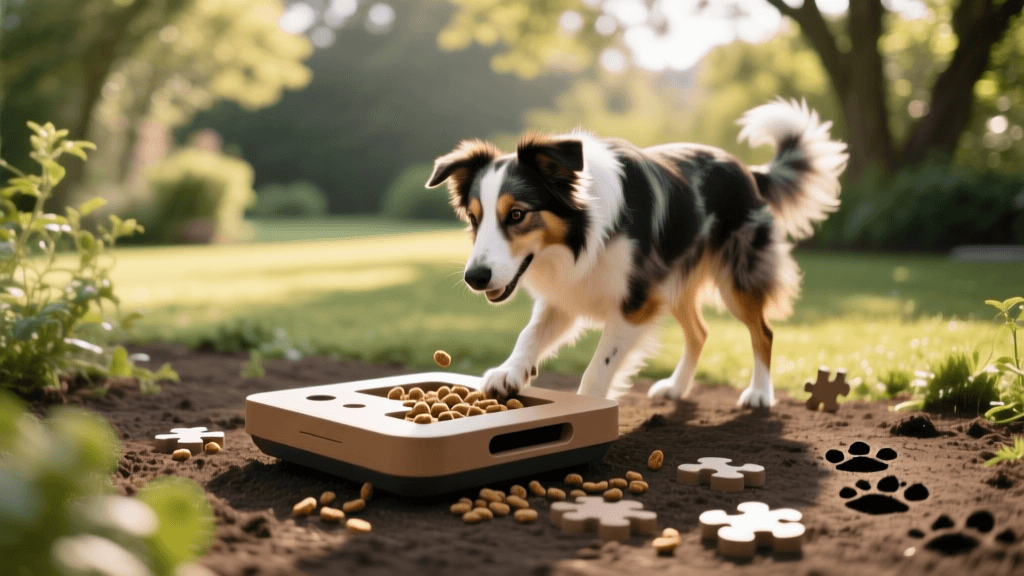
This level requires the dog to understand cause-and-effect mechanics, such as sliding panels, lifting pegs, and spinning wheels. This is where herding breeds truly thrive.
- Technique: Never leave a dog alone with a Level 3 puzzle. Use shaping techniques. If using a sliding-tile puzzle, initially place treats in the open compartments. Next, place a treat in a covered compartment but leave the tile half-open. Finally, cover it completely and encourage the dog to use their paw or nose to slide the tile.
- Best For: Intelligent working breeds, dogs prone to boredom, and advanced trick-training sessions.
- 2026 Top Pick: The Nina Ottosson Dog Tornado (Composite Edition) features three layers of spinning bone covers and requires multi-directional manipulation to access the hidden rewards.
Top Rated Commercial Puzzles of 2026: Comparison Chart
When selecting a puzzle, it is crucial to match the toy's difficulty with your dog's current cognitive skill level. Below is a breakdown of the most effective foraging puzzles available in 2026.
| Product Name | Difficulty Level | Best Suited For | 2026 Avg Price | Est. Engagement Time |
|---|---|---|---|---|
| Wooly Snuffle Mat | Beginner | All Breeds / Seniors | $39.00 | 10-20 Minutes |
| SodaPup Honeycomb Lickimat | Beginner to Intermediate | Anxious Dogs / Fast Eaters | $14.50 | 20-40 Minutes (Frozen) |
| Outward Hound Hide N Slide | Intermediate | Small to Medium Breeds | $15.99 | 10-15 Minutes |
| Nina Ottosson Dog Tornado | Advanced | Herding / Working Breeds | $24.99 | 15-25 Minutes |
| Kong Wobbler | Intermediate | High-Energy / Food Motivated | $19.99 | 15-30 Minutes |
DIY Foraging: The Cardboard Destruction Box
Commercial puzzles are excellent, but many dogs, particularly terriers and retrievers, possess a strong biological drive to dissect and destroy. In 2026, the 'Destruction Box' has become a staple in professional behavioral conditioning for dogs that shred household items. To create one, take a medium-sized cardboard box (remove all tape, staples, and packing labels) and fill it with crumpled paper, empty toilet paper rolls, and scattered high-value treats. Allow the dog to tear into the box to find the rewards. This satisfies the predatory sequence of 'dissecting' prey in a safe, controlled environment. Always supervise this activity to ensure your dog does not ingest large pieces of cardboard.
Troubleshooting Puzzle Frustration
A common hurdle in mental enrichment is canine frustration. If a dog begins barking at a puzzle, pawing it aggressively, or walking away, the difficulty has been escalated too quickly. The American Kennel Club's training resources emphasize the importance of 'shaping' behavior and setting the dog up for success. If your dog struggles with a Level 3 sliding puzzle, revert to Level 1 scent games for a few days to rebuild their confidence. You can also 'seed' the puzzle with higher-value rewards, such as freeze-dried liver or boiled chicken, to increase their motivation to work through the frustration barrier.
Hygiene and Maintenance of Interactive Toys
With the increased use of soft foods, peanut butters, and raw broths in puzzle toys, hygiene is a paramount concern in 2026. Bacteria such as Salmonella and E. coli can thrive in the crevices of plastic and rubber toys if not cleaned properly. After every use involving wet food, puzzles must be washed with hot, soapy water. Silicone Lickimats and composite Nina Ottosson puzzles are generally top-rack dishwasher safe, which ensures high-heat sanitation. Snuffle mats should be shaken out outdoors and washed in a laundry machine on a gentle cycle weekly to prevent the buildup of saliva and environmental allergens. By maintaining strict hygiene protocols, you ensure that your dog's mental enrichment routine remains both stimulating and entirely safe.
tom-renshaw
All our authors care for dogs every day — read more of their work on the authors page.