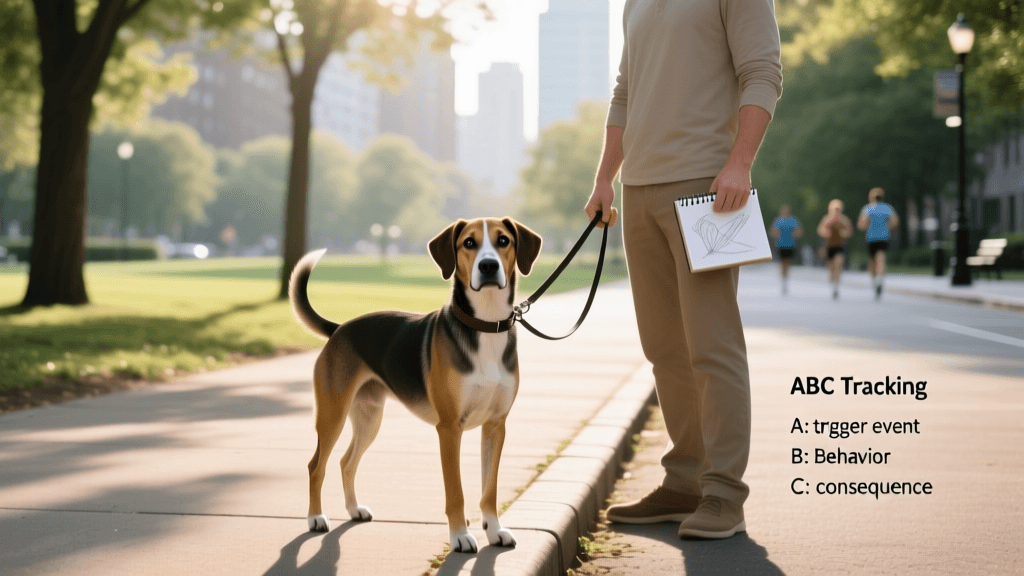
Vet & Trainer Q&A: Fixing Leash Reactivity in Dogs
Vet and trainer experts answer top questions on fixing leash reactivity in dogs. Learn actionable desensitization tips, gear, and timing strategies.

Expert Q&A: Fixing Leash Reactivity in Adult Dogs
Leash reactivity is one of the most stressful behavioral challenges a dog owner can face. Whether your dog is barking, lunging, or growling at other dogs, people, or bicycles, the daily walk can quickly turn into a source of anxiety. To cut through the noise, we sat down with a board-certified Veterinary Behaviorist and a Certified Professional Dog Trainer (CPDT-KA) to answer your most pressing questions about managing and modifying leash reactivity.
Our Experts: Dr. Elena Rostova, DVM, DACVB (Veterinary Behaviorist) and Mark Davies, CPDT-KA (Certified Professional Dog Trainer).
Q1: Is My Dog Aggressive or Just Reactive?
Mark (Trainer): This is the most common question I get. Reactivity is an overreaction to a specific stimulus, usually rooted in fear, frustration, or over-arousal. Aggression, on the other hand, involves the intent to cause harm. A reactive dog on a leash is often exhibiting 'barrier frustration' or a 'fight or flight' response because they feel trapped by the leash. When the leash is removed in a neutral environment, many 'reactive' dogs are actually quite friendly or simply avoidant. True aggression is a deeper behavioral issue that often presents with a stiff body, hard staring, and a lack of warning signs before a bite.
Dr. Rostova (Vet): I agree. From a medical standpoint, we always rule out pain first. A dog with undiagnosed osteoarthritis or hypothyroidism may react aggressively on a leash simply because they feel vulnerable and physically unable to escape a perceived threat. Always get a full veterinary workup before starting a rigorous behavior modification plan.
Q2: What is the Best Gear for a Reactive Dog?
Mark (Trainer): Gear will not train your dog, but it will keep you safe while you train. I strictly avoid aversive tools like prong collars, choke chains, or e-collars. According to the American Veterinary Society of Animal Behavior (AVSAB), punishment-based tools can increase anxiety and worsen reactivity by creating negative associations with the trigger.
Instead, I recommend a front-clip harness or a head halter, paired with a double-clip leash for maximum control. Here is a breakdown of my top recommendations:
| Gear Type | Recommended Brand | Avg Cost | Best For | Trainer Note |
|---|---|---|---|---|
| Front-Clip Harness | Ruffwear Front Range | $40 | Mild to moderate pullers | Reduces leverage; prevents choking. |
| Head Halter | PetSafe Gentle Leader | $20 | Severe lungers / Large breeds | Requires 1-2 weeks of positive acclimation. |
| Double-Clip Leash | Mighty Paw | $25 | Extra control & security | Clips to both the front and back rings. |
| High-Value Treats | Zuke's Mini Naturals | $12 | Quick reinforcement | Low calorie, high smell, easy to chew. |
Q3: How Do We Actually Train the 'Engage-Disengage' Game?
Mark (Trainer): Engage-Disengage is the gold standard for counter-conditioning. The goal is to change your dog's emotional response from 'threat' to 'predictor of good things.' Here is the exact protocol:
- Step 1 (Engage): Your dog spots the trigger (e.g., another dog) at a distance where they notice it but do not react (below threshold).
- Step 2 (Mark): Within 0.5 seconds of them looking at the trigger, use a clicker or a verbal marker like 'Yes!'
- Step 3 (Disengage): Deliver a high-value treat (like boiled chicken or freeze-dried liver). The dog should turn away from the trigger to get the treat.
- Step 4 (Repeat): Do this for 3-5 minutes, then take a 'sniffari' break to let their nervous system decompress.
Dr. Rostova (Vet): Timing is everything. If you mark and treat after the dog has started barking or lunging, you are accidentally reinforcing the reactive state. You must catch them in the 'looking' phase.
Q4: What is the 'Threshold' and How Do I Find It?
Dr. Rostova (Vet): The threshold is the distance at which your dog notices a trigger but remains capable of learning and eating treats. I like to use a traffic light analogy:
- Green Zone (Under Threshold): Dog is relaxed, ears forward, willing to eat treats and take cues. This is where learning happens.
- Yellow Zone (At Threshold): Dog is stiff, staring, mouth closed, ignoring treats. The sympathetic nervous system is activating. You need to increase distance immediately.
- Red Zone (Over Threshold): Barking, lunging, snapping. The dog's prefrontal cortex (the thinking brain) has shut down. No learning can occur here. You must perform an 'emergency U-turn' and retreat.
Mark (Trainer): For some dogs, the Green Zone is 50 feet away. For others, it is 150 feet. You must respect your dog's individual threshold. The American Kennel Club (AKC) Training Resources consistently remind owners that forcing a dog into the Red Zone will only deepen the behavioral trauma.
Q5: When Should We Consider Anti-Anxiety Medication?
Dr. Rostova (Vet): Medication is not a last resort; it is a bridge to learning. If a dog is constantly flooded with cortisol and adrenaline, behavior modification will fail. I typically recommend medication when:
- The dog's threshold is so close that you cannot find a safe distance to train (e.g., they react to a dog 200 feet away).
- The dog's reactivity is severely impacting their quality of life or the owner's safety.
- Progress has plateaued after 4-6 weeks of consistent, positive reinforcement training.
We often start with daily SSRIs like Fluoxetine (Prozac), which takes 4 to 6 weeks to reach efficacy and costs roughly $15-$30 per month. For situational anxiety, like a known vet visit or a crowded walk, we might use Trazodone or Gabapentin, administered 2 hours before the event. As highlighted by Fear Free Pets, combining pharmaceutical support with force-free training drastically reduces emotional stress and accelerates behavioral rehabilitation.
Q6: Can You Provide a Sample 4-Week Desensitization Schedule?
Mark (Trainer): Consistency is key. Here is a structured plan for a dog reacting to other dogs on leash. Remember, every session should be kept under 10 minutes to prevent cognitive fatigue.
Week 1: Foundation and Decompression
- Goal: Establish the marker word ('Yes!') and harness acclimation.
- Action: Practice Engage-Disengage in your backyard or a completely empty park with no triggers present. Use a 'magnet hand' (continuous feeding) if a trigger unexpectedly appears to keep the dog focused on you.
Week 2: Controlled Distance
- Goal: Introduce mild triggers at a heavy distance.
- Action: Set up a 'decoy dog' with a friend at a distance of 100+ feet. Perform 10 reps of Engage-Disengage. End the session on a success.
Week 3: Decreasing Distance
- Goal: Shrink the threshold safely.
- Action: Move the decoy dog to 70 feet. If the dog enters the Yellow Zone, immediately increase distance back to 100 feet. Do not push through the Yellow Zone.
Week 4: Real-World Application
- Goal: Manage unpredictable environments.
- Action: Walk near a tennis court or dog park (but stay outside the fence). Practice emergency U-turns and 'Find It' (treat scatter) games when unpredictable dogs appear.
Final Thoughts from the Experts
Fixing leash reactivity is a marathon, not a sprint. Dr. Rostova reminds owners to practice self-care: 'Your dog feeds off your leash tension and emotional state. If you are dreading the walk, your dog will be on high alert before you even leave the driveway.' Mark adds, 'Celebrate the micro-victories. A dog that used to lunge at 30 feet but now just stares at 30 feet is making massive neurological progress. Be patient, be consistent, and never hesitate to seek professional help.'
aaron-whyte
All our authors care for dogs every day — read more of their work on the authors page.