First-Time Dog Owner Guide: Home Prep & First-Day Essentials
Prepare your home for a new puppy or rescue dog. Discover essential first-day supplies, safety proofing tips, and estimated costs for first-time owners.
Welcome to Dog Ownership: Setting the Stage
Bringing a dog home for the first time is an unforgettable milestone filled with excitement, joy, and inevitably, a healthy dose of anxiety. As a first-time dog owner, the transition from an empty house to one with a four-legged companion requires more than just enthusiasm; it demands strategic preparation. Whether you are adopting a senior rescue dog, bringing home an energetic puppy, or welcoming a nervous adult dog, the environment you create on day one will set the foundation for your lifelong bond.
The goal of your first day is not to teach your dog complex tricks or introduce them to the entire neighborhood. Instead, your primary objective is to provide safety, establish a predictable routine, and allow your new pet to decompress. This comprehensive guide will walk you through exactly how to puppy-proof your living space, what specific gear you need to purchase before arrival, and a step-by-step timeline for navigating those crucial first 24 hours.
Puppy-Proofing Your Home: A Room-by-Room Guide
Dogs, much like human toddlers, explore the world with their mouths. This natural curiosity can lead to destructive behavior or dangerous medical emergencies if your home is not properly secured. According to the ASPCA's puppy-proofing guidelines, taking a proactive approach to home safety is the single most important step you can take before your dog arrives.
The Kitchen and Dining Area
The kitchen is a high-risk zone for dogs. Many common human foods, including grapes, raisins, onions, garlic, macadamia nuts, and anything containing the artificial sweetener xylitol (often found in sugar-free gum and peanut butter), are highly toxic to canines.
- Trash Cans: Invest in a heavy-duty, locking trash can like the Simplehuman Dual Compartment. Dogs can easily knock over standard bins, leading to ingestion of dangerous bones, wrappers, or spoiled food.
- Cabinets: Install childproof magnetic latches on all lower cabinets containing cleaning supplies, dish soap, or plastic bags.
- Countertops: Practice the 'clean counter' rule. Never leave food unattended, as opportunistic counter-surfing can become a deeply ingrained habit in just a few days.
The Living Room and Bedrooms
Electrical cords and houseplants are the primary hazards in common living spaces. Use cord concealers or split-loom tubing to protect TV and lamp wires from chewing. If your dog is a known chewer, apply a pet-safe deterrent like Grannick's Bitter Apple Spray to baseboards and wooden furniture legs. Additionally, cross-reference all your indoor and outdoor plants against the ASPCA's toxic plant list; common culprits like sago palms, lilies, and pothos must be relocated to dog-free zones.
The Bathroom
Always keep the toilet lid closed. Dogs are surprisingly adept at drinking from the bowl, which poses a drowning risk for small breeds and a toxicity risk if you use automatic toilet bowl cleaners. Store all medications, vitamins, and supplements in high, locked cabinets, as dogs can easily chew through child-resistant pill bottles.
The Ultimate First-Day Shopping List
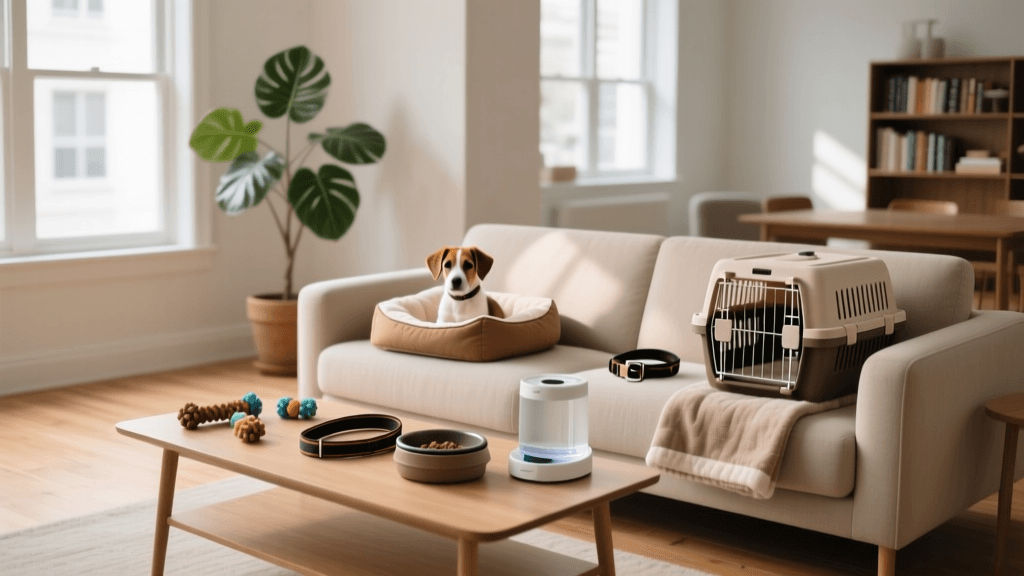
Walking into a pet supply store can be overwhelming for a first-time owner. To save time and money, focus on the functional essentials rather than the novelty items. Below is a structured breakdown of the exact gear you need, complete with recommended specifications and estimated costs.
| Item Category | Recommended Specs / Brands | Estimated Cost |
|---|---|---|
| Dog Crate | MidWest iCrate Double Door with Divider Panel (Size based on estimated adult weight) | $50 - $90 |
| Enzymatic Cleaner | Nature's Miracle Advanced Stain & Odor Eliminator (Crucial for potty accidents) | $12 - $18 |
| Harness & Leash | Rabbitgoo No-Pull Front-Clip Harness & 6-foot nylon leash (Avoid retractable leashes) | $25 - $40 |
| Interactive Toy | Kong Classic Red Rubber Toy (Stuff with dog-safe peanut butter & freeze) | $10 - $15 |
| Calming Aid | SmartPetLove Snuggle Puppy with Heat Pack & Heartbeat (Ideal for first nights) | $35 - $45 |
| Potty Bells | Potty Bells for Dogs (Hang on the exit door handle to signal potty needs) | $8 - $12 |
| Chew Treats | Yak Cheese Chews or Bully Sticks (For long-lasting, safe chewing sessions) | $15 - $25 |
Note: When purchasing a crate, ensure it is large enough for your dog to stand up, turn around, and lie down comfortably. If you have a puppy, use the included divider panel to section off the crate so it grows with them. A crate that is too large too soon can encourage the dog to eliminate in one corner and sleep in the other.
Setting Up the Safe Zone and Decompression
Before bringing your dog through the front door, designate a 'Safe Zone.' This should be a quiet, low-traffic area of your home, such as a corner of the living room or a spare bedroom, where the crate, water bowl, and a few toys are permanently set up.
According to the Humane Society's guide to bringing a new dog home, limiting a new dog's access to the entire house immediately can lead to overstimulation and anxiety. Use baby gates or exercise pens to confine your dog to the Safe Zone and one adjacent potty-access area for the first few days.
The 3-3-3 Rule of Decompression: First-time owners must manage their expectations. Expect your new dog to spend 3 days decompressing from the stress of the shelter, breeder, or transport environment. It will take roughly 3 weeks for them to learn your daily routine and begin to settle in. Finally, it takes about 3 months for a rescue dog to truly feel at home, build trust, and reveal their genuine personality.
The First 24 Hours: A Timeline for Success
The first day is about establishing calm predictability. Resist the urge to invite friends and family over for a 'welcome home' party. Your dog's nervous system is already in overdrive.
Hour 1: Arrival and Immediate Potty Break
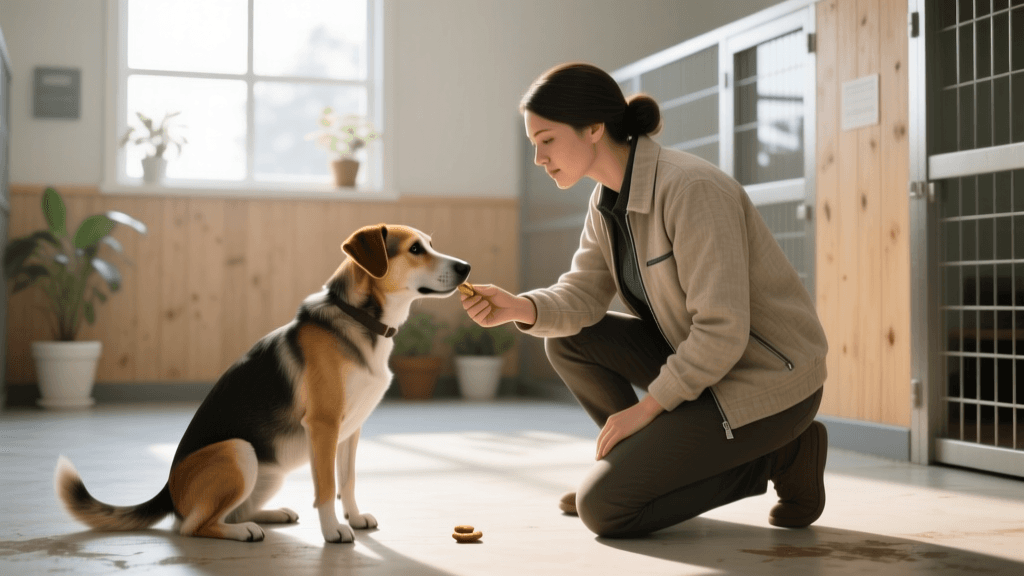
When you arrive home, do not immediately bring the dog inside. Keep them on their 6-foot leash and walk them directly to the designated outdoor potty spot. Stand quietly and allow them to sniff. The moment they eliminate, offer a high-value treat (like boiled chicken or a small piece of hot dog) and use a consistent cue word like 'Go Potty.' Only after they have emptied their bladder should you bring them inside.
Hour 2-4: Safe Zone Exploration and Hydration
Lead your dog to their pre-established Safe Zone. Unclip the leash and let them explore the confined space at their own pace. Offer a shallow bowl of fresh water, but do not overwhelm them with a massive meal right away, as stress can cause an upset stomach. Instead, offer a small handful of their regular kibble or a frozen Kong to help soothe their nerves through licking and chewing.
Evening: Calm Bonding and Routine Setting
Spend the evening sitting on the floor near the Safe Zone. Read a book or work on your laptop quietly. Allow the dog to approach you for affection, but do not force interaction if they choose to retreat to their crate. This teaches them that your presence is safe and non-demanding. Take them out for a potty break every two hours, and always after any play session or drinking water.
Nighttime: Crate Training and Sleep
The first night is notoriously difficult. Place the crate in your bedroom so the dog can hear and smell you; this drastically reduces separation anxiety. Place the SmartPetLove Snuggle Puppy inside the crate to mimic the warmth and heartbeat of littermates.
Set an alarm on your phone for 3:00 AM. Puppies and small adult dogs cannot hold their bladders for a full eight hours. When the alarm goes off, quietly lift or leash the dog, carry them outside to the potty spot, reward the elimination, and immediately return them to the crate with minimal talking or eye contact. Consistency on night one prevents weeks of midnight barking.
Health, Safety, and Veterinary Prep
Before your dog arrives, you should already have a wellness exam scheduled with a local veterinarian for within the first week of adoption. The CDC's recommendations on pet health and safety emphasize the importance of establishing a veterinary relationship early to ensure proper vaccination schedules, parasite prevention, and microchip registration are up to date.
Prepare a 'Doggy First Aid Kit' in your home. This should include:
- Styptic powder (to stop bleeding from torn nails)
- Saline eye wash
- Digital pet thermometer
- Hydrogen peroxide 3% (ONLY to be used to induce vomiting if explicitly instructed by a vet or Animal Poison Control)
- Gauze pads and self-adhering veterinary wrap
Additionally, program the number for the ASPCA Animal Poison Control Center (888-426-4435) and your nearest 24-hour emergency veterinary clinic into your phone. In an emergency, having these numbers readily available can save precious minutes and your dog's life.
Conclusion: Patience is Your Greatest Tool
Transitioning into the role of a dog owner is a profound lifestyle shift. There will be chewed shoes, potty accidents on the rug, and sleepless nights. These are not signs of failure; they are standard milestones in the journey of raising a dog. By thoroughly preparing your home, investing in the right functional gear, and adhering to a calm, structured first-day timeline, you are giving your new companion the greatest gift possible: a secure foundation. Take a deep breath, trust the 3-3-3 decompression rule, and enjoy the incredible journey of earning your new best friend's trust.
hannah-wickes
All our authors care for dogs every day — read more of their work on the authors page.