How to Evaluate Shelter Dog Behavior Before Adopting
Learn how to evaluate shelter dog behavior before adopting. Expert behavior analysis tips, consent tests, and red flags to ensure a perfect match.
The Illusion of the Kennel Environment
Adopting a shelter dog is a profoundly emotional experience, but from a canine behavior analysis perspective, it requires a highly objective eye. Many well-meaning adopters make the critical mistake of equating a dog's kennel behavior with their true, baseline personality. Shelters are loud, echoey, and visually overstimulating environments. According to the American Kennel Club, shelter environments are inherently stressful, often triggering 'barrier frustration' rather than genuine aggression.
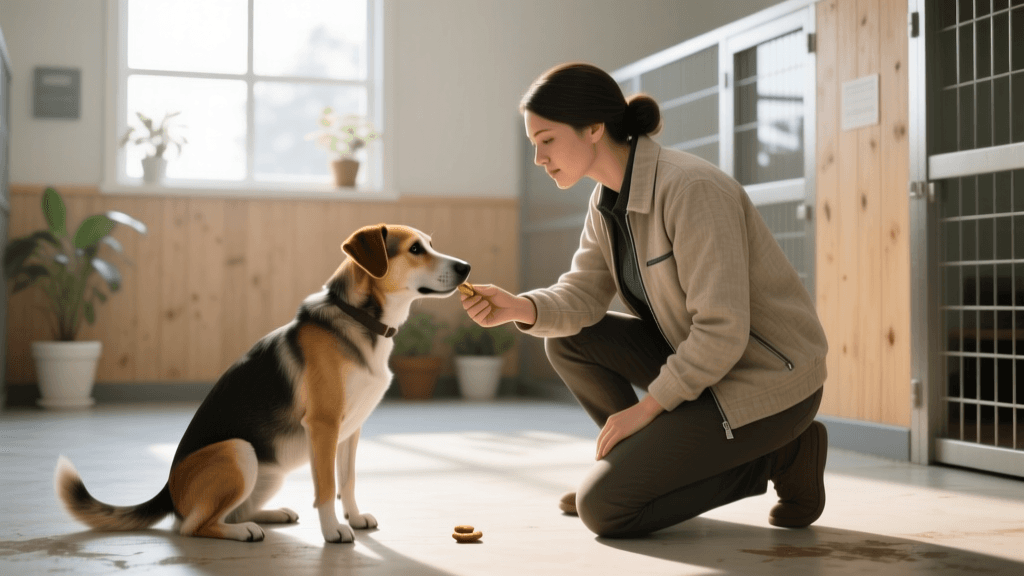
Barrier frustration occurs when a dog is physically prevented from approaching a stimulus (like another dog or a person) and expresses that thwarted arousal through barking, lunging, and spinning. Conversely, a dog that shuts down, faces the back wall, and exhibits chronic stress signals—such as excessive lip licking, yawning, or 'whale eye' (showing the whites of the eyes)—may be labeled as 'calm' by an untrained observer, when in reality, they are experiencing learned helplessness. To truly evaluate a dog, you must remove them from the kennel and assess their behavioral responses in a neutral environment.
The 3-Second Petting Consent Test
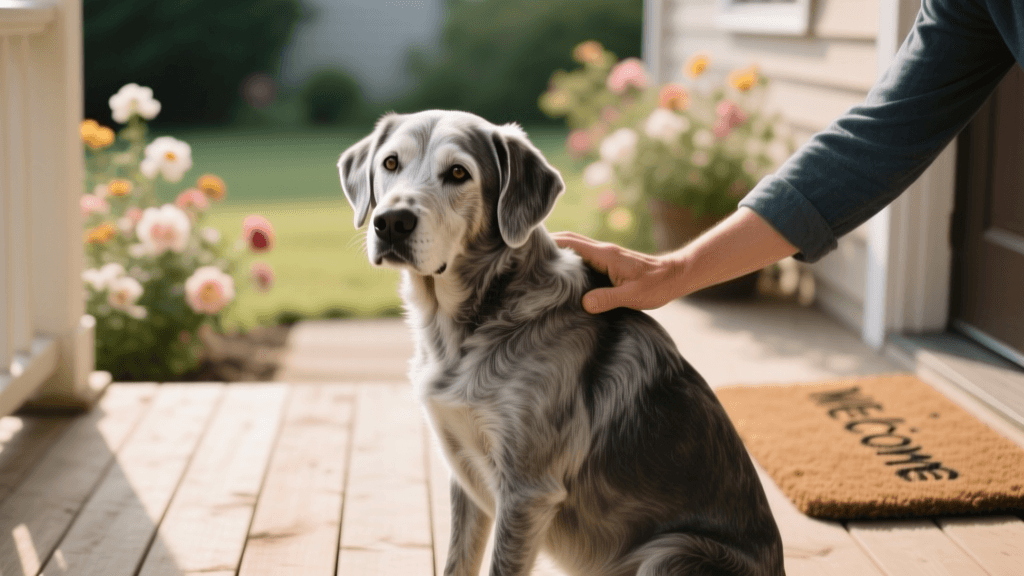
One of the most reliable ways to assess a shelter dog's sociability and boundaries is the Petting Consent Test. This evaluates the dog's willingness to engage and their comfort level with human touch, which is vital for predicting resource guarding or handling sensitivities.
- Approach neutrally: Stand sideways to the dog, avoiding direct, sustained eye contact, which can be perceived as a threat.
- Invite interaction: Gently offer the back of your hand below the dog's chin level. Allow the dog to close the distance.
- The 3-Second Rule: If the dog sniffs and leans in, pet their chest or shoulder for exactly three seconds, then stop and remove your hand.
- Observe the reaction: Does the dog lean into you, nudge your hand, or paw at you to ask for more? This is a massive green flag indicating a desire for social engagement. If the dog steps back, turns their head away, licks their lips, or freezes, they are communicating that they are over threshold and do not want to be touched at that moment.
As noted by the Humane Society of the United States, understanding these subtle canine body language cues is the foundation of preventing dog bites and building trust.
Assessing Threshold and Environmental Reactivity
Once you have established a baseline of sociability, it is time to test the dog's environmental threshold. Ask the shelter staff to fit the dog with a secure, front-clip harness (like the Rabbitgoo No-Pull Harness, approx. $25) attached to a 15-foot Biothane long line (approx. $30-$40). The long line provides the dog with a sense of agency while keeping you safe.
Walk the dog in a quiet outdoor area and introduce mild, novel stimuli. Open an umbrella 10 feet away, drop a clipboard on the grass, or have a stranger walk a stuffed 'dummy dog' at a distance. Observe the dog's recovery time. A behaviorally sound dog may startle but will quickly recover, sniff the novel object, and look back to you for guidance (checking in). A dog that reacts with prolonged panic, attempts to flee, or redirects their arousal by biting the leash is showing you that their threshold for environmental stress is currently very low, requiring extensive desensitization and counter-conditioning post-adoption.
Behavioral Red Flags vs. Green Flags
When evaluating a prospective adoption, use this structured comparison chart to categorize the behaviors you observe during the meet-and-greet.
| Behavioral Trait | Green Flags (Adoptable/Manageable) | Red Flags (Requires Expert Intervention) |
|---|---|---|
| Sociability | Soft eyes, relaxed open mouth, solicits play, leans into petting. | Hard staring, stiff posture, freezes when touched, avoids eye contact entirely. |
| Novel Objects | Startles but recovers quickly, investigates with sniffing. | Prolonged panic, urination/defecation from fear, aggressive snapping at object. |
| Handling | Tolerates gentle ear and paw inspections, wags tail loosely. | Lip curling, growling, snapping, or extreme trembling when touched near collar. |
| Leash Manners | Pulls but redirects when spoken to, checks in with handler. | Leash biting, redirecting bites onto handler's legs, total shutdown (refuses to walk). |
The Resource Guarding 'Trade-Up' Assessment
Resource guarding is a natural canine behavior, but severe guarding can be dangerous in a home with children. You can safely assess a dog's tendency to guard without risking a bite by playing the 'Trade-Up' game. Bring a low-value item, such as a plain plastic Kong or a rolled-up towel, and a high-value treat, like freeze-dried beef liver or Zuke's Mini Naturals (approx. $6 per bag).
Offer the low-value item to the dog. Once they take it, approach calmly from the side, toss the high-value treat near their nose, and say 'Trade.' If the dog readily drops the low-value item to eat the treat, and remains relaxed when you pick up the item, they have a healthy, trainable relationship with resource exchange. If the dog eats the low-value item frantically, stiffens, growls, or snaps the air when you approach, they are exhibiting early signs of resource guarding. This is not an automatic dealbreaker for experienced owners, but it requires immediate management and a strict behavior modification protocol.
The 3-3-3 Decompression Rule
From a behavioral science standpoint, a dog's cortisol (stress hormone) levels take time to metabolize after a major life transition. The half-life of cortisol in a dog's system means that the initial transition period is critical. The ASPCA and leading rescue organizations heavily advocate for the 3-3-3 Rule of Decompression:
- 3 Days (Detox): The dog may refuse to eat, hide, or sleep excessively. Keep the environment incredibly quiet. Limit visitors. Use a Snuffle Mat (approx. $20-$30) for mental enrichment and scent work, which naturally lowers a dog's heart rate.
- 3 Weeks (Routine): The dog begins to learn your schedule. This is when management flaws appear, such as counter-surfing or separation anxiety. Implement crate training or a designated 'place' mat using high-value chew items like a stuffed Kong Classic (approx. $12-$18).
- 3 Months (Bonding): The dog's true personality emerges. The 'honeymoon period' ends, and underlying behavioral quirks or trauma responses may surface. This is the ideal time to enroll in a positive-reinforcement group training class.
Essential Behavior Modification Gear for New Adopters
Setting up your home with the right behavioral tools before the dog arrives prevents the rehearsal of unwanted behaviors. Invest in the following essentials:
- Baskerville Ultra Muzzle ($15-$20): Even if you don't anticipate aggression, muzzle conditioning is a vital safety skill. The Baskerville Ultra allows the dog to pant, drink, and receive treats, making it a positive training tool rather than a punishment.
- 15-Foot Biothane Long Line ($30-$40): Essential for practicing reliable recall in open spaces before the dog is ready for off-leash privileges. Biothane is waterproof and easy to clean.
- Calming Pheromone Diffusers ($25-$35): Products like Adaptil release synthetic dog-appeasing pheromones (DAP) which mimic the pheromones produced by nursing mothers, helping to lower arousal levels in a new environment.
Evaluating a shelter dog requires looking past the immediate emotional pull and analyzing the dog's coping mechanisms, stress thresholds, and sociability. By utilizing consent tests, observing environmental reactions, and preparing your home with proper behavioral management tools, you set the foundation for a safe, successful, and lifelong partnership.
hannah-wickes
All our authors care for dogs every day — read more of their work on the authors page.