First Month Dog Schedule: Wellness and Potty Routines
Discover the ideal daily wellness and potty schedule for your new dog's first month. Learn feeding times, crate routines, and health tracking tips.

Welcome Home: The Power of a Predictable Routine
Bringing a new dog home is one of the most exciting milestones in life, but the transition from a shelter, rescue, or breeder environment into your home can be incredibly overwhelming for a canine. During the first 30 days, your primary goal is not just to teach basic obedience, but to establish a foundational daily wellness and potty schedule. Dogs are creatures of habit; they thrive on predictability. When a dog knows exactly when they will eat, sleep, play, and eliminate, their baseline anxiety drops significantly, making them more receptive to bonding and training.
According to the American Veterinary Medical Association (AVMA), establishing a consistent daily routine is critical for a new pet's physical health and behavioral development. A structured schedule regulates their digestive system, stabilizes their energy levels, and drastically reduces the frequency of indoor potty accidents. In this comprehensive guide, we will break down the ultimate daily schedule for your new dog's first month, complete with specific timings, wellness tracking metrics, and essential product recommendations.
The 3-3-3 Rule and Decompression
Before diving into the hourly schedule, it is vital to understand the "3-3-3 Rule" of dog adoption. This widely accepted timeline suggests that a new dog will spend the first three days decompressing and feeling overwhelmed, the first three weeks learning your routine and settling in, and the first three months building trust and forming a true bond. During those crucial first three days, keep your schedule incredibly low-key. Limit visitors, avoid loud noises, and stick strictly to the potty and feeding routines outlined below to give your dog a sense of immediate security.
The Ideal Daily Wellness and Potty Schedule
This schedule is designed for a typical adult dog or an older puppy (over 4 months of age) who has some bladder control. If you are bringing home an 8-week-old puppy, you will need to double the frequency of the potty breaks and mid-day naps.
Morning Routine: Wake Up and Eliminate (6:30 AM - 8:00 AM)
- 6:30 AM - Immediate Potty Break: The moment you wake up, take your dog outside. Do not stop to make coffee or check your phone. Carry them or walk them on a leash directly to their designated "potty spot." Use a consistent verbal cue like "Go potty" and reward immediately with a high-value treat (e.g., small pieces of boiled chicken or Zuke's Mini Naturals) the second they finish.
- 6:45 AM - Breakfast: Serve their morning meal. For a 30-pound dog, this typically means measuring out exactly 1 to 1.5 cups of high-quality dry kibble, depending on the brand's caloric density. Use a slow-feeder bowl or a Kong Classic stuffed with kibble and a smear of dog-safe peanut butter to promote mental stimulation and prevent bloating.
- 7:15 AM - Second Potty Break: Most dogs need to eliminate again 20 to 30 minutes after eating. Take them back to the same spot.
- 7:30 AM - Morning Walk & Enrichment: Embark on a 20-to-30-minute sniffari. Allow your dog to sniff the environment; sniffing lowers a dog's heart rate and provides immense mental enrichment.
Mid-Day Routine: Rest and Reset (12:00 PM - 4:00 PM)
- 12:00 PM - Mid-Day Potty & Water Check: If you are home, take the dog out for a quick 10-minute bathroom break. If you work away from home, ensure a dog walker or neighbor provides this break. Ensure their water bowl is filled with fresh, clean water.
- 12:30 PM - Crate Nap / Quiet Time: Dogs sleep up to 14 hours a day. Place your dog in their crate or a designated puppy-proofed pen with a long-lasting chew, such as a bully stick or a Yak Cheese chew, to encourage independent settling and jaw exercise.
- 3:30 PM - Afternoon Potty & Play: Take the dog out to eliminate, followed by a 15-minute structured play session. Use a flirt pole or play a gentle game of tug-of-war to burn off afternoon energy without overstimulating them.
Evening Routine: Dinner and Wind Down (5:30 PM - 10:30 PM)
- 5:30 PM - Evening Potty Break: A standard bathroom break before dinner.
- 6:00 PM - Dinner: Serve the second half of their daily caloric intake. The Centers for Disease Control and Prevention (CDC) emphasizes that regular, measured feeding schedules help prevent obesity and allow owners to monitor a dog's appetite, which is a key indicator of overall health.
- 6:30 PM - Post-Dinner Potty Break: Take them out to eliminate after their meal.
- 7:00 PM - Family Time & Training: Spend 15 minutes practicing basic commands like "sit," "down," and "touch." Keep training sessions short and positive.
- 8:00 PM - Water Removal: Pick up the water bowl. This is a crucial step for overnight potty success. Removing water two to three hours before bedtime ensures their bladder is relatively empty when they go to sleep.
- 10:00 PM - Final Potty Break: Take them out on a leash for a boring, quiet bathroom break. Keep the lights low and avoid play so they understand it is time for sleep.
- 10:30 PM - Bedtime: Place the dog in their crate. Cover the crate with a breathable blanket to create a den-like atmosphere and reduce visual stimuli.
Potty Training Logistics and Environment Setup
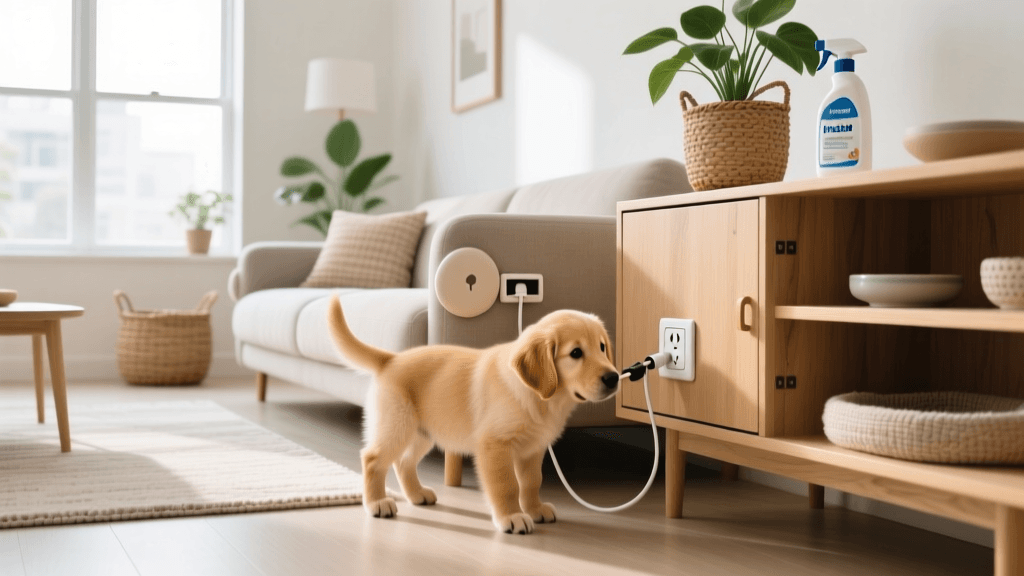
A schedule is only as effective as the environment supporting it. During the first month, your dog should not have free roam of the house. Use baby gates to restrict access to carpeted areas or rooms where accidents might go unnoticed. When you cannot actively supervise your dog with your eyes on them, they must be in a crate or a secure pen.
Crate Sizing: The crate should be just large enough for the dog to stand up, turn around, and lie down comfortably. If the crate is too large, the dog may designate one corner for sleeping and another for eliminating. If you have a wire crate, use the included divider panel to adjust the size as your puppy grows.
Accident Cleanup: Never use ammonia-based cleaners for potty accidents, as ammonia smells like urine to a dog and will encourage them to mark the spot again. Instead, invest in a high-quality enzymatic cleaner that breaks down the uric acid crystals.
Tracking Your Dog's Wellness: The Daily Checklist
The first 30 days are a critical window for identifying underlying health issues, dietary intolerances, or stress-related illnesses. Keep a daily wellness log on your refrigerator or use a pet-tracking app to monitor the following metrics.
| Wellness Metric | What to Look For (Normal) | Action if Abnormal |
|---|---|---|
| Stool Consistency | Firm, log-shaped, dark brown, easy to pick up. | If soft or diarrhea persists for more than 24 hours, or if you see blood/mucus, contact your vet immediately. |
| Appetite & Hydration | Eats all meals within 15 minutes; drinks water steadily throughout the day. | Refusal to eat for over 24 hours or excessive, unquenchable thirst requires a veterinary checkup. |
| Energy Levels | Alert during walks and play; settles down easily for naps. | Lethargy, inability to settle, or sudden hyperactivity may indicate stress, poor diet, or illness. |
| Coat & Skin | Shiny coat, no excessive scratching, redness, or hot spots. | Constant licking of paws or scratching may indicate environmental allergies or a food protein intolerance. |
Pro Tip: Take a photo of your dog's stool once a week during the first month. If you need to visit the veterinarian for digestive issues, having visual evidence of their stool consistency is incredibly helpful for accurate diagnosis.
Essential Wellness Products for the First Month
To execute this schedule flawlessly, you need the right tools. Here are three highly recommended products to support your dog's wellness and potty routine, along with their estimated costs:
- Snuggle Puppy Behavioral Aid (Approx. $39.95): This plush toy features a real-feel heartbeat and a heat pack. Placing this in your dog's crate at night mimics the feeling of sleeping next to their littermates, drastically reducing nighttime whining and separation anxiety during the first few weeks.
- Nature's Miracle Advanced Stain & Odor Eliminator (Approx. $12.99 - $15.99): An absolute necessity for any new dog owner. This enzymatic formula penetrates deep into carpets and upholstery to destroy organic odors rather than just masking them, preventing repeat potty offenses.
- Kong Classic Dog Toy - Red or Black (Approx. $15.00 - $25.00): Use this for scheduled meal times. Stuffing the Kong with your dog's measured kibble and a little plain, unsweetened pumpkin puree (great for digestive wellness) turns a 2-minute meal into a 15-minute brain game, reducing stress and promoting healthy digestion.
Conclusion: Consistency is the Ultimate Kindness
Getting a new dog is a marathon, not a sprint. The daily wellness and potty schedule outlined above may feel rigid at first, but it is the ultimate act of kindness you can offer a dog navigating a massive life transition. By controlling their environment, measuring their nutrition, tracking their physical health, and providing predictable potty opportunities, you are building a foundation of trust. Stick to the routine, be patient with the inevitable accidents, and watch your new companion blossom into a confident, healthy, and deeply bonded family member.
robin-maitland
All our authors care for dogs every day — read more of their work on the authors page.