Managing Puppy Reactivity: 2026 Engagement-Disengagement Guide
Learn the 2026 Engagement-Disengagement Protocol to manage puppy fear reactivity. Discover threshold training steps, calming tools, and expert tips.
Understanding Early Puppy Reactivity in 2026
Raising a puppy is a joyous experience, but it can quickly become overwhelming if your young dog begins to exhibit signs of fear, anxiety, or reactivity. In 2026, veterinary behaviorists emphasize that early intervention is the cornerstone of managing puppy reactivity. Unlike adult dogs with years of rehearsed behavioral patterns, puppies possess high neuroplasticity, meaning their brains are incredibly adaptable to positive, structured interventions. Reactivity in puppies—often manifested as barking, lunging, freezing, or hiding in the presence of novel stimuli—is rarely rooted in true aggression. Instead, it is almost always a symptom of fear, overstimulation, or a lack of appropriate socialization during critical developmental windows.
If your puppy is struggling to cope with the sights and sounds of the modern world, you are not alone. The good news is that evidence-based behavioral modification techniques, specifically the Engagement-Disengagement Protocol (EDP), can help your puppy build confidence and emotional regulation. This comprehensive guide will walk you through the exact steps, modern tools, and threshold management strategies needed to transform your fearful puppy into a resilient companion.
The Science of Puppy Fear Periods
Before diving into training protocols, it is crucial to understand the biological drivers behind puppy anxiety. Puppies experience distinct 'fear periods' during their first year of life. The first typically occurs between 8 and 11 weeks of age, often coinciding with the transition to a new home. The second, and often more intense, fear period occurs between 6 and 14 months, aligning with adolescence and significant neurological pruning.
During these windows, a single traumatic or highly stressful event can leave a lasting imprint on a puppy's developing brain. According to the American Veterinary Society of Animal Behavior (AVSAB), proper socialization during these periods is critical, but it must be done at the puppy's pace. Forcing a fearful puppy to interact with a trigger (a practice known as 'flooding') is now widely condemned by 2026 behavioral standards, as it exacerbates anxiety and damages the human-animal bond. Instead, experts advocate for sub-threshold exposure paired with positive reinforcement.
The Engagement-Disengagement Protocol (EDP)
The Engagement-Disengagement Protocol is a highly effective, force-free behavior modification technique designed to change a dog's emotional response to a trigger. The goal is to teach the puppy that the presence of a scary stimulus predicts good things (engagement), and that choosing to look away from the stimulus and back at the handler is a highly rewarding choice (disengagement).
Phase 1: Classical Conditioning (Weeks 1-3)
In the first phase, you are simply pairing the trigger with a high-value reward. The puppy does not need to perform any specific behavior other than noticing the trigger from a safe distance.
- Step 1: Find the Sub-Threshold Distance. Identify the distance at which your puppy notices the trigger (e.g., a stranger, another dog, a loud truck) but does not react with panic, barking, or freezing. This might be 30 meters or 50 meters.
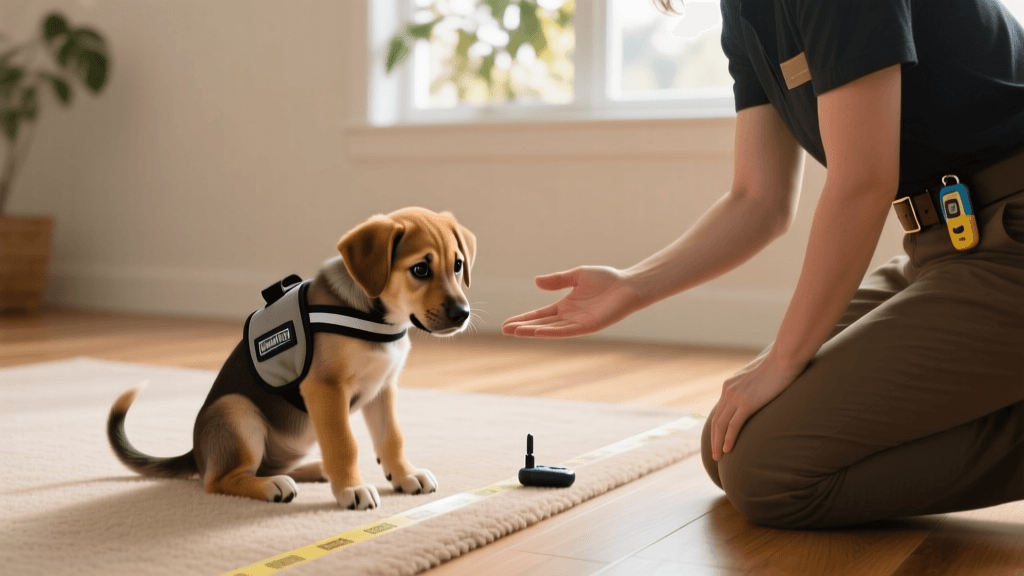
- Step 2: Mark the Engagement. The moment your puppy looks at the trigger, use a marker word like 'Yes!' or click a clicker.
- Step 3: Deliver the Reward. Immediately feed a high-value treat (e.g., boiled chicken, freeze-dried liver). The treat should be delivered away from the trigger, encouraging the puppy to turn their head toward you.
- Step 4: Repeat. Continue this process for 5-10 minute sessions. Over time, the puppy will begin to anticipate the treat the moment they see the trigger, creating a positive emotional association.
Phase 2: Operant Conditioning (Weeks 4-6)
Once your puppy consistently looks at the trigger and then immediately snaps their head back to you in anticipation of a treat, you are ready for Phase 2. Here, the puppy learns that disengaging from the trigger is an active choice that earns rewards.
- Step 1: Wait for the Choice. When the puppy looks at the trigger, do not mark or reward immediately. Wait patiently.
- Step 2: Mark the Disengagement. The moment the puppy voluntarily turns their head away from the trigger to look back at you, mark with 'Yes!'
- Step 3: Reward Generously. Deliver a 'jackpot' reward (3-4 pieces of high-value food) directly to your puppy's mouth.
- Step 4: Reset and Repeat. Take a few steps backward to increase distance, then allow the puppy to engage with the trigger again. This teaches emotional regulation and impulse control.
Trigger Threshold Management & Reward Hierarchy
Success with the EDP relies entirely on managing your puppy's threshold. If your puppy is over threshold (panting heavily, refusing treats, lunging, or whining), learning cannot occur. The amygdala has hijacked the brain, and the cognitive cortex is effectively offline. To help you plan your 2026 training sessions, refer to the structured reward and distance hierarchy below.
| Trigger Intensity | Safe Distance (Meters) | Recommended Reward Value | Tool Integration |
|---|---|---|---|
| Low (Distant, quiet stimulus) | 15 - 20 meters | Medium (Kibble, carrot bits, commercial training treats) | Standard 4-foot leash, treat pouch |
| Medium (Moving stimulus, moderate noise) | 25 - 40 meters | High (Boiled chicken, string cheese, hot dogs) | Front-clip harness, lick mat for post-session decompression |
| High (Direct approach, loud noises) | 50+ meters | Jackpot (Freeze-dried liver, real meat pouches, bone broth) | Calming pheromone spray (Adaptil), snuffle mat for grounding |
Modern Environmental Management Tools
Training sessions are only a fraction of your puppy's day. Managing the home environment is equally critical for an anxious puppy. In 2026, the market offers several scientifically backed tools to lower baseline cortisol levels in reactive puppies.
1. Pheromone Therapy: Synthetic dog-appeasing pheromones (DAP), such as Adaptil Junior collars and diffusers, mimic the comforting pheromones released by a nursing mother. Studies show these can significantly reduce stress vocalizations and pacing in new puppies.
2. Smart White Noise & Acoustic Masking: Puppies with sound sensitivity (thunder, fireworks, urban traffic) benefit from continuous acoustic masking. Modern smart-home speakers can now play specialized bio-acoustic music designed to lower canine heart rates, blocking out sudden environmental triggers.
3. Visual Barriers: For puppies reactive to people or dogs walking past the house, apply frosted window film to the lower half of your windows. This simple, low-cost modification prevents the puppy from practicing barrier frustration and reactive barking, keeping their nervous system calm.
For more on creating a safe space, the ASPCA recommends setting up a dedicated 'decompression zone' with a covered crate and chew toys to help puppies self-soothe after overwhelming outings.
Troubleshooting Common EDP Mistakes
Even dedicated owners can stumble when implementing the Engagement-Disengagement Protocol. Here are the most common pitfalls and how to correct them:
- Mistake: Pushing Over Threshold. If your puppy refuses a piece of boiled chicken, you are too close to the trigger. The trigger has surpassed their ability to process food. Fix: Immediately increase your distance by 10-15 meters without pulling on the leash. Use a happy voice to encourage them to follow you.
- Mistake: Inconsistent Marking. The marker word ('Yes!') must occur within 0.5 seconds of the puppy's head turning. If you delay the marker, the puppy will not understand which behavior earned the reward. Fix: Practice your clicker or marker timing at home with a bouncing tennis ball before taking it to the streets.
- Mistake: Using Low-Value Treats in High-Stress Environments. Dry kibble might work in your living room, but it will not compete with the adrenaline of a passing skateboard. Fix: Reserve your puppy's absolute favorite, highest-smelling treats exclusively for reactivity training sessions.
Building a Resilient Puppy for the Future
Managing a reactive puppy requires patience, empathy, and consistency. It is vital to celebrate the micro-victories: a single moment of disengagement, a relaxed tail carriage, or a deep sigh of relief after a stressful encounter. Remember that socialization is not about forcing your puppy to interact with everything; it is about teaching them that the world is a safe place and that they can look to you for guidance when they feel unsure.
According to the American Kennel Club (AKC), positive, puppy-led socialization builds a foundation of trust that lasts a lifetime. By utilizing the Engagement-Disengagement Protocol, respecting your puppy's thresholds, and leveraging modern environmental management tools, you are not just suppressing bad behavior—you are actively rewiring your puppy's brain for confidence, resilience, and emotional stability in 2026 and beyond.
'A reactive puppy is not a bad dog; they are simply a dog asking for help navigating a world that feels too big, too loud, and too fast. Your job is to be their safe harbor.'
jonas-cole
All our authors care for dogs every day — read more of their work on the authors page.