Fear-Free Muzzle Training for Vet Visits in 2026: A Force-Free Guide
Learn force-free muzzle training for anxious dogs using the Baskerville Ultra. Discover 2026 cooperative vet care techniques for stress-free visits.
The Paradigm Shift to Cooperative Care in 2026
In 2026, the veterinary and dog training communities have fully embraced cooperative care as the gold standard for canine health and wellbeing. Gone are the days of forceful restraint and pinning down fearful dogs. Today, positive reinforcement and force-free methods dictate that we must prioritize a dog's mental health just as much as their physical health. Central to this philosophy is proactive muzzle training. According to Fear Free Pets, reducing fear, anxiety, and stress (FAS) during veterinary visits is critical for accurate medical assessments and long-term wellness. When a dog is terrified, their heart rate spikes, cortisol floods their system, and physical exams become inaccurate and dangerous. Muzzle training, when done correctly using force-free methods, transforms a potentially traumatic veterinary visit into a manageable, stress-free experience.
Why Muzzle Training is a Health and Wellness Imperative
Many dog owners still harbor outdated stigmas regarding muzzles, associating them with aggression or punishment. In modern force-free dog care, a muzzle is viewed exactly like a seatbelt or a recovery cone: a vital safety and wellness tool. For anxious, reactive, or pain-sensitive dogs, a muzzle prevents bite incidents, which in turn prevents the need for heavy chemical restraints or sedation. While sedation is sometimes medically necessary, minimizing its use through proactive cooperative care reduces the physical toll on your dog's liver and kidneys. Furthermore, a well-trained dog wearing a comfortable muzzle allows the veterinarian to perform thorough dental checks, draw blood, and administer vaccines without the dog experiencing sheer panic. This proactive approach ensures that your dog receives top-tier medical care without compromising their emotional wellbeing.
Choosing the Right Tool: The Baskerville Ultra Muzzle
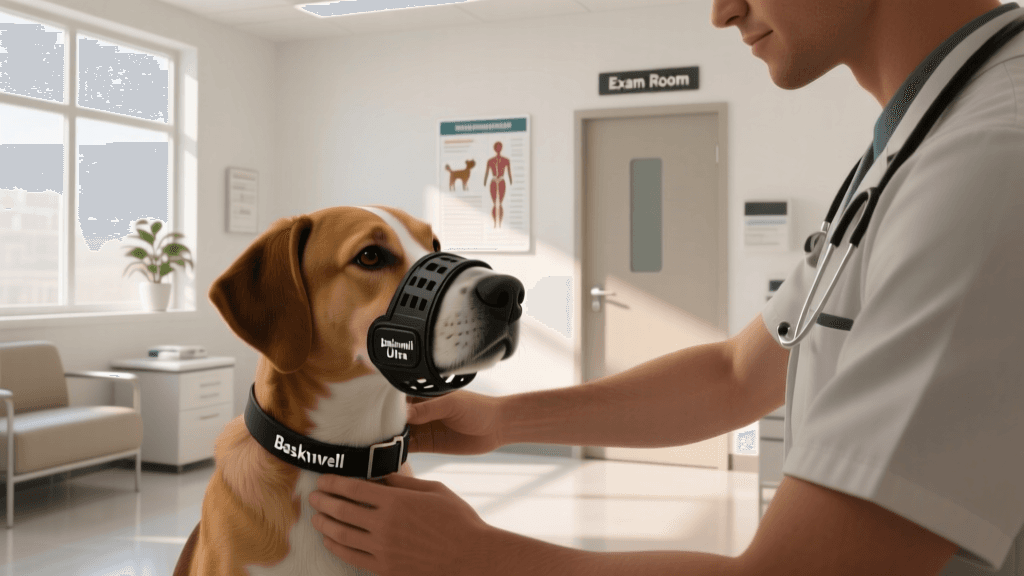
For force-free muzzle training in 2026, the Baskerville Ultra Muzzle remains the premier choice among certified behavior consultants. Unlike restrictive cloth or grooming muzzles that clamp the dog's mouth shut, the Baskerville Ultra is a basket-style muzzle designed with canine anatomy and welfare in mind. It allows the dog to pant freely (which is essential for thermoregulation and stress relief), drink water, and most importantly, receive high-value treats during training sessions. The ability to deliver treats through the muzzle is the cornerstone of desensitization and counterconditioning.
Muzzle Comparison Chart for Force-Free Training
| Muzzle Type | Panting Allowed? | Treat Delivery? | Force-Free Suitability |
|---|---|---|---|
| Baskerville Ultra (Basket) | Yes | Yes | Excellent (Gold Standard) |
| BUMAS Custom (Biothane) | Yes | Yes | Excellent (Premium Custom) |
| Cloth / Grooming Muzzle | No | No | Poor (High Stress Risk) |
| Wire Basket (Traditional) | Yes | Difficult | Good (Heavy, less comfortable) |
The Psychology of Desensitization and Counterconditioning
Force-free muzzle training relies heavily on two behavioral science principles: Desensitization and Counterconditioning (DSCC). Desensitization involves exposing the dog to the muzzle at an intensity so low that it does not trigger a fear response. Counterconditioning changes the dog's emotional response to the muzzle from negative or neutral to highly positive. The International Association of Animal Behavior Consultants emphasizes that DSCC must be done at the dog's pace. If you rush the process and force the muzzle onto the dog's snout, you will trigger 'flooding,' which will exponentially increase the dog's fear and set your training back by months. Patience, observation of canine body language, and high-value reinforcement are your most important tools.
Step-by-Step Force-Free Muzzle Training Protocol
Follow this structured, force-free protocol to build a positive conditioned emotional response (+CER) to the Baskerville Ultra Muzzle. Always work in a quiet, familiar environment before introducing distractions.
Phase 1: The Muzzle is a Treat Bowl
Begin by placing the Baskerville Ultra on the floor or holding it loosely in your hand. Do not attempt to put it on the dog. Smear a high-value, lickable treat (such as plain pumpkin puree or a dog-safe peanut butter alternative) inside the nose cup of the muzzle. Allow the dog to approach and lick the treat out at their own volition. The moment the dog pulls their head away, the treat session ends. Repeat this until the dog eagerly dives into the muzzle the moment they see it. This phase builds a strong positive association with the sight and smell of the muzzle.
Phase 2: Voluntary Nose Insertion and Duration
Once the dog is happily eating from the muzzle, begin to withhold the treat until the dog voluntarily pushes their nose deeper into the nose cup. You can use a target stick or place a small piece of freeze-dried liver at the very tip of the inside of the muzzle. When the dog's nose touches the back of the cup, mark the behavior with a clicker or a verbal 'Yes!' and deliver a jackpot of treats through the front grill. Gradually increase the duration the dog keeps their nose in the cup before you mark and reward. Start with one second, then build up to five, ten, and eventually thirty seconds of sustained voluntary targeting.
Phase 3: Desensitizing the Straps and Touch
With the dog's nose happily planted in the muzzle, begin to lightly touch the straps behind their ears. Do not fasten them yet. Touch the strap, mark, and treat. Next, gently lift the strap over the dog's head, immediately mark, treat, and release the strap. This desensitizes the dog to the feeling of pressure and movement around their neck and ears, which is often a trigger point for anxious dogs. Over multiple sessions, gradually increase the time the strap rests over the head before you release it.
Phase 4: Fastening and Movement
Once the dog is entirely relaxed with the strap resting on their neck, gently clip the buckle. Mark and treat heavily. Immediately unclip it. Repeat this, slowly increasing the time the buckle remains fastened. Once the muzzle is securely on, encourage the dog to move around. Toss treats on the ground, engage in a gentle game of tug (if the muzzle allows), or go for a short, happy walk in the yard. The goal is to teach the dog that wearing the muzzle predicts fun, engaging activities, not just visits to the vet.
Phase 5: Real-World Proofing and Vet Clinic Integration
Practice wearing the muzzle in various environments: the car, the living room, and eventually the parking lot of your veterinary clinic. Do not go inside the clinic during the initial proofing stages. Simply sit in the car with the muzzle on, feed high-value treats, and go home. This prevents the dog from associating the muzzle exclusively with the stress of the exam room.
High-Value Reinforcement Strategies for 2026
Successful force-free training requires rewards that are genuinely motivating to your specific dog. In 2026, the market for enrichment and high-value training treats has expanded significantly. For muzzle training, lickable treats are superior because they can be easily delivered through the Baskerville Ultra's grill. Consider using silicone squeeze tubes filled with bone broth, plain Greek yogurt, or commercial dog-safe pastes. Additionally, utilizing interactive tools like the West Paw Toppl or a Kong Easy Treat can keep the dog engaged while you practice fastening the straps. Always reserve these 'jackpot' treats exclusively for muzzle training to maintain their high economic value in your dog's mind.
Troubleshooting Common Training Hurdles
The dog paws at the muzzle: This indicates that the training has progressed too quickly, or the fit is uncomfortable. Ensure the Baskerville Ultra is properly sized; it should not rub against the dog's eyes or restrict their panting. If they paw at it, distract them immediately with a treat scatter on the floor, remove the muzzle calmly, and take a step back in your training phases.
The dog refuses to put their nose in: You may have accidentally 'lured' the dog into a situation they weren't ready for, breaking their trust. Return to Phase 1. Make the muzzle incredibly rewarding by placing it next to their food bowl during mealtimes so it becomes a predictor of good things.
Partnering with Your Veterinary Team
Communication with your veterinary team is a crucial component of cooperative care. According to guidelines supported by the ASPCA, owners should advocate for their pets by informing the clinic ahead of time about their dog's muzzle training progress. Ask your vet if they utilize Fear Free handling techniques and if they are willing to allow your dog to wear their familiar, positively-conditioned Baskerville Ultra during the exam. Many modern veterinary clinics in 2026 now have 'happy visit' protocols, where you can bring your dog in, practice muzzle targeting in the lobby, receive treats from the staff, and leave without any medical procedures taking place. This builds a massive trust account between your dog and the veterinary staff.
Conclusion
Force-free muzzle training is an act of deep compassion and responsible pet ownership. By utilizing the Baskerville Ultra and adhering to the principles of desensitization and counterconditioning, you are giving your dog the gift of safety and reduced anxiety. In 2026, we know better, so we do better. Embrace cooperative care, celebrate the small victories, and watch as your dog transforms from a fearful patient into a confident, willing participant in their own healthcare journey.
aaron-whyte
All our authors care for dogs every day — read more of their work on the authors page.