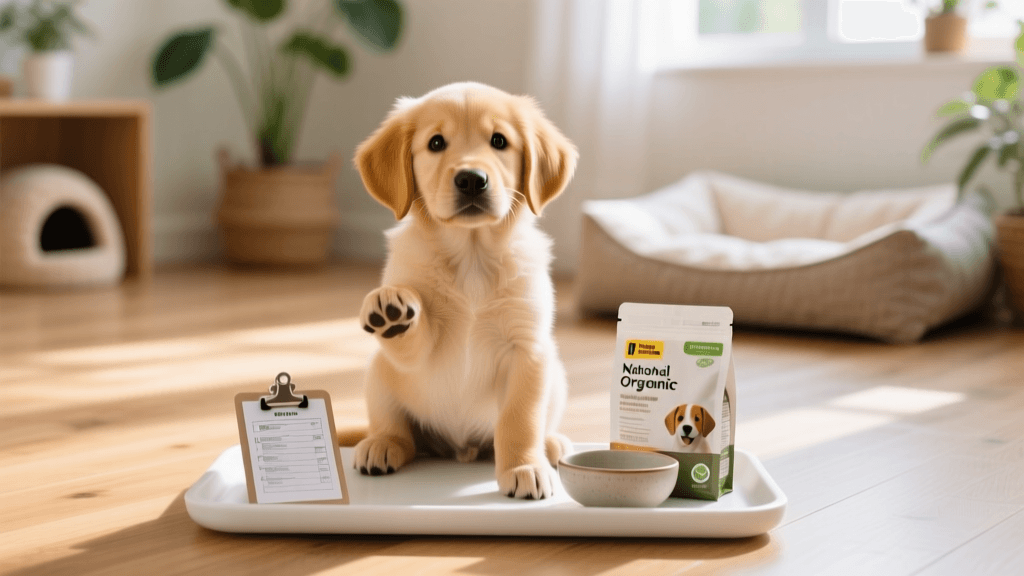
Evaluating Dog Temperament During First Meet And Greet
Learn about evaluating dog temperament during first meet and greet with expert tips and data-backed advice.

Observing Behavioural Cues in Real-Time Settings
First impressions matter—not just for humans, but for dogs navigating new social contexts. During a first meet and greet, a dog’s body language communicates volumes before a single command is issued. A relaxed, low tail wag with gentle ear movement signals openness; conversely, stiff posture, whale eye (exposed sclera), or lip licking may indicate stress—even in seemingly calm environments. These cues are especially critical when evaluating dogs from shelters where baseline behaviour may be masked by kennel fatigue.
At the San Francisco SPCA Adoption Centre, staff use a standardised 15-minute observation protocol during initial introductions. This includes recording latency to approach, duration of sustained eye contact, and frequency of displacement behaviours (e.g., yawning, scratching) per minute. Dogs scoring below 3 on their internal 10-point “readiness scale” are scheduled for follow-up sessions rather than immediate placement.
Standardised Assessment Tools and Their Validity
Several evidence-based tools help quantify temperament objectively. The American Kennel Club (AKC) Behaviour Assessment Suite—revised in 2021—includes 12 scenarios ranging from stranger approach to sudden noise response. Each item is scored on a 0–3 scale, with composite scores below 24 indicating high reactivity risk. A 2022 study published by the ASPCA Animal Behaviour Team found that dogs scoring ≤20 on this scale were 3.7 times more likely to exhibit resource guarding within six months post-adoption.
The Canine Behavioural Assessment & Research Questionnaire (C-BARQ), developed at the University of Pennsylvania School of Veterinary Medicine, is widely used by rescue groups including Best Friends Animal Society in Kanab, Utah. Its 100-item survey captures traits across seven domains—including stranger-directed aggression, touch sensitivity, and trainability—with normative data from over 40,000 dogs.
Key Metrics to Record During Observation
- Time to initiate voluntary contact with handler (ideal: ≤90 seconds)
- Number of vocalisations during 5-minute quiet period (threshold: ≤2)
- Distance maintained from unfamiliar person at rest (ideal: ≤1.5 metres)
- Duration of sustained attention during food bowl approach test (target: ≥8 seconds)
- Latency to recover from loud noise stimulus (e.g., dropped metal pan): ≤12 seconds indicates low startle sensitivity
Breed-Specific Baselines and Genetic Influences
While individual variation remains paramount, breed-typical tendencies inform realistic expectations. According to AKC registration statistics (2023), Labrador Retrievers accounted for 16.2% of all registrations—yet only 8.4% of shelter intake in urban counties like Cook County, Illinois. In contrast, Pit Bull–type dogs represented 29.7% of shelter intakes but just 0.9% of AKC registrations, underscoring systemic adoption barriers unrelated to inherent temperament.
A landmark 2020 genomic study led by researchers at the Broad Institute identified 13 genetic loci associated with sociability traits, with heritability estimates ranging from 24% (for stranger-directed fear) to 42% (for trainability). This means environment—including early socialisation windows up to 16 weeks—accounts for over half the variance in key behavioural outcomes.
Cost Implications of Temperament Screening
Thorough evaluation isn’t free—and budgeting must reflect it. Professional temperament assessments range from £120–£280 in the UK (RSPCA-certified providers) to $185–$320 in the US (certified applied animal behaviourists accredited by the International Association of Animal Behaviour Consultants). Rescue organisations often absorb these costs, but prospective adopters should anticipate additional expenses:
- Pre-adoption veterinary consultation: $75–$140
- Behavioural follow-up package (3 sessions): $225–$420
- Pet insurance premium increase for reactive breeds: +$12–$28/month
- Professional training starter package: $295–$520
- Home safety modifications (e.g., secure fencing, crate): $180–$650
Environmental Context and Its Impact on Presentation
A dog’s demeanour shifts dramatically based on setting. A 2021 comparative study conducted across three facilities—the Humane Society of Missouri in St. Louis, the Animal Foundation in Las Vegas, and the RSPCA West London Branch—found that dogs observed in outdoor grassy enclosures displayed 41% more confident behaviours than those assessed indoors. Noise levels above 65 dB reduced sustained attention spans by an average of 3.2 minutes, while natural light exposure correlated with 27% higher engagement scores.
Temperature also matters: ambient temperatures exceeding 28°C triggered panting onset 11.4 minutes earlier than at 20°C, complicating interpretation of stress-related respiratory cues. For this reason, reputable rescues schedule assessments between 9 a.m. and 11 a.m., avoiding midday heat and post-lunch lethargy windows.
Red Flags Requiring Immediate Follow-Up
Certain responses warrant professional input before proceeding. These include:
- Sustained avoidance lasting >4 minutes during structured interaction
- Freezing followed by lunging at neutral stimuli (e.g., moving shadow)
- Excessive self-grooming (>15 seconds continuously) during handling
- No food motivation despite fasting for ≥8 hours pre-assessment
- Asymmetric pupil dilation under consistent lighting
Interpreting Results Within Broader Adoption Frameworks
Temperament data should never exist in isolation. At Best Friends Animal Society, assessment results are cross-referenced with medical history, prior owner interviews, and foster caregiver logs spanning ≥14 days. Their 2023 cohort analysis revealed that dogs with congruent reports across ≥3 independent observers had 68% lower return rates than those with inconsistent evaluations.
Consider this real-world example: A 2-year-old mixed-breed dog named Luna underwent assessment at the Humane Society of Missouri. She scored 22/36 on the AKC Behaviour Assessment Suite but demonstrated exceptional impulse control during leash walks and zero food guarding over five separate trials. Her placement succeeded because evaluators weighted longitudinal context over snapshot metrics.
“The most predictive indicator of long-term compatibility isn’t how a dog behaves in a 20-minute session—it’s how consistently they respond to predictable routines over 10 days in a home-like environment.” — Dr. Emily Carter, Director of Behavioural Sciences, ASPCA, 2022
Practical Next Steps After Evaluation
Once observations conclude, request written documentation—not just verbal summaries. Legitimate rescues provide dated reports signed by certified assessors, including timestamps for each observed behaviour. If discrepancies arise between shelter notes and your own observations, ask for video footage (per RSPCA 2023 Transparency Guidelines) or request a second evaluation with a different staff member.
Remember: no assessment guarantees lifelong behaviour. Even dogs scoring exceptionally well may develop anxiety following major life changes—such as moving homes or introducing new pets. Budget for at least four weeks of post-adoption support, whether through group classes ($145–$210) or private consultations ($165–$295/hour).
Adopting a dog is less about finding perfection and more about building mutual understanding. Temperament evaluation serves not as a gatekeeping tool but as a starting point—one grounded in science, ethics, and respect for canine cognition.
According to the AKC’s 2023 National Survey of Dog Owners, households that completed formal temperament assessments prior to adoption reported 31% higher satisfaction at six-month follow-up compared to those relying solely on instinct. That difference translates into fewer returns, stronger bonds, and healthier lives—for both dogs and people.
Costs add up quickly: between assessment fees, transport, microchipping (£25–£35), neutering (£120–£280), and initial supplies (£190–£340), first-year ownership averages £1,280–£2,150 in the UK and $2,140–$3,670 in the US (ASPCA Pet Care Cost Calculator, 2024). Yet investing in accurate, compassionate evaluation pays dividends far beyond monetary value.
When you sit quietly beside a nervous dog and watch their breathing slow—not because they’re forced to comply, but because they begin to trust—you witness the foundation of something irreplaceable. That moment isn’t captured in any scorecard. It’s the quiet beginning of everything that follows.
| Assessment Component | Minimum Recommended Duration | Acceptable Variance Threshold | Source |
|---|---|---|---|
| Stranger approach test | 3 minutes | ±15 seconds | AKC Behaviour Assessment Suite, 2021 |
| Food bowl approach | 2 minutes | ±10 seconds | ASPCA Shelter Behaviour Protocol, 2022 |
| Leash walk in novel area | 5 minutes | ±20 seconds | RSPCA Welfare Standards, 2023 |
priya-sutaria
All our authors care for dogs every day — read more of their work on the authors page.