Best Smart Pet Cameras for Reactive Dog Doorbell Training 2026
Discover how to use the Eufy Pet Treat Camera and smart doorbell integrations to manage doorbell reactivity and anxiety in reactive dogs in 2026.
Understanding Doorbell Reactivity in Dogs
Living with a reactive or highly anxious dog requires immense patience, strategic management, and a deep understanding of canine neurology. For many pet parents, the most chaotic part of the day is the arrival of a delivery driver or a guest. The sudden, piercing chime of a doorbell can instantly send an anxious dog into a state of sympathetic nervous system overdrive. According to the ASPCA's guidelines on excessive barking, territorial barking and alarm barking are triggered by sudden environmental changes that the dog perceives as a threat to their safe space.
In 2026, the approach to managing these intense emotional responses has shifted away from punitive corrections and toward proactive environmental management and remote desensitization. By leveraging advanced smart home technology, owners can now intercept the arousal cycle before the dog reaches their reactivity threshold, creating a safer, calmer household for everyone.
Why Smart Treat Cameras Changed Reactive Dog Training in 2026
Historically, desensitizing a dog to the doorbell required a second person to stand outside and ring the bell repeatedly while the owner fed treats. This was logistically difficult and often resulted in the dog practicing the reactive behavior between repetitions. Modern smart pet cameras with treat-tossing capabilities have revolutionized this process.
These devices allow owners to remotely monitor their dog's body language via high-definition, wide-angle lenses and dispense high-value rewards from their smartphone. More importantly, the 2026 generation of smart cameras features seamless integration with smart doorbells and home automation routines, allowing for visual alerts that precede audio triggers, effectively giving the anxious dog time to process the event without panicking.
Top Smart Camera Pick: Eufy Pet Treat Camera (2026 Model)
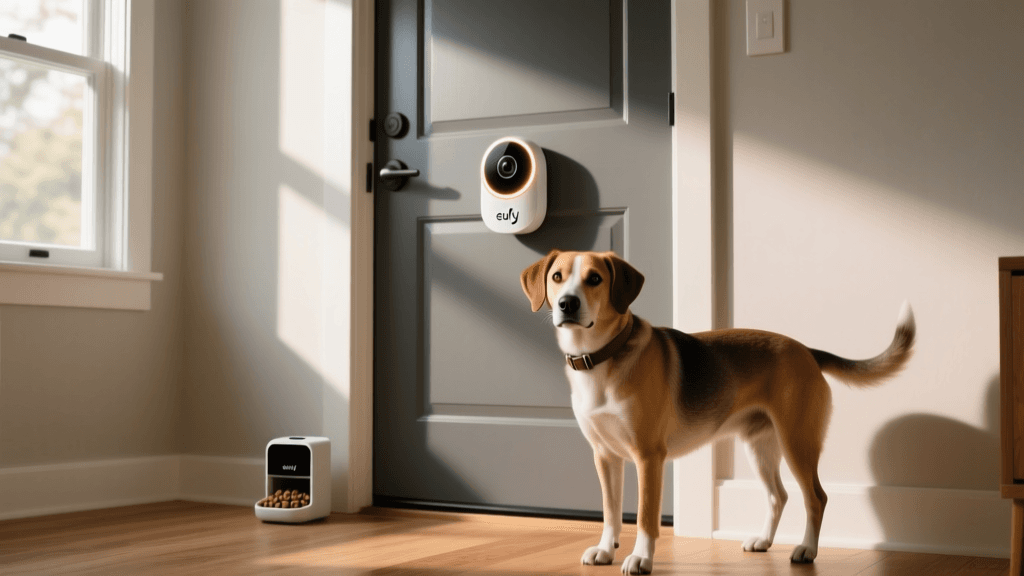
For reactive dog management, the Eufy Pet Treat Camera stands out as the premier tool in 2026. Priced at approximately $169.99, it offers a unique combination of hardware and software features specifically beneficial for behavior modification.
- 360-Degree Pan and Tilt: Allows you to track a pacing, anxious dog no matter where they retreat in the room.
- Quiet Toss Mechanism: Unlike older models that used loud mechanical whirs that startled nervous dogs, the 2026 Eufy model uses a silent magnetic dispensing system.
- Smart Doorbell Integration: When paired with the Eufy Video Doorbell, the system can be programmed to flash a connected smart bulb blue and silently dispense a treat the moment the delivery driver approaches the porch, beating the doorbell chime entirely.
Pro Tip for 2026: Mount the Eufy camera on a shelf or wall bracket exactly 3 feet off the ground. This is the optimal height to catch a medium-to-large dog's eye level when they are in a seated 'watch' position, encouraging them to orient toward the camera rather than the front door.
Step-by-Step Desensitization Protocol Using Smart Tech
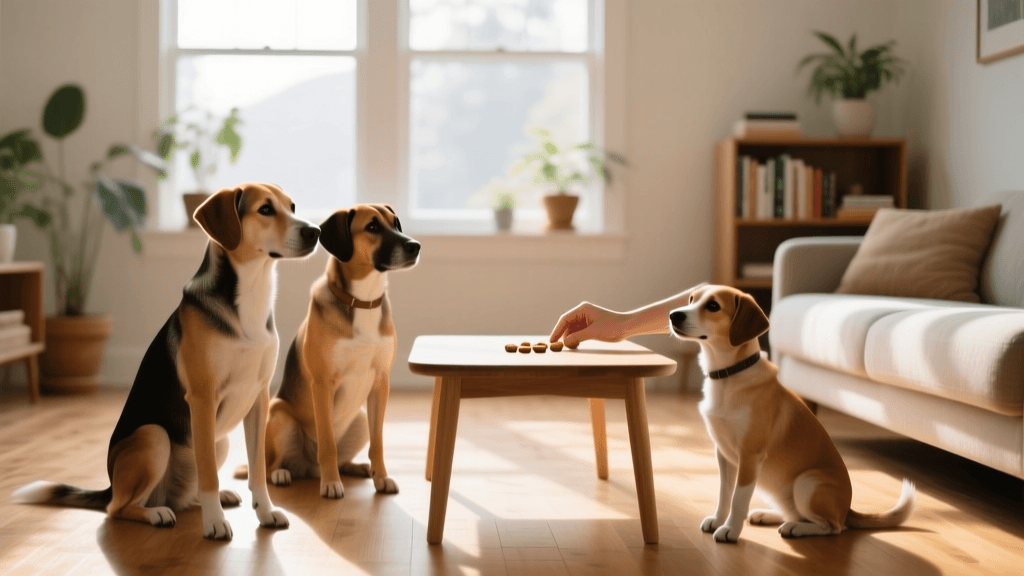
To effectively use the Eufy Pet Treat Camera for doorbell reactivity, follow this structured, multi-phase desensitization protocol. Always use high-value, soft treats (like freeze-dried beef liver or boiled chicken breast) cut into precise 1/4-inch cubes to ensure rapid consumption and prevent choking.
Phase 1: Visual Alert Training (Weeks 1-2)
Before introducing any sound, change the doorbell's physical chime to a visual cue. Using a smart plug connected to a floor lamp, set up a routine where a 'virtual doorbell ring' from your phone simply turns the lamp on and off. When the light flashes, use the Eufy app to toss three treats away from the door. This teaches the dog that a visual change in the environment predicts a reward scatter, shifting their emotional response from alarm to anticipation of food.
Phase 2: Muted Audio & Remote Tossing (Weeks 3-4)
Lower the volume of your physical doorbell to 10% using your smart home hub's settings. Ring the bell while watching your dog through the camera feed. The moment they orient toward the sound but before they bark, trigger the treat toss. If they bark, you have pushed too far too fast; lower the volume further or increase the distance from the door using baby gates.
Phase 3: Real-World Integration (Weeks 5-6)
Restore the doorbell to normal volume. When a real delivery arrives, use the camera's two-way audio to speak in a calm, low-register voice ('Place' or 'Find it'), followed immediately by a multi-treat scatter away from the entryway. This breaks the dog's fixation on the door and redirects their energy to the floor.
Comparison Chart: Top Treat Tossers for Anxious Dogs
While the Eufy is our top pick for smart home integration, it is helpful to compare it against other leading models available in 2026 to find the best fit for your specific reactivity management needs.
| Feature | Eufy Pet Treat Camera | Furbo 360 Dog Camera | Petcube Bites 2 Lite |
|---|---|---|---|
| 2026 Retail Price | $169.99 | $249.99 | $199.99 |
| Toss Distance | Up to 12 feet | Up to 8 feet | Up to 6 feet |
| Rotation | 360° Pan/Tilt | 360° Pan (Fixed Tilt) | Fixed Wide-Angle |
| Smart Integration | Native Eufy Ecosystem | IFTTT & Alexa | Alexa Only |
| Bark Alert Accuracy | High (AI Filtered) | High (AI Filtered) | Moderate |
Integrating Calming Pheromones and Acoustic Dampening
Technology alone cannot lower a dog's baseline cortisol levels. To maximize the effectiveness of your smart camera training, you must address the physical environment of your home. The Cornell University Veterinary Behavior Clinic frequently recommends multi-modal approaches to anxiety, combining behavioral modification with environmental and pheromonal support.
In 2026, the Adaptil Calm Optimum diffuser remains the gold standard for environmental support. Plug the diffuser into an outlet in the room where the dog spends the most time, ensuring it is not blocked by furniture. The synthetic dog-appeasing pheromones (DAP) bind to the vomeronasal organ, signaling safety and lowering the dog's overall arousal baseline.
Additionally, consider acoustic dampening. If you live in an apartment with thin walls or a house facing a busy street, the constant low-level noise can keep a reactive dog in a state of chronic hyper-vigilance. Hanging heavy, sound-absorbing moving blankets or installing decorative acoustic foam panels near the front entryway can significantly muffle exterior triggers, giving your dog's nervous system a chance to rest.
When to Seek Professional Help
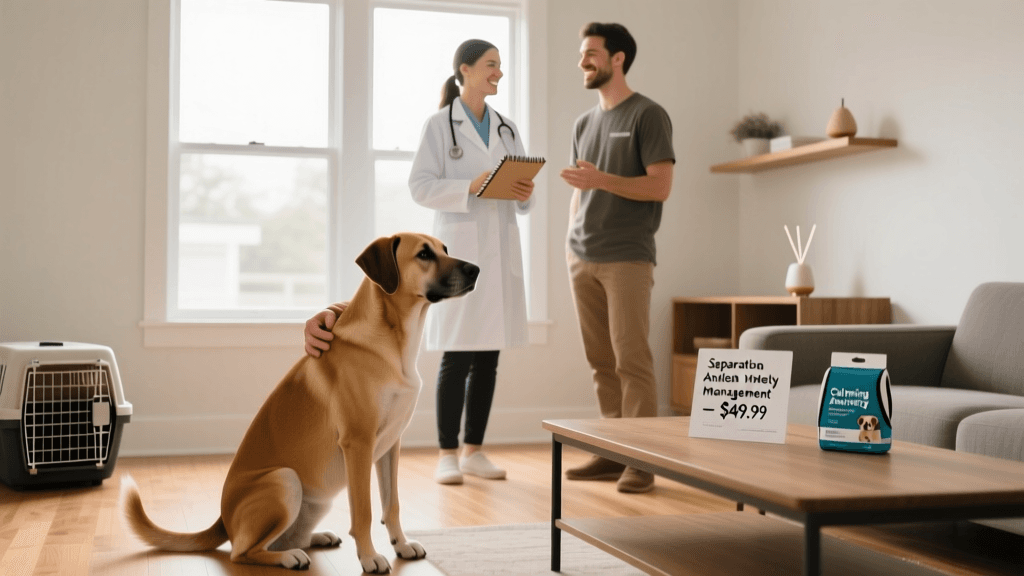
While smart cameras and desensitization protocols are incredibly effective for mild to moderate reactivity, severe anxiety requires professional intervention. If your dog exhibits signs of extreme distress—such as self-injury, destructive escape attempts, or inability to eat treats even when tossed directly in front of them—it is time to consult an expert.
Look for a professional who adheres to the Fear Free Pets certification standards and utilizes force-free, science-based behavior modification techniques. A certified veterinary behaviorist can assess whether your dog requires short-term or long-term anti-anxiety medication (such as fluoxetine or trazodone) to lower their chemical arousal threshold enough for the smart camera training to actually take hold.
Conclusion
Managing a reactive dog in 2026 is less about physical restraint and more about intelligent environmental design. By utilizing the Eufy Pet Treat Camera to intercept triggers, pairing it with visual smart home cues, and supporting your dog's nervous system with pheromones and acoustic management, you can transform the dreaded doorbell from a source of panic into a predictable cue for a rewarding treat scatter. Consistency, patience, and the right technology are the keys to unlocking a calmer, happier life with your anxious companion.
hannah-wickes
All our authors care for dogs every day — read more of their work on the authors page.