Leash Reactivity in 2026: Engage-Disengage & Biometric Tracking
Master leash reactivity in 2026 using the Engage-Disengage protocol and biometric smart collars to track your dog's stress thresholds in real time.
The Neurobiology of Leash Reactivity in 2026
Leash reactivity remains one of the most pervasive behavioral challenges for dog owners, but our understanding of the canine brain has evolved significantly. Reactivity is not a display of stubbornness or dominance; it is a profound emotional response rooted in the amygdala, the brain's fear and threat-detection center. When a reactive dog spots a trigger—such as an unfamiliar dog, a skateboard, or a loud vehicle—their sympathetic nervous system initiates a fight-or-flight response. Because the leash restricts the flight option, the dog often defaults to a defensive display of barking, lunging, and snarling to increase the distance between themselves and the perceived threat.
According to the ASPCA, fear and anxiety are the primary drivers of most reactive behaviors. In 2026, veterinary behaviorists emphasize that punishing these outbursts only exacerbates the underlying emotional distress. Instead, modern behavior modification focuses on keeping the dog under their reactivity threshold while systematically changing their emotional response to triggers through counter-conditioning and desensitization.
The Engage-Disengage Protocol Explained
Developed by certified dog behavior consultant Leslie McDevitt, the Engage-Disengage protocol (often referred to as the 'Look at That' game) is a cornerstone of modern reactive dog rehabilitation. The goal is to teach the dog that noticing a trigger predicts a high-value reward, ultimately empowering the dog to voluntarily disengage from the trigger and look back at their handler. Here is how to execute the protocol with precision.
Step 1: The Engage Phase (Mark and Reward)
Before you begin, you must identify your dog's threshold distance—the exact distance at which they notice a trigger but remain capable of learning and taking treats. If your dog is barking or refusing food, you are too close.
- Spot the Trigger: The moment your dog looks at the trigger (e.g., a dog walking 50 feet away), immediately use a marker word like 'Yes!' or a clicker.
- Deliver the Reward: Within one second of the marker, present a high-value treat (such as boiled chicken breast, freeze-dried beef liver, or string cheese) directly to your dog's mouth.
- Repeat: If the dog continues to stare at the trigger, mark and reward again. You are building a neurological association: 'Seeing a strange dog makes chicken appear from my human.'
Step 2: The Disengage Phase (Voluntary Check-In)
Once your dog anticipates the treat upon seeing the trigger, you will raise your criteria. You are now waiting for the dog to make a choice.
- Wait for the Turn: When your dog looks at the trigger, do not immediately mark. Wait a brief moment (1 to 2 seconds). Your dog will likely look at the trigger, realize the treat hasn't appeared, and turn their head back toward you to investigate.
- Mark the Choice: The exact millisecond your dog voluntarily turns their head away from the trigger and toward you, mark with 'Yes!'
- Reward Generously: Deliver a jackpot of treats. This reinforces the voluntary disengagement, teaching the dog that checking in with you is more rewarding than staring at the trigger.
Integrating 2026 Biometric Wearables for Threshold Tracking
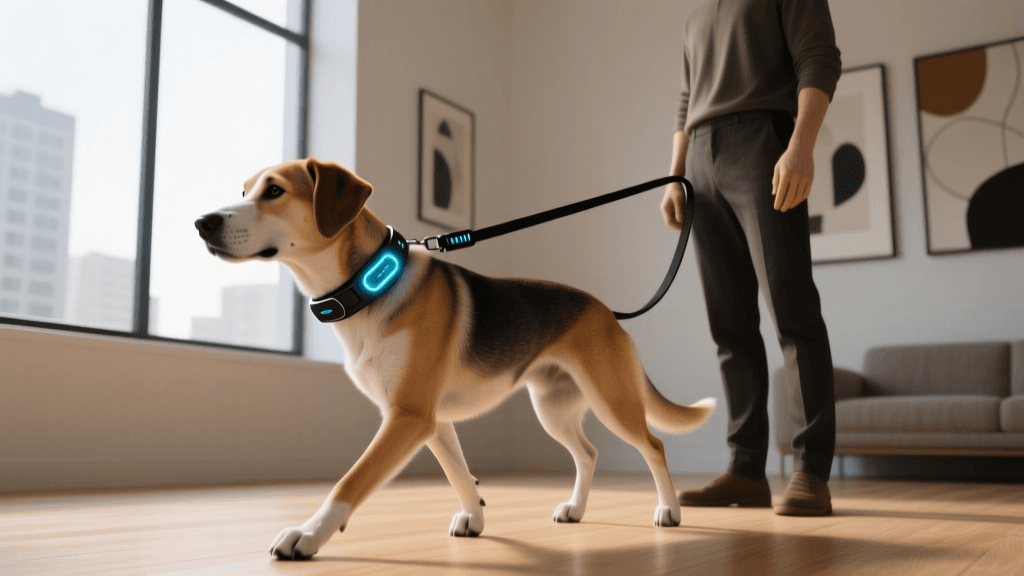
One of the greatest challenges in reactive dog training is accurately identifying the sub-threshold zone before the dog physically reacts. In 2026, the integration of biometric smart collars has revolutionized this process. Modern canine wearables now track Heart Rate Variability (HRV) and continuous resting heart rate, providing empirical data on a dog's autonomic nervous system state.
The American Kennel Club (AKC) notes that subtle signs of stress—such as lip licking, yawning, or a slight elevation in heart rate—often precede a reactive outburst by several minutes. By pairing a biometric collar with a smartphone app, handlers can monitor their dog's physiological stress levels in real-time during walks. If the app indicates a sudden drop in HRV (a primary indicator of sympathetic nervous system arousal), the handler knows the dog is approaching their threshold, even if the dog appears outwardly calm. This allows the handler to proactively increase distance or initiate the Engage-Disengage game before the amygdala hijacks the dog's brain.
Trigger Distance vs. Biometric Response Chart
Use the following structured guide to interpret your dog's biometric data alongside their physical body language during training sessions in 2026.
| Zone | Trigger Distance | Biometric HRV Status | Canine Body Language | Recommended Action |
|---|---|---|---|---|
| Sub-Threshold (Green) | Far (e.g., 80+ feet) | Stable / High HRV | Relaxed posture, soft eyes, willing to eat treats. | Proceed with Engage-Disengage Step 1. Reward heavily for noticing the trigger. |
| Approaching Threshold (Yellow) | Mid-range (e.g., 40 feet) | Moderate HRV Drop / Elevated Heart Rate | Stiffening, ear flicking, closed mouth, slower treat intake. | Switch to Disengage Step 2. Increase distance immediately if the dog cannot voluntarily check in. |
| Over Threshold (Red) | Too Close (e.g., 15 feet) | Severe HRV Drop / Spiking Heart Rate | Hard staring, lunging, barking, refusing all food. | Abort training. Perform an emergency U-turn. Do not attempt to train; the dog cannot learn in this state. |
Essential Gear for Reactive Dog Walks in 2026
Success in behavior modification requires the right equipment to ensure safety and clear communication. Here is the recommended gear for managing a reactive dog today:
- Front-Clip No-Pull Harness: A well-fitted Y-shaped harness with a front chest ring gently redirects the dog's momentum toward you if they lunge, without putting dangerous pressure on the trachea. Look for models with padded chest plates and reflective stitching for low-light visibility.
- Biometric Smart Collar: Worn alongside the harness, a 2026-era wellness tracker that monitors HRV, respiratory rate, and sleep quality helps you understand your dog's baseline stress and recovery needs. Organizations like Fear Free Pets heavily advocate for utilizing environmental and physiological data to reduce fear, anxiety, and stress in companion animals.
- Double-Clip Leash: A 6-foot leather or biothane leash with clips on both ends allows you to attach to both the front and back rings of the harness, providing maximum steering control and security.
- High-Value Bait Bag: A treat pouch with a wide opening and a magnetic closure allows for rapid, silent treat delivery. Avoid pouches with loud velcro, which can startle an already anxious dog.
When to Call a Professional
While the Engage-Disengage protocol and biometric tracking are powerful tools, severe reactivity—especially cases involving bite histories, extreme fear, or resource guarding—requires the guidance of a certified professional. If your dog's reactivity is causing you physical injury, severe emotional burnout, or if you notice no improvement after six weeks of consistent sub-threshold training, consult a Certified Applied Animal Behaviorist (CAAB) or a veterinarian specializing in behavioral medicine. In 2026, many veterinary behaviorists also offer telehealth consultations to evaluate your training footage and biometric data, helping you refine your technique from the safety of your home.
Managing a reactive dog is a marathon, not a sprint. By combining the empathetic, science-based Engage-Disengage protocol with cutting-edge biometric insights, you can help your dog navigate the world with confidence, turning fearful walks into opportunities for connection and trust.
robin-maitland
All our authors care for dogs every day — read more of their work on the authors page.