DIY Enrichment Puzzles to Satisfy Dog Foraging Instincts
Discover how to build DIY enrichment puzzles that satisfy your dog's natural foraging instincts, reduce anxiety, and promote mental well-being at home.
The Psychology of the Canine Foraging Instinct
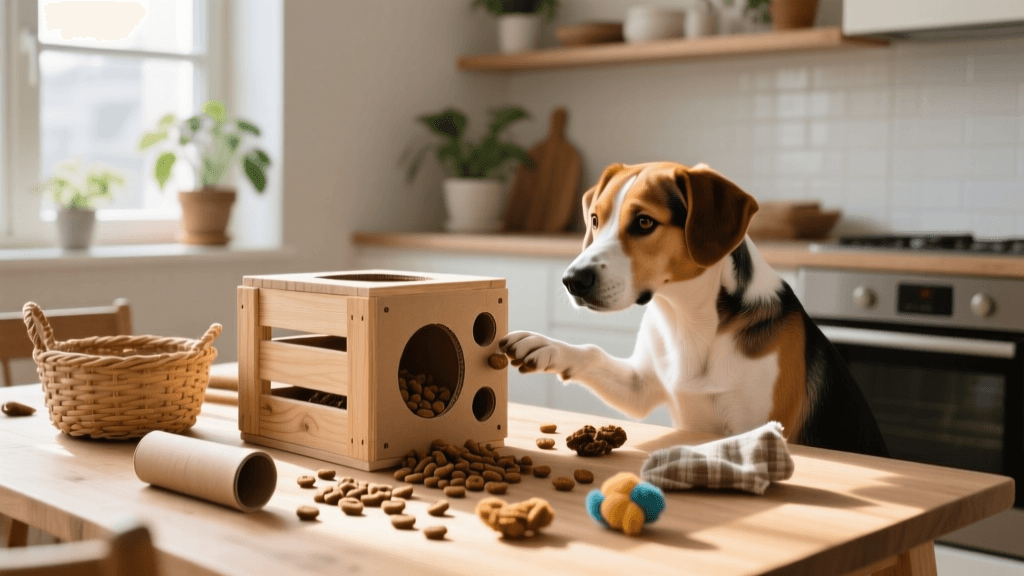
To truly understand your dog, you must first look at their evolutionary history. Long before they were sleeping on our couches, canines spent up to 80% of their waking hours scavenging, hunting, and foraging for food. This deeply ingrained survival mechanism means that a dog's brain is hardwired to seek out sustenance through problem-solving and scent-tracking. When we feed our domestic dogs from a stainless steel bowl, they consume their daily calories in less than two minutes. While this is convenient for us, it creates a massive psychological void for them.
According to the Best Friends Animal Society, failing to accommodate a dog's natural foraging instincts can lead to a host of behavioral issues, including destructive chewing, excessive barking, and separation anxiety. By introducing food puzzles, we tap into their innate desire to work for their meals, providing crucial mental stimulation that physical exercise alone cannot achieve. Understanding this instinct is the first step toward building a deeper, more empathetic bond with your canine companion.
Reading Your Dog’s Body Language During Puzzle Solving
Building a DIY puzzle is only half the equation; the real insight comes from observing your dog's body language as they interact with it. Canine communication is subtle, and watching how your dog approaches a problem reveals volumes about their psychological state and confidence levels.
- Healthy Engagement: A dog in a positive state of flow will exhibit relaxed ears, a softly wagging tail, and persistent, varied sniffing. They may use their paws gently and take breaks to think. This indicates they are in the 'learning zone' and feeling confident.
- Signs of Frustration: If your dog begins to whine, aggressively bite the puzzle, paw frantically without pausing, or eventually walk away and pant heavily, they have crossed their frustration threshold. This is a vital communication signal telling you the puzzle is too difficult, and you need to simplify the challenge to prevent learned helplessness.
- Calming Signals: You might notice your dog licking their lips, yawning, or scratching suddenly. These are 'calming signals' used to diffuse their own internal stress. Recognizing these cues allows you to step in and offer guidance before your dog becomes overwhelmed.
Why DIY Homemade Solutions Work
While the pet market is flooded with expensive plastic puzzle toys, DIY and homemade solutions offer distinct advantages for the observant dog owner. First, they are highly cost-effective, often utilizing upcycled household items for pennies on the dollar. Second, they are infinitely customizable. You can adjust the difficulty in real-time based on your dog's immediate behavioral feedback. Finally, homemade puzzles allow you to control the materials, ensuring they are safe for your specific dog's chewing style. As noted by the American Kennel Club, rotating different types of enrichment activities keeps a dog's brain engaged and prevents them from becoming bored with a single, static toy.
3 DIY Foraging Puzzles You Can Make Today
Below are three actionable, homemade enrichment puzzles designed to target different aspects of your dog's foraging psychology. Each includes specific measurements, timing, and cost estimates.
1. The Upcycled Cardboard Foraging Box
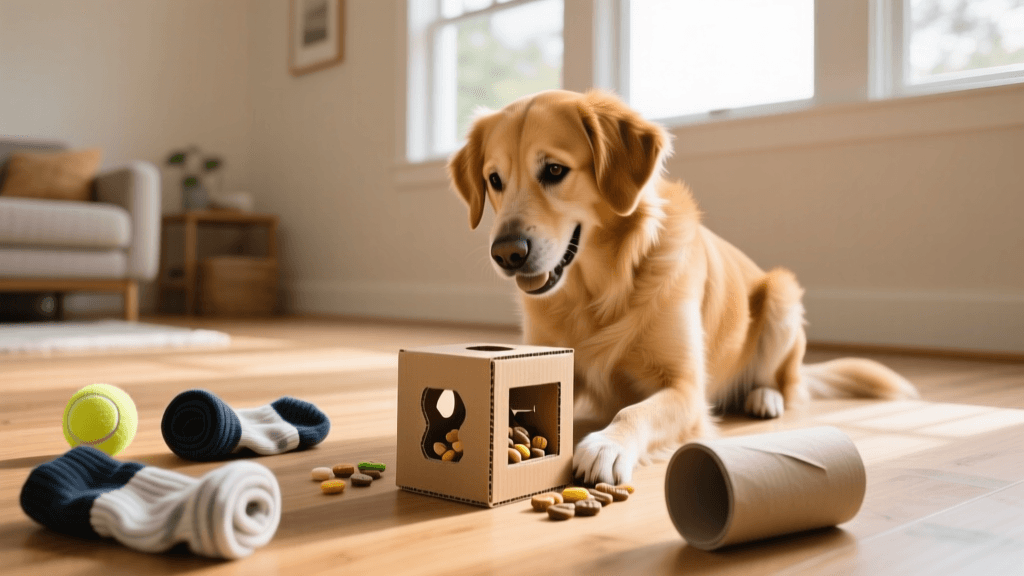
This puzzle targets the natural scavenging instinct and is perfect for dogs who love to shred and tear. It encourages them to use their nose and paws to uncover hidden treasures.
- Cost: $0 (Uses recycling bin items)
- Prep Time: 10 minutes
- Materials: One 12x12x12 inch cardboard shipping box, 10-15 empty toilet paper rolls, crumpled parchment paper, and 1/2 cup of your dog's daily kibble or high-value treats.
- Instructions: Place the empty toilet paper rolls upright inside the box. Stuff a few treats inside some of the rolls. Fill the empty spaces between the rolls with crumpled parchment paper. Sprinkle the remaining kibble over the top and deep into the crevices. Close the flaps loosely so your dog has to nudge them open.
2. The Frozen Broth and Towel Burrito
This puzzle is ideal for hot days or high-energy dogs who need a prolonged, soothing activity. Licking and chewing on frozen items releases endorphins in a dog's brain, promoting a sense of calm.
- Cost: $3 - $5
- Prep Time: 15 minutes (plus 4 hours freezing time)
- Materials: One large, clean fleece blanket or towel (avoid terry cloth which can snag claws), 2 cups of low-sodium, onion-free chicken or beef broth, and soft training treats.
- Instructions: Lay the towel flat. Sprinkle the soft treats evenly across the surface. Roll the towel up tightly into a 'burrito' shape. Slowly pour the low-sodium broth over the rolled towel, allowing it to absorb the liquid without becoming completely waterlogged. Place the towel burrito in a silicone baking pan or on a rimmed baking sheet and freeze for 4 to 6 hours until solid. Supervise your dog as they work to unroll and lick the frozen treat.
3. The PVC Pipe Treat Dispenser
For the 'Thinker' or the heavy chewer, a sturdy PVC dispenser provides a durable, physics-based challenge that requires batting, nosing, and rolling.
- Cost: $8 - $12
- Prep Time: 20 minutes
- Materials: A 12-inch length of 3-inch diameter PVC pipe, two PVC end caps, a drill with a 1-inch hole saw bit, and sandpaper.
- Instructions: Drill three to four 1-inch holes along the length of the PVC pipe. Use sandpaper to smooth out all edges, ensuring there are no sharp plastic burrs that could cut your dog's gums or paws. Glue one end cap on permanently using pet-safe PVC cement. Leave the other end cap unglued so you can easily remove it to load the pipe with kibble. When your dog rolls the pipe, the kibble will fall out of the drilled holes.
Matching the Puzzle to Your Dog’s Psychological Profile
Not all dogs approach problem-solving the same way. Understanding your dog's unique personality will help you select the right DIY puzzle and adjust the difficulty to keep them in the optimal zone of engagement. Use the comparison chart below to match your dog's behavioral traits with the ideal homemade solution.
| Dog Personality Type | Behavioral Trait | Recommended DIY Puzzle | Difficulty Adjustment Strategy |
|---|---|---|---|
| The Destroyer | High prey drive, shreds toys quickly, uses paws aggressively. | Upcycled Cardboard Foraging Box | Start with an open box. Progress to taping the flaps shut with pet-safe paper tape as their confidence grows. |
| The Anxious Thinker | Easily frustrated, gives up quickly, exhibits calming signals (yawning/lip licking). | Frozen Broth and Towel Burrito | Do not freeze solid at first. Offer it slightly chilled or rolled loosely so the reward is immediate, building their confidence. |
| The Persistent Worker | High stamina, loves physical manipulation, won't quit until the job is done. | PVC Pipe Treat Dispenser | Increase the challenge by using larger kibble that barely fits through the holes, or by adding a second, smaller pipe inside. |
| The Senior / Mobility Impaired | Low physical energy, relies heavily on scent, may have arthritis. | Cardboard Box (Modified Flat) | Remove the box walls entirely. Lay the paper rolls and treats flat on a snuffle mat or towel to encourage scent work without physical strain. |
Safety First: Supervising Homemade Enrichment
While DIY solutions are fantastic for canine psychology, they require strict supervision. Unlike commercially tested toys, household items can pose ingestion risks. According to Fear Free Pets, it is crucial to monitor your dog to ensure they are eating the food and not consuming the puzzle materials themselves.
- Cardboard and Paper: While small amounts of plain cardboard are generally passable through a dog's digestive tract, large pieces can cause intestinal blockages. If your dog is a 'gulper' who swallows the toilet paper rolls whole, switch to the frozen towel burrito or the PVC pipe.
- Plastics and PVC: Always inspect the PVC pipe before and after use. If your dog manages to crack the plastic or chew off sharp edges, discard the toy immediately to prevent oral lacerations or gastrointestinal perforation.
- Hygiene: Wash the fleece towels and PVC pipes with hot, soapy water after every use to prevent bacterial growth, especially when using meat-based broths.
Conclusion
Understanding your dog goes far beyond teaching them to sit or stay; it requires a deep appreciation for their evolutionary drives and psychological needs. By taking the time to build DIY foraging puzzles, you are not just saving money—you are actively participating in your dog's mental well-being. You are giving them an outlet for their natural instincts, reducing their anxiety, and learning to read their subtle body language. The next time you reach for their food bowl, pause and consider how a simple cardboard box or a frozen towel can transform a mundane daily routine into a rich, rewarding psychological experience for your best friend.
priya-sutaria
All our authors care for dogs every day — read more of their work on the authors page.