Puppy Osteoarthritis 2026: Managing Early Hip Dysplasia
Learn to manage early-onset osteoarthritis and hip dysplasia in puppies. Explore 2026 treatments, Dasuquin dosing, and hydrotherapy tips for young dogs.
Understanding Early-Onset Osteoarthritis in Puppies
When most pet parents hear the term "osteoarthritis" (OA), they immediately picture senior dogs struggling to stand. However, early-onset osteoarthritis is a significant reality for many puppies during their critical first year of life. Unlike the wear-and-tear arthritis seen in older dogs, puppy OA is almost always secondary to Developmental Orthopedic Diseases (DOD). Conditions such as hip dysplasia, elbow dysplasia, and osteochondritis dissecans (OCD) cause abnormal joint mechanics while the puppy's skeleton is still rapidly growing, leading to cartilage degradation and premature osteoarthritis.
According to the American College of Veterinary Surgeons, hip dysplasia is a genetic malformation where the ball and socket of the hip joint do not fit or develop properly. In a growing puppy, this laxity causes micro-traumas with every step, triggering inflammatory cascades that result in early-onset OA. As we navigate veterinary standards in 2026, early intervention during the first 12 months is no longer just about pain management; it is about altering the biomechanical trajectory of the puppy's life to preserve joint cartilage before irreversible damage occurs.
Recognizing the Signs of Joint Pain in Your Puppy
Puppies are notorious for hiding discomfort, and their natural playfulness can easily mask early signs of joint degradation. Because their growth plates are still open and their pain tolerance is remarkably high, you must look for subtle biomechanical shifts rather than overt limping. Watch closely for the following indicators during your puppy's first year:
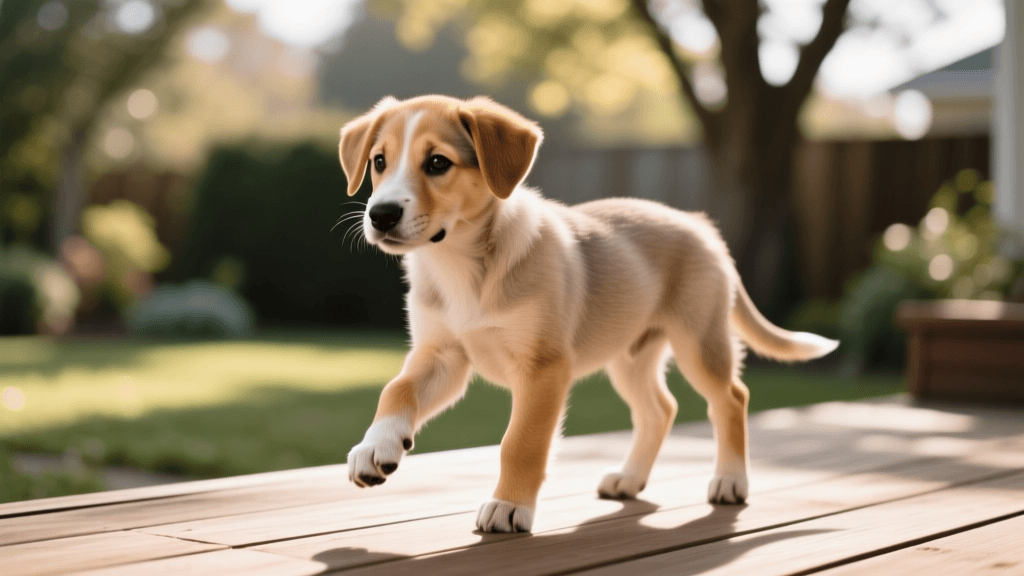
- The "Bunny Hop" Gait: Instead of using their hind legs alternately when running or climbing stairs, the puppy uses both hind legs simultaneously to minimize individual hip joint rotation.
- Reluctance to Jump or Climb: Hesitation before leaping onto the couch, into the car, or navigating staircases.
- Stiffness After Rest: Difficulty rising from a nap, often shaking off stiffness after the first few steps.
- Asymmetrical Muscle Development: Noticeable atrophy in the thigh muscles of the affected leg(s) compared to the front half of the body, even in young dogs.
- Decreased Play Drive: Tiring out quickly during fetch or refusing to engage in high-impact play with littermates or other dogs.
If you observe any of these signs before your puppy reaches 12 months of age, schedule a comprehensive orthopedic evaluation with your veterinarian immediately. The American Kennel Club strongly recommends orthopedic screening for large and giant breed puppies, as early detection is the cornerstone of preserving mobility.
2026 Veterinary Interventions for Puppies Under 12 Months
Treating osteoarthritis in a puppy requires a vastly different approach than treating an adult dog. Because a puppy's growth plates remain open until 14 to 18 months of age, many standard adult OA medications and surgical procedures are contraindicated. In 2026, veterinary orthopedics focuses heavily on juvenile-specific interventions that leverage the puppy's ongoing growth to correct joint laxity.
Surgical Options for the Growing Puppy
If hip dysplasia is diagnosed early enough, preventive surgeries can halt the progression of secondary OA before it truly begins. Juvenile Pubic Symphysiodesis (JPS) is a minimally invasive procedure performed strictly between 16 and 20 weeks of age. By prematurely fusing a specific growth plate in the pelvis, the hip sockets are forced to rotate and cover the femoral head better as the puppy grows. For puppies diagnosed slightly later, between 6 and 8 months, a Triple Pelvic Osteotomy (TPO) may be recommended to surgically rotate the hip socket into a more secure position. Both procedures aim to eliminate the joint laxity that causes early-onset OA.
Medical Management and Injections
While Non-Steroidal Anti-Inflammatory Drugs (NSAIDs) like Carprofen or Meloxicam are staples for adult OA, they must be used with extreme caution in puppies due to the risk of gastrointestinal and renal complications in developing bodies. Instead, veterinarians in 2026 frequently turn to Polysulfated Glycosaminoglycan (PSGAG) injections, commonly known by the brand name Adequan. Adequan is FDA-approved and highly effective in young dogs; it inhibits the enzymes that break down cartilage while stimulating the synthesis of new joint fluid, providing a protective shield for the puppy's vulnerable hips and elbows.
Veterinary Warning: Never administer human pain relievers (such as Ibuprofen or Acetaminophen) to a puppy. These are highly toxic and can cause fatal organ failure. Always consult your veterinarian for puppy-safe OA management.
Top Joint Supplements for Puppies in 2026
Nutraceuticals play a vital role in managing early-onset OA by providing the building blocks for cartilage repair and reducing intra-articular inflammation. When selecting a supplement for a puppy, it is crucial to choose products formulated specifically for growth phases, avoiding excessive calcium or vitamin D that can disrupt bone development. Below is a comparison of the top veterinary-recommended joint supplements for puppies in 2026.
| Supplement Brand (2026) | Key Active Ingredients | Best For | Approx. Monthly Cost |
|---|---|---|---|
| Nutramax Dasuquin Advanced | ASU, Glucosamine, Chondroitin, Omega-3s, Boswellia | Severe early-onset OA & post-op recovery | $55 - $70 |
| VetriScience GlycoFlex Stage 1 | Green-Lipped Mussel, Glucosamine, MSM, DMG | Mild dysplasia & active large-breed puppies | $30 - $45 |
| GlycanAid-HA (by Bioiberica) | Hyaluronic Acid, Collagen, Chondroitin Sulfate | Cartilage hydration & joint fluid support | $40 - $60 |
Dosing Tip: Always follow the "loading dose" instructions provided on the packaging for the first 4 to 6 weeks. This saturates the puppy's system with the necessary compounds before dropping down to a daily maintenance dose.
At-Home Management: Environment and Hydrotherapy
Modifying your puppy's environment is just as critical as medical intervention. A puppy with early OA needs to build muscle to support their unstable joints, but they must do so without subjecting their cartilage to concussive forces.
Orthopedic Bedding and Traction
Slippery hardwood or tile floors are the enemy of a dysplastic puppy. Every time a puppy's paws slide out, the hip joint subluxates (partially dislocates), causing micro-tears in the joint capsule. Invest in interlocking foam floor mats or non-slip area rugs for the rooms where your puppy spends the most time. Additionally, provide an orthopedic bed with high-density memory foam, such as the Big Barker Puppy Edition, to relieve pressure points on the hips and elbows while they sleep.
Canine Hydrotherapy
Hydrotherapy is the gold standard for pediatric canine rehabilitation in 2026. An underwater treadmill allows the puppy to build crucial gluteal and quadriceps muscle mass while the buoyancy of the water unloads the weight from their fragile joints. The hydrostatic pressure of the water also helps reduce joint swelling. Most veterinary rehabilitation centers recommend starting hydrotherapy as soon as the puppy is fully vaccinated and cleared by their orthopedic surgeon, typically around 16 weeks of age.
Diet and Weight Control: The Most Critical Factor
No medication, supplement, or surgery can outwork the physics of excess weight. For a puppy with early-onset osteoarthritis, maintaining a lean Body Condition Score (BCS) is the single most effective way to slow the progression of the disease. The World Small Animal Veterinary Association (WSAVA) Global Nutrition Committee emphasizes that growing puppies should be kept at a BCS of 4 out of 9. You should be able to easily feel your puppy's ribs without pressing hard, and they should have a visible abdominal tuck when viewed from the side.
Feed a high-quality, AAFCO-approved large-breed puppy diet. These formulations are specifically calibrated to promote a slower, steadier growth rate, preventing the rapid bone expansion that exacerbates joint laxity. Measure every meal with a gram scale rather than a scoop, and eliminate high-calorie treats, replacing them with low-calorie alternatives like carrot sticks or green beans. By combining strict weight management, targeted juvenile supplements, and early veterinary intervention, you can successfully manage early-onset osteoarthritis and give your puppy a vibrant, active life well beyond their first year.
priya-sutaria
All our authors care for dogs every day — read more of their work on the authors page.