Dog Weight Management: Daily Routines and Calorie Tracking
Discover practical daily routines for dog weight management. Learn calorie tracking, portion control, and enrichment feeding to keep your pup healthy.
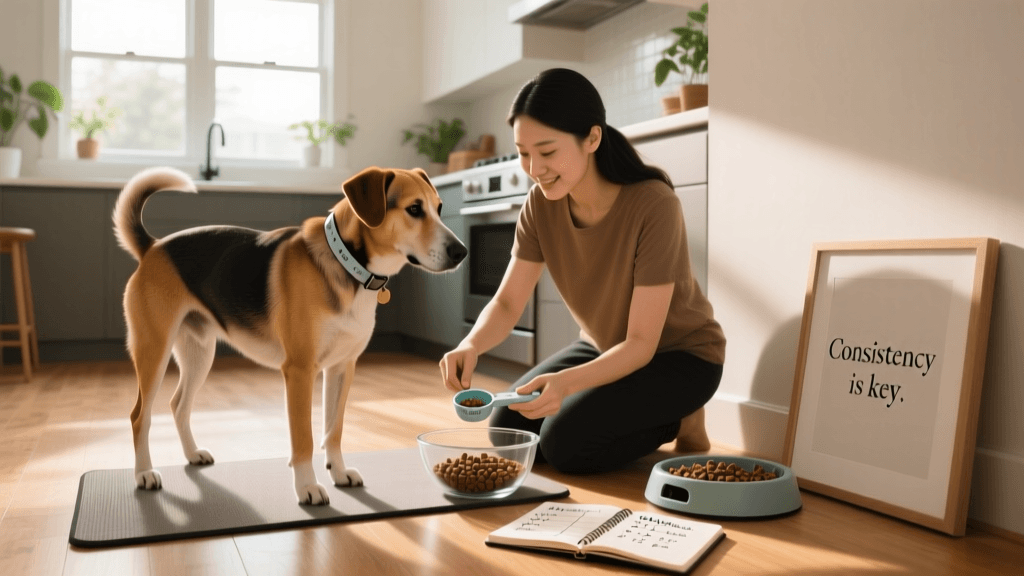
The Canine Weight Crisis and the Power of Routine
According to the Association for Pet Obesity Prevention (APOP), over 55% of dogs in the United States are classified as overweight or obese. Carrying excess weight is not merely a cosmetic issue; it drastically increases the risk of osteoarthritis, type 2 diabetes, cardiovascular disease, and certain cancers. While the solution conceptually boils down to calories in versus calories out, the practical application requires a structured, sustainable daily routine.
As a pet parent, relying on free-feeding or guessing portion sizes is a recipe for gradual weight gain. Effective weight management requires integrating precise caloric tracking, mental enrichment, and structured exercise into your dog's everyday life. Below, we dive deep into the actionable math, feeding strategies, and daily schedules required to help your dog reach and maintain their ideal body condition.
The Math of Weight Loss: Calculating Daily Calories
Before adjusting your dog's diet, you must determine their exact caloric needs. The World Small Animal Veterinary Association (WSAVA) recommends calculating the Resting Energy Requirement (RER) and adjusting it with a Maintenance Energy Requirement (MER) multiplier.
Step 1: Calculate Resting Energy Requirement (RER)
The formula for RER is: 70 x (Body Weight in kg)^0.75
Example: Let us take a Labrador Retriever who currently weighs 35 kg (77 lbs) but has an ideal target weight of 30 kg (66 lbs). We always calculate weight loss calories based on the target weight, not the current weight.
- Target weight: 30 kg
- 30^0.75 = 12.81
- 70 x 12.81 = 897 kcal/day (RER)
Step 2: Apply the Weight Loss Multiplier (MER)
For a safe, gradual weight loss of about 1% to 2% of body weight per week, multiply the RER by 0.8 (for neutered/spayed adults) or use the specific weight loss factor recommended by your veterinarian.
- 897 kcal x 0.8 = 717 kcal/day
This means your 35 kg Labrador should consume exactly 717 calories per day, including all treats, to safely reach their 30 kg goal.
Ditching the Bowl: Enrichment Feeding Strategies
Eating from a standard stainless steel bowl takes a dog an average of two to five minutes. This rapid consumption does little to satisfy their psychological need to forage and often leads to begging behavior shortly after the meal ends. Transitioning to enrichment feeders slows down eating, improves digestion, and burns mental energy.
| Feeding Method | Avg. Meal Duration | Mental Enrichment | Approx. Cost | Best For |
|---|---|---|---|---|
| Standard Stainless Steel Bowl | 2-5 minutes | Low | $5 - $15 | Strict medical monitoring, picky eaters |
| Outward Hound Fun Feeder Slo Bowl | 10-15 minutes | Medium | $12 - $18 | Dogs who gulp food and need digestion support |
| KONG Classic (Stuffed & Frozen) | 20-45 minutes | High | $15 - $25 | High-energy dogs, separation anxiety, crate time |
| Snuffle Mat | 15-25 minutes | High | $20 - $35 | Senior dogs, low-impact mental stimulation |
| SureFeed Microchip Pet Feeder | Variable | Low-Medium | $160 - $190 | Multi-pet homes, strict prescription diets |
Pro Tip for KONG Stuffing: To keep calories in check while using a KONG Classic, plug the small hole with a dab of peanut butter (check for xylitol-free), fill the cavity with your dog's measured daily kibble, and top it with low-sodium bone broth before freezing overnight. This provides a long-lasting, low-calorie challenge.
Mastering the 10% Treat Rule
One of the most common pitfalls in canine weight management is untracked treats. The Tufts University Cummings Veterinary Medical Center emphasizes the '10% Rule': treats and table scraps should never exceed 10% of your dog's total daily caloric intake. The remaining 90% must come from a complete and balanced diet.
If your dog's daily allowance is 717 kcal, their treat budget is a strict 71 kcal per day. Consider the difference in treat choices:
- Milk-Bone Original Biscuits (Medium): ~40 kcal each. Your dog gets less than two treats for the entire day.
- Zuke's Mini Naturals: ~2.5 kcal each. Your dog can earn up to 28 treats during training sessions without blowing their caloric budget.
- Green Beans (Canned, No Salt Added): ~1 kcal per bean. An excellent, high-fiber crunch that allows for massive volume feeding for dogs who are highly food-motivated.
Navigating Multi-Pet Household Challenges
Managing a dieting dog in a home with a normal-weight dog (or a cat) requires logistical planning. Food stealing and resource guarding can derail your efforts and cause household stress.
- Microchip Feeders: Investing in a SureFeed Microchip Pet Feeder ($170) ensures that only the designated dog can access their specific caloric portion. The lid remains closed unless it reads the correct RFID microchip or collar tag.
- Elevated and Separated Feeding: Feed the normal-weight dog on a kitchen counter or in a separate room with a baby gate. Cats should be fed on elevated cat trees or shelving where the dog cannot reach.
- Synchronized Meal Times: Do not free-feed any pet in the house. Implement a 15-minute meal window. If the dieting dog does not finish their food in 15 minutes, pick it up and offer it again at the next scheduled meal. This eliminates grazing and scavenging.
A Sample Daily Routine for Weight Management
Consistency reduces canine anxiety and begging behaviors. Here is a practical daily schedule for a working professional managing a dog's weight loss:
- 6:30 AM (Wake Up & Hydrate): 15-minute leash walk for bathroom breaks and light sniffing. Provide fresh water.
- 8:00 AM (Departure): Provide a frozen KONG stuffed with 10% of the daily kibble and low-sodium broth to ease separation anxiety.
- 5:30 PM (The 'Sniffari' Walk): 30 to 45-minute decompression walk on a long line in a green space. Allow the dog to dictate the pace and sniff extensively. Sniffing lowers the heart rate and provides immense mental fatigue, which is crucial for weight loss routines where high-impact running might damage overweight joints.
- 6:30 PM (Dinner & Training): Serve the remaining 40% of daily kibble in a standard bowl or puzzle toy. Use the final 10% of the daily kibble allowance as rewards for a 10-minute indoor obedience or trick training session.
- 9:00 PM (Wind Down): Last bathroom break. No food or high-value treats after 8:00 PM to allow for proper digestion before sleep.
Monitoring Progress: The Body Condition Score (BCS)
Scales can be misleading due to fluctuations in hydration and muscle mass. Instead, rely on the 9-point Body Condition Score (BCS) system endorsed by the WSAVA. An ideal score is a 4 or 5 out of 9.
How to Perform a Weekly BCS Check:
- The Rib Test: Run your hands along your dog's sides. You should be able to feel their ribs easily with a light touch, similar to feeling the knuckles on the back of your hand. If you have to press hard (like feeling your wrist), they are overweight.
- The Waist Tuck: Look at your dog from above. There should be a visible hourglass indentation behind the ribcage.
- The Abdominal Tuck: Look at your dog from the side. The abdomen should tuck up behind the ribcage, not hang down parallel to the floor.
Weigh your dog every two weeks and perform a BCS check weekly. If your dog is not losing 1% to 2% of their body weight per month, reduce the daily caloric intake by another 10% and consult your veterinarian to rule out underlying metabolic conditions like hypothyroidism or Cushing's disease.
Conclusion
Weight management is not a temporary diet; it is a permanent lifestyle shift. By replacing the food bowl with enrichment tools, strictly calculating caloric math, and implementing a predictable daily routine, you remove the guesswork from your dog's health. The result is a leaner, happier, and more mentally stimulated companion who will enjoy a higher quality of life for years to come.
marcus-aldridge
All our authors care for dogs every day — read more of their work on the authors page.