Bernedoodle vs Goldendoodle: Costs, Care, and Lifestyle
Compare Bernedoodle and Goldendoodle costs, grooming needs, and energy levels to find the perfect Doodle mix for your family and lifestyle.
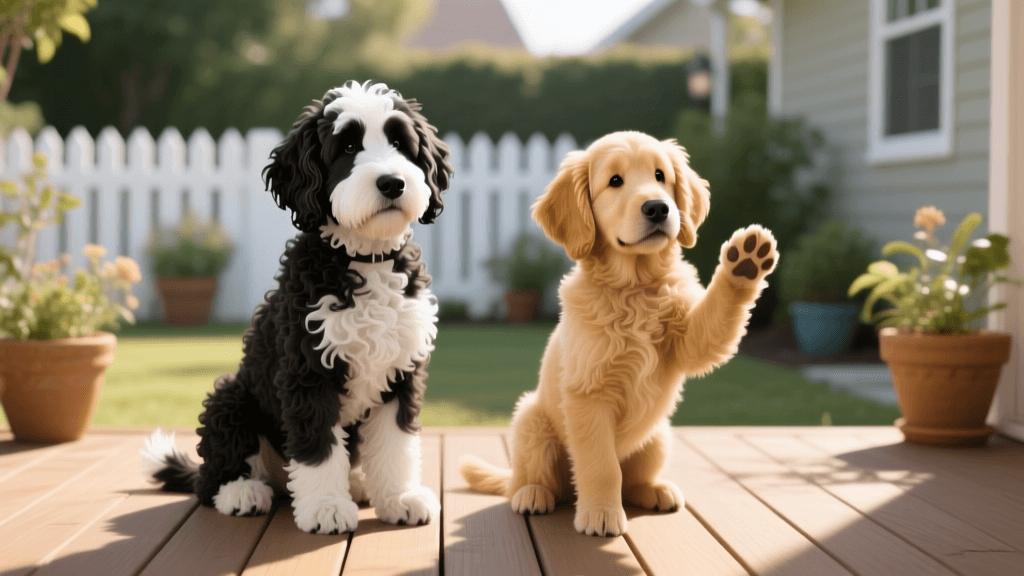
The Great Doodle Debate: Bernedoodle vs. Goldendoodle
The popularity of Poodle mixes, affectionately known as 'Doodles,' has skyrocketed over the past decade. Among the most sought-after are the Bernedoodle and the Goldendoodle. Both offer the low-shedding appeal of a Poodle combined with the loyal, affectionate nature of their respective retriever and mountain dog lineage. However, sharing your life with a dog requires more than just picking a cute face; it demands a realistic look at lifestyle compatibility, grooming commitments, and long-term financial planning. In this comprehensive breed comparison, we break down everything you need to know to choose the right Doodle for your household.
Breed Origins and Genetic Background
The Goldendoodle was first bred in the late 1960s and gained massive popularity in the 1990s as a hypoallergenic guide dog option. By crossing the Golden Retriever with the Poodle, breeders aimed to combine the Golden's legendary trainability with the Poodle's low-shedding coat. According to the American Kennel Club (AKC), Golden Retrievers are famously eager to please, a trait that heavily influences the Goldendoodle's personality.
The Bernedoodle is a newer entrant to the designer dog scene, first intentionally bred in 2003 by Sherry Rupke of SwissRidge Kennels. The goal was to blend the goofy, devoted nature of the Bernese Mountain Dog with the Poodle's intelligence and longer lifespan. The AKC notes that Bernese Mountain Dogs are strikingly beautiful, cold-weather companions with a calm disposition, though they carry a heavier frame and distinct stubborn streak.
Size, Growth, and Physical Traits
Both breeds come in various sizes depending on the Poodle parent (Standard, Miniature, or Toy). However, their growth rates and adult builds differ significantly. Bernedoodles tend to be stockier with heavier bone density, while Goldendoodles are generally more athletic and streamlined.
| Feature | Standard Bernedoodle | Standard Goldendoodle |
|---|---|---|
| Adult Weight | 70 - 90 lbs | 50 - 75 lbs |
| Adult Height | 23 - 29 inches | 20 - 26 inches |
| Growth Plateau | 18 - 24 months | 12 - 18 months |
| Coat Types | Wavy, Curly, Straight (Tri-color common) | Wavy, Curly, Straight (Gold, Red, Cream) |
| Average Lifespan | 12 - 18 years | 10 - 15 years |
When selecting a puppy, ask the breeder for the exact weight and generation (e.g., F1, F1B, F2) of the parents. An F1B Bernedoodle (75% Poodle, 25% Bernese) will typically have a curlier, lower-shedding coat than an F1 (50/50 split), which is crucial if you have mild pet allergies.
Temperament and Household Fit
While both dogs are deeply affectionate, their daily energy outputs and social needs vary.
The Goldendoodle: The Social Butterfly
Goldendoodles are extroverts. They thrive in active, multi-person households and excel in dog sports like agility and dock diving. They require at least 60 to 90 minutes of vigorous exercise daily. If left alone for long hours without mental stimulation, a Goldendoodle is prone to separation anxiety and destructive chewing. They are the ideal choice for families who spend their weekends hiking, running, or visiting dog-friendly parks.
The Bernedoodle: The Gentle Giant
Bernedoodles are generally more laid-back. While they still need 45 to 60 minutes of daily exercise, they are perfectly content to lounge on the couch for the remainder of the day. They tend to bond intensely with their immediate family and can be aloof or wary of strangers, making them excellent watchdogs (though too gentle to be guard dogs). Their stubborn streak means training requires patience, high-value treats (like freeze-dried liver), and short, engaging sessions.
Grooming Regimens and Tool Recommendations
The 'low-shedding' label does not mean 'low-maintenance.' Both breeds require rigorous grooming routines to prevent painful matting, especially behind the ears, in the armpits, and around the collar line.
- Daily Brushing: Use a high-quality slicker brush, such as the Chris Christensen Big G, followed by a metal greyhound comb to check for tangles at the skin level.
- Bathing Schedule: Every 4 to 6 weeks using a moisturizing, dog-specific shampoo and conditioner to prevent the hair from becoming brittle.
- Professional Grooming: Expect to visit a professional groomer every 6 to 8 weeks for a haircut, nail trim, and ear cleaning.
Pro Tip: Invest in a high-velocity dog dryer (like the B-Air Fido Max). Fluff-drying your Doodle while brushing is the only way to achieve the straight, fluffy 'teddy bear' coat and ensure no dampness is trapped near the skin, which can cause hot spots.
Health Screening and Veterinary Care
Designer dogs can benefit from hybrid vigor, but they are still susceptible to the genetic conditions of their parent breeds. Reputable breeders must provide Orthopedic Foundation for Animals (OFA) or PennHIP certifications for both parents.
- Goldendoodle Risks: Hip and elbow dysplasia, progressive retinal atrophy (PRA), and certain heart conditions like subvalvular aortic stenosis (SAS).
- Bernedoodle Risks: Hip and elbow dysplasia, von Willebrand's disease, and a higher predisposition to certain cancers inherited from the Bernese Mountain Dog lineage.
Budgeting for comprehensive pet insurance is highly recommended. Companies like Trupanion or Healthy Paws can help offset the costs of unexpected surgeries, which can easily exceed $5,000 for orthopedic procedures.
Financial Breakdown: Puppy Price to Lifetime Care
Understanding the financial commitment is a critical part of responsible dog ownership. The ASPCA estimates that annual dog care costs can range widely depending on your location, the dog's size, and their health needs.
Initial Costs
- Puppy Purchase: $2,500 to $5,000 from a reputable, health-testing breeder. (Avoid pet stores or backyard breeders offering 'cheap' Doodles).
- Initial Supplies: $400 - $600 (Crate, adjustable harness, orthopedic bed, grooming tools, puzzle toys).
- First Year Vet Care: $500 - $800 (Vaccinations, spay/neuter, microchipping, heartworm prevention).
Recurring Annual Costs
- High-Quality Food: $600 - $900 (Brands like Purina Pro Plan, Royal Canin, or Orijen).
- Professional Grooming: $600 - $1,200 (Assuming $100-$150 per session, 6-8 times a year).
- Preventative Medications: $250 - $400 (Flea, tick, and heartworm preventatives like NexGard or Heartgard).
- Pet Insurance: $600 - $1,000 annually.
When you calculate these figures, a standard-sized Doodle can easily cost between $2,500 and $4,000 per year to maintain properly, excluding emergency medical care or boarding fees.
Final Verdict: Which Doodle is Right for You?
Choosing between a Bernedoodle and a Goldendoodle ultimately comes down to your daily routine and household environment. If you are an active family looking for a tireless companion to join you on outdoor adventures, and you have the time to dedicate to extensive socialization and obedience training, the Goldendoodle is your perfect match.
Conversely, if you prefer a more relaxed pace, work from home, and want a deeply devoted, slightly more reserved companion who is happy to alternate between moderate walks and long cuddle sessions, the Bernedoodle will steal your heart. Whichever you choose, commit to the grooming, health testing, and financial responsibilities to ensure a long, joyous life with your new best friend.
marcus-aldridge
All our authors care for dogs every day — read more of their work on the authors page.