Moving Homes in 2026: Understanding Canine Scent Mapping Stress
Discover how dogs process moving through scent mapping. Learn 2026 strategies to reduce relocation stress and help your dog acclimate to a new home.
The Hidden Psychology of Relocation
For humans, moving to a new home is primarily a visual and logistical transition. We unpack boxes, arrange furniture, and appreciate the new natural light. But for our canine companions, a move represents a profound psychological disruption to their fundamental understanding of the world. As we navigate the shifting housing trends and hybrid work relocations of 2026, veterinary behaviorists are increasingly highlighting a critical, often overlooked factor in canine welfare: scent mapping. Understanding how your dog processes environmental changes through olfaction is the key to transforming a stressful relocation into a smooth life transition.
According to the American Veterinary Medical Association (AVMA), environmental changes are among the top triggers for acute stress and anxiety in domestic dogs. However, the root of this anxiety is rarely the change in scenery; it is the sudden erasure of their olfactory security blanket. To help your dog thrive in a new space, we must first understand the intricate cognitive map they have built in your old home.
Canine Scent Mapping: How Dogs 'See' Their Home
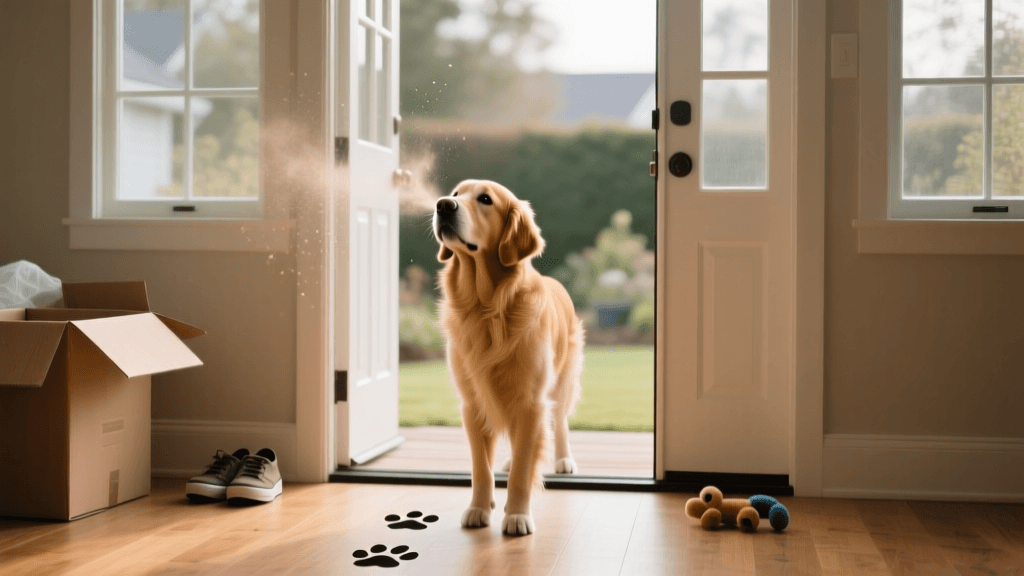
Dogs possess up to 300 million olfactory receptors in their noses, compared to our mere six million. Furthermore, the part of a dog's brain dedicated to analyzing odors is proportionally 40 times larger than ours. When your dog walks through your living room, they are not just recognizing the shape of the sofa; they are reading a complex, layered history of who has been there, what they ate, their emotional state, and the passage of time.
Through a process called scent mapping, dogs create a three-dimensional cognitive layout of their territory. They use their vomeronasal organ (Jacobson's organ) to detect pheromones and environmental odors, anchoring their sense of safety to specific rooms, doorframes, and furniture. Your dog's own scent, deposited through cheek rubbing, paw pad sweating, and general presence, acts as a continuous feedback loop that tells them: 'I have been here before, I am safe, and this space belongs to my social group.'
The Shock of the New: Olfactory Dissonance
When you move, you pack up the visual cues, but the scent cues are left behind, boxed away, or destroyed by cleaning chemicals. Arriving at a new home presents your dog with severe olfactory dissonance. The new environment smells of unknown previous occupants, strange pets, industrial cleaning agents, and unfamiliar neighborhood wildlife.
This sudden lack of familiar scent markers causes a spike in cortisol (the stress hormone). Without their scent map to rely on, dogs may exhibit hyper-vigilance, pacing, vocalization, or even regression in house training. As noted by the ASPCA's behavioral guidelines, sudden environmental shifts can trigger temporary behavioral regressions that owners often mistake for stubbornness, when in reality, the dog is experiencing profound sensory overwhelm.
The 2026 Protocol for Scent-Anchor Transitioning
To mitigate this stress, modern canine behaviorists recommend a proactive approach to scent transfer. Here is the step-by-step protocol for establishing a new scent map in 2026.
1. Pre-Move Scent Harvesting
Before the moving trucks arrive, take sterile gauze pads and gently rub your dog's cheeks, chin, and the base of their tail. These areas are rich in sebaceous glands that produce calming, familiar pheromones. Store these swabs in a sealed glass jar. Once you arrive at the new home, rub these swabs along the baseboards, doorframes, and corners of the new house at your dog's nose height. This immediately seeds the new environment with your dog's own 'safe' scent.
2. The Basecamp Method
Do not give your dog free roam of the new house on day one. The sheer volume of novel odors will cause sensory overload. Instead, set up a 'Basecamp'—a single, quiet room (like a bedroom or home office) unpacked with your dog's unwashed bedding, favorite toys, and your worn clothing. Keep them in this room while the chaotic moving process occurs, allowing them to establish a secure micro-territory before gradually expanding their boundaries.
3. Smart-Home Climate and Pheromone Integration
In 2026, leveraging smart home technology can vastly improve scent dispersion. Odor molecules degrade rapidly in dry, stagnant air. Use your smart thermostat to maintain a humidity level of around 45-50%, which helps your dog's scent markers linger longer in the air, speeding up the mapping process. Additionally, plug in a synthetic dog-appeasing pheromone (DAP) diffuser, such as the Adaptil Calm Home Diffuser, in the Basecamp room to provide a continuous baseline of maternal calming signals.
Acclimation Timeline and Behavioral Milestones
Understanding the timeline of scent acclimation helps set realistic expectations. Use the following table to track your dog's psychological adjustment during the first month in your new home.
| Timeframe | Canine Psychological State | Owner Action Required |
|---|---|---|
| Days 1-3 | Acute Disorientation. High cortisol, hyper-vigilance, potential appetite suppression. | Maintain strict Basecamp confinement. Keep routines (feeding, walking) identical to the old home. Use DAP diffusers. |
| Week 1-2 | Scent Overwriting. Active investigation, increased sniffing, beginning to deposit new scent markers. | Allow supervised exploration of adjacent rooms. Praise calm sniffing behavior. Avoid harsh corrections for minor accidents. |
| Week 3-4 | Territorial Confidence. Cortisol levels normalize. The dog begins to rest deeply in new spaces. | Expand boundaries fully. Introduce new neighborhood walking routes to build an external olfactory map. |
Managing Multi-Dog Household Scent Dynamics
If you are moving with multiple dogs, the transition is even more complex. Dogs in the same household share a 'pack odor'—a communal scent profile that reinforces their social bond and mutual recognition. The stress of a move, combined with the sudden presence of strange environmental odors, can mask this pack odor, occasionally leading to inter-dog tension or redirected aggression.
To preserve the group scent, ensure all dogs share the same unwashed blankets in the Basecamp room. Furthermore, engage in synchronized, parallel walks in the new neighborhood. Moving together through a novel environment while sharing a unified activity reinforces their social hierarchy and mutual reliance, anchoring their bond despite the changing backdrop.
Decoding Body Language: Stress vs. Healthy Exploration
As your dog navigates the new home, it is vital to differentiate between stress-induced behaviors and healthy olfactory mapping. According to The Humane Society of the United States, recognizing subtle calming signals can prevent long-term anxiety issues.
- Signs of Stress: 'Whale eye' (showing the whites of the eyes), tight facial muscles, excessive lip licking, yawning when not tired, frantic pacing, and a high, stiff tail carriage. If you see these, gently guide your dog back to the Basecamp room to decompress.
- Signs of Healthy Mapping: Loose, wiggly body posture, deep and prolonged ground-sniffing, a relaxed or gently sweeping tail, and the 'shake-off' (where the dog shakes their entire body as if wet, which is a natural mechanism to reset the nervous system after processing new information).
Conclusion: Patience and Olfactory Empathy
Relocating in 2026 offers us more tools and scientific understanding than ever before, but the core of a successful move still relies on empathy for the canine experience. By shifting our perspective from a visual move to an olfactory one, we can actively participate in rebuilding our dog's sense of security. Through scent harvesting, strategic Basecamp setups, and a patient approach to their cognitive mapping process, you can ensure that your new house quickly becomes a place your dog truly recognizes as home.
hannah-wickes
All our authors care for dogs every day — read more of their work on the authors page.