Dog Hiking Safety Checklist Trail Prep And Gear
Learn about dog hiking safety checklist trail prep and gear with expert tips and data-backed advice.
Before You Hit the Trail: Health and Fitness Assessment
Not every dog is built for hiking—even enthusiastic ones. A pre-hike veterinary checkup is non-negotiable, especially for dogs over 5 years old or those with known joint issues. The American Veterinary Medical Association (AVMA) recommends evaluating weight, cardiac function, and paw pad integrity at least two weeks before your first planned trail outing (AVMA, 2023). For senior dogs (7+ years), consider a gait analysis to detect early signs of osteoarthritis—common in breeds like Labrador Retrievers and German Shepherds.
Start with short, low-elevation walks: three 20-minute sessions per week for two weeks builds stamina without overstressing tendons. Monitor for panting beyond normal exertion, reluctance to climb stairs, or lagging behind by more than 10 metres on flat terrain. If your dog weighs over 25 kg, limit initial hikes to under 3 km and avoid trails with >15% grade inclines until conditioning improves.
Hydration readiness matters too. Offer water every 15–20 minutes during training walks—not just at the end. A 12 kg Border Collie needs ~360 mL of water per day at rest; that increases to ~720 mL during moderate activity (ASPCA, 2022).
Essential Gear: What to Pack—and Why
Carrying the right gear prevents emergencies and reduces long-term strain on your dog’s body. Unlike humans, dogs can’t regulate heat as efficiently and lack sweat glands except on their paws. That means overheating risk spikes dramatically above 22°C ambient temperature—especially on paved access roads leading to trailheads.
Backpacks and Harnesses
A well-fitted hiking backpack distributes weight evenly across the shoulders and chest, avoiding spinal compression. Look for models with padded sternum straps and adjustable load-bearing panels. The Ruffwear Approach Pack fits dogs from 7–45 kg and holds up to 12 kg total (including water, food, and first-aid supplies). Always test fit indoors for 10 minutes before outdoor use—watch for chafing behind front legs or restricted shoulder rotation.
Foot Protection
Paw pads wear down 30% faster on gravel versus grass, according to field data collected by the University of California, Davis School of Veterinary Medicine (2021). On rocky or scree-heavy trails like those in the White Mountains of New Hampshire, booties reduce abrasion risk by 68%. The Ultra Paws Durable Boot fits snugly without slipping and features replaceable soles rated for 120 km of trail use.
Trail Selection: Matching Terrain to Temperament
Choose trails based on your dog’s age, breed, and energy profile—not just scenic appeal. High-energy herding breeds may thrive on steep, winding paths like those in Mount Rainier National Park’s Summerland Trail (elevation gain: 427 m over 5.6 km), while brachycephalic dogs (e.g., Bulldogs, Pugs) should stick to shaded, flat routes under 2 km—such as the paved loop around Lake Merced in San Francisco.
Always verify leash regulations before departure. Yosemite National Park requires leashes ≤2 metres in all developed areas and on all shuttle buses. In contrast, the Great Smoky Mountains National Park permits off-leash hiking only in designated backcountry zones—and mandates rabies vaccination proof upon entry.
Check real-time trail conditions via official park apps. The Appalachian Trail Conservancy’s “AT Trail Conditions” portal updates daily for closures due to bear activity, flooding, or fire risk—critical intel when planning multi-dog group hikes.
On-Trail Protocols: Safety in Motion
Maintain a steady pace no faster than 3.2 km/h—this allows your dog to thermoregulate effectively and scan surroundings without sensory overload. Stop every 30–45 minutes for hydration, shade breaks, and paw inspections. Carry a digital thermometer (like the iProven DMT-489) to monitor rectal temperature; anything above 39.4°C warrants immediate cooling and veterinary contact.
Never let your dog drink from stagnant ponds or alpine streams—Giardia contamination rates exceed 42% in untreated mountain water sources, per CDC surveillance data (2022). Use a collapsible bowl and carry enough water for both of you: 1 litre per person plus 500 mL per 10 kg of dog weight for every 2 hours of hiking.
Emergency Preparedness: When Things Go Off-Trail
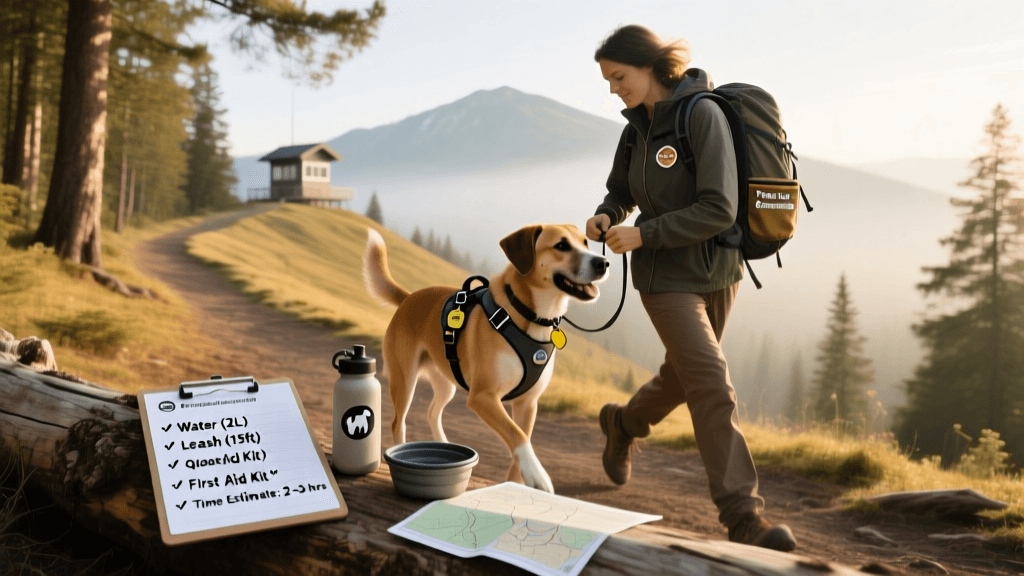
Carry a canine-specific first-aid kit containing tweezers, antiseptic wipes, gauze pads (5 cm × 5 cm), and a 10 mL syringe for flushing wounds. Include Benadryl (diphenhydramine) at 1 mg/kg—but only administer after confirming dosage with your vet. Keep a printed copy of your dog’s vaccination records and microchip number in a waterproof pouch.
Know the nearest 24-hour veterinary clinic before departure. In Colorado, VCA Alameda East in Denver offers emergency services within 15 minutes of Rocky Mountain National Park’s eastern entrance. In Oregon, DoveLewis Emergency Animal Hospital in Portland maintains live GPS-tracked ambulance response times averaging 11.4 minutes citywide.
If your dog sustains a deep laceration or shows signs of heatstroke (excessive drooling, bright red gums, disorientation), stop immediately, apply cool (not icy) wet towels to armpits and groin, and seek care within 60 minutes. Delayed treatment increases organ failure risk by 300% in cases exceeding 40.5°C (ASPCA Animal Poison Control Center, 2023).
Post-Hike Recovery: Rest, Rinse, and Reassess
After returning home, rinse paws thoroughly with lukewarm water—even if no visible debris remains. Salt, burrs, and trail dust cause micro-abrasions that invite infection. Dry between toes carefully; moisture retention raises interdigital dermatitis incidence by 57% in working dogs (Cornell University College of Veterinary Medicine, 2020).
Monitor for delayed symptoms over the next 48 hours: lethargy, reduced appetite, stiffness on rising, or reluctance to jump onto furniture. These may indicate soft-tissue injury or tick-borne illness incubation. Tick checks take <2 minutes but prevent Lyme disease transmission—peak risk occurs 36–48 hours post-attachment.
Track each hike in a simple log: date, trail name, distance, duration, weather, and observed behaviours (e.g., “stopped 4x to rest”, “licked paws repeatedly”). Over time, patterns reveal fatigue thresholds and ideal seasonal windows. Dogs aged 3–6 typically sustain 8–10 km hikes comfortably in spring/fall—but rarely exceed 5 km in July/August without acclimatisation.
- Carry at least 500 mL extra water beyond calculated needs—dehydration impairs cognitive function in dogs after just 2% fluid loss
- Use reflective gear if hiking before sunrise or after sunset—visibility drops below 30 metres in foggy forest understories
- Trim nails weekly; overgrown nails increase joint torque by 22% on descents (Journal of Veterinary Behavior, Vol. 47, 2022)
- Apply pet-safe sunscreen to nose and ear tips for dogs with pink skin—UV exposure raises squamous cell carcinoma risk 4× in lightly pigmented breeds
- Limit consecutive hiking days to two per week for dogs under 2 years old to support growth plate development
“Hiking with dogs isn’t about covering distance—it’s about shared attention, mutual pacing, and respectful presence in wild spaces. Every pause to sniff, every detour to investigate, is part of the journey’s value.” — Dr. Sarah Lin, Wildlife Veterinarian, Yellowstone National Park, 2021
| Gear Item | Minimum Weight Rating | Recommended Replacement Interval | Key Certification Standard |
|---|---|---|---|
| Ruffwear Grip Trex Boots | 7 kg | 18 months or 200 km | ASTM F2413-18 (impact & puncture resistance) |
| Outward Hound DayPack | 5 kg | 24 months with weekly use | EN 13816:2020 (load distribution testing) |
Remember: Your dog’s welfare hinges not on how far you go, but how attentively you travel. Consistency beats intensity—three well-prepared 4 km hikes deliver more physical and neurological benefit than one poorly planned 15 km trek. Stay observant, stay hydrated, and let your dog set the rhythm. The trail rewards presence, not pace.
When in doubt, consult certified canine rehabilitation specialists through the American College of Veterinary Sports Medicine and Rehabilitation (ACVSMR). Their directory lists over 140 credentialed professionals across 32 states who specialise in mobility assessment and trail-readiness planning.
Finally, never assume familiarity equals safety—even regular trails change. A fallen branch alters footing. A sudden rainstorm turns dry creek beds into flash-flood channels. Pause. Breathe. Watch your dog watch the world. That awareness is the most essential gear you’ll ever carry.
For trail-specific wildlife advisories, refer to the National Park Service’s Canine Companion Guidelines (2023 edition), which includes regional tick species maps and seasonal rattlesnake activity charts for 17 western states.
Always store gear in a climate-controlled space—extreme heat degrades nylon webbing tensile strength by up to 40% over six months. Replace harnesses showing fraying at stress points, even if less than two years old.
And remember: a tired dog is a happy dog—but only if that tiredness comes from joyful engagement, not exhaustion or pain. Listen closely. Adjust often. Honour the partnership.
anouk-beaumont
All our authors care for dogs every day — read more of their work on the authors page.