Beginner's Handbook: Dog Dental Care & Brushing Guide
Discover essential dog dental care tips in our beginner's handbook. Learn how to brush your dog's teeth, choose the right products, and prevent disease.

Welcome to Your Dog's Dental Care Journey
Bringing a new dog into your life is an exciting milestone filled with firsts: the first walk, the first training session, and the first trip to the veterinarian. However, amidst the excitement of choosing the right kibble and picking out cozy beds, many new owners overlook a critical component of canine health: dental care. According to veterinary experts, over 80 percent of dogs show signs of periodontal disease by the time they reach three years of age. This comprehensive beginner's handbook will demystify dog dental care, providing you with actionable steps, product recommendations, and a clear roadmap to keeping your furry friend's smile bright and healthy for years to come.
Why Dog Dental Health is Non-Negotiable
It is a common misconception that dogs naturally clean their teeth by chewing on sticks or bones, or that 'dog breath' is just a normal part of pet ownership. In reality, poor oral hygiene can lead to severe, systemic health issues. When plaque is not removed, it calcifies into tartar within 48 hours. Tartar buildup pushes the gums away from the teeth, creating pockets where bacteria thrive. This leads to gingivitis and, eventually, periodontal disease.
The dangers of periodontal disease extend far beyond the mouth. As the gums become inflamed and bleed, oral bacteria can enter the bloodstream and travel to vital organs. Studies have linked severe dental disease in dogs to endocarditis (inflammation of the heart valves), liver disease, and kidney failure. By establishing a dental care routine early, you are not just saving your dog from painful tooth extractions; you are actively protecting their internal organs and extending their lifespan.
Building Your Beginner's Dental Toolkit
Before you attempt to brush your dog's teeth, you need the right equipment. The most critical rule for beginners is to never use human toothpaste. Human toothpastes often contain fluoride, which can cause severe stomach upset in dogs, and xylitol, an artificial sweetener that is highly toxic and potentially fatal to canines. Instead, you must use enzymatic toothpaste specifically formulated for dogs. These pastes are safe to swallow and contain enzymes that continue to break down plaque even after brushing is complete.
Here is a comparison chart to help you select the right tools for your dog's specific needs:
| Tool Type | Best For | Pros | Cons |
|---|---|---|---|
| Finger Brush | Puppies, small breeds, beginners | Highly maneuverable, gentle on gums, easy to control | Difficult to reach far back molars, less scrubbing power |
| Dual-Head Dog Brush | Adult dogs, medium to large breeds | Cleans inner and outer surfaces simultaneously, long handle | Can be bulky for small mouths, requires more coordination |
| Enzymatic Toothpaste | All dogs and life stages | Safe to swallow, comes in dog-friendly flavors (poultry, beef) | Requires consistent daily use for maximum efficacy |
Product Recommendations: Look for trusted veterinary brands such as Virbac C.E.T. Enzymatic Dog Toothpaste or Petrodex Veterinary Strength Toothpaste. Both are highly rated by veterinarians and feature flavors that appeal to canine palates.
The Step-by-Step Brushing Protocol
If you have never brushed your dog's teeth before, do not expect to simply grab a brush and start scrubbing. Dogs need to be desensitized to the process. The American Kennel Club recommends a gradual, positive-reinforcement-based approach broken down into three phases.
Phase 1: Desensitization (Days 1 to 5)
Start by letting your dog taste the enzymatic toothpaste. Squeeze a small, pea-sized amount onto your finger and let them lick it off. Do this once a day, pairing the experience with verbal praise and a high-value treat afterward. The goal is to teach your dog that the toothpaste is a delicious treat, not a punishment.
Phase 2: Introduction to Touch (Days 6 to 10)
Once your dog is eager for the toothpaste, apply it to your finger and gently rub it along their front teeth and gums. Lift their lip gently to expose the teeth. Keep these sessions incredibly short—no more than 10 to 15 seconds. If your dog pulls away, do not force them; simply try again later. The objective is to get them comfortable with the sensation of something rubbing against their gums.
Phase 3: The First Brush (Days 11 and Beyond)
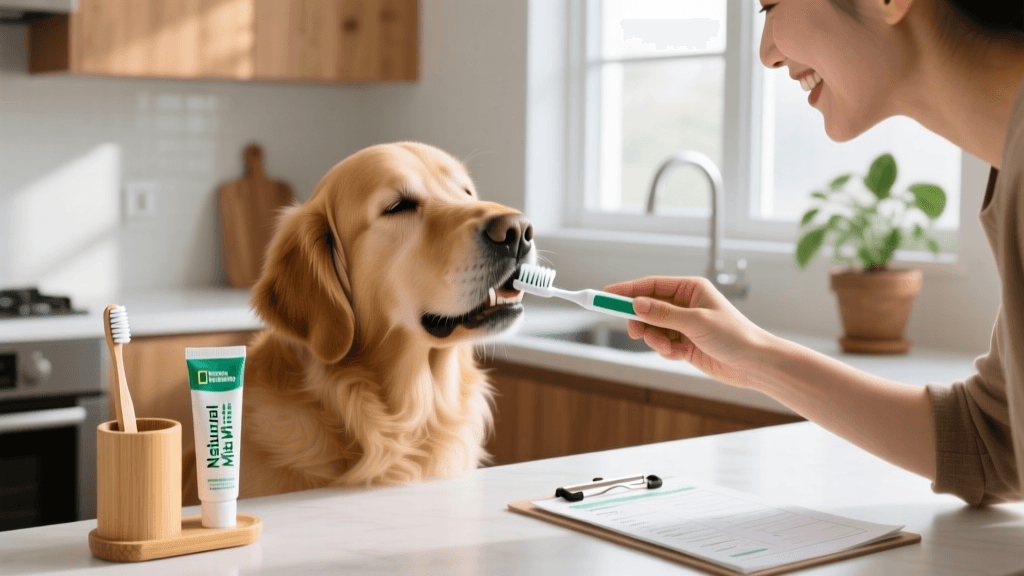
Introduce the toothbrush. Apply the toothpaste and let them lick it off the bristles. Then, gently place the brush against the outer surfaces of their teeth at a 45-degree angle. Use small, circular motions, focusing primarily on the outside of the teeth where plaque accumulates most heavily. You do not need to pry their mouth open to brush the inner surfaces; a dog's rough tongue naturally helps keep the inside of the teeth relatively clean. Aim for a total brushing time of about 60 to 90 seconds, spending roughly 30 seconds on each side of the mouth. Always end the session with enthusiastic praise and a favorite toy or treat.
Beyond the Brush: Chews, Additives, and Diets
While daily brushing is the gold standard of canine dental care, it is not always possible to brush every single day, and some dogs simply will not tolerate it. Fortunately, there are supplementary options to help maintain oral health between brushings.
Dental Chews and Treats
Dental chews work through mechanical abrasion; as the dog chews, the texture scrapes plaque off the teeth. However, not all chews are created equal. When shopping, always look for the Veterinary Oral Health Council (VOHC) seal of acceptance. The VOHC is an independent entity that evaluates pet dental products for efficacy. Products like Purina Pro Plan Veterinary Dental Chewz or Greenies carry this seal. Expect to spend between $20 and $40 per month on high-quality, VOHC-approved dental chews.
Water Additives
Water additives are tasteless, odorless liquids that you mix into your dog's daily drinking water. They contain enzymes and antibacterial agents that help reduce plaque and freshen breath. Brands like TropiClean Fresh Breath are popular among beginners. While not a replacement for brushing, they are an excellent, low-stress supplementary measure, costing roughly $10 to $15 per bottle (lasting about a month).
Prescription Dental Diets
For dogs prone to severe tartar buildup, veterinarians may recommend a prescription dental diet. These kibbles are specially formulated with a larger, porous structure that does not shatter upon impact; instead, the tooth sinks into the kibble, providing a scrubbing action all the way to the gum line. These diets require a veterinary prescription and typically cost between $60 and $90 per large bag.
Recognizing the Warning Signs of Dental Disease
Even with a diligent at-home routine, dogs can develop dental issues. As a responsible owner, you must know when to stop home care and seek professional veterinary intervention. The U.S. Food and Drug Administration (FDA) advises pet owners to watch for the following red flags:
- Persistent Bad Breath (Halitosis): While dog breath is rarely pleasant, a foul, rotting odor indicates bacterial overdrive and potential infection.
- Pawing at the Mouth: If your dog frequently rubs their face against furniture or paws at their mouth, they are likely experiencing oral pain.
- Changes in Eating Habits: Dropping food, chewing exclusively on one side of the mouth, or suddenly preferring wet food over dry kibble are classic signs of tooth pain.
- Visible Gum Changes: Gums should be a healthy bubblegum pink. Bright red, swollen, or bleeding gums are indicative of gingivitis.
- Loose or Discolored Teeth: Teeth that are wobbly, broken, or stained dark brown or black require immediate veterinary attention.
The Role of Professional Veterinary Cleanings
It is crucial to understand that at-home care cannot replace professional veterinary dental cleanings. Just as humans need to visit the dentist twice a year, dogs require professional scaling and polishing to remove tartar from below the gumline—something a toothbrush simply cannot reach.
Professional cleanings are performed under general anesthesia. This is necessary to keep the dog completely still, protect their airway from water and bacteria, and allow the veterinarian to take dental X-rays. X-rays are vital because over 60 percent of a dog's tooth structure lies hidden beneath the gumline, where hidden infections, root abscesses, and bone loss occur.
Cost Expectations: A routine veterinary dental cleaning under anesthesia typically ranges from $300 to $600, depending on your geographic location and the clinic's pricing structure. If dental X-rays, bloodwork, or tooth extractions are required, the cost can easily exceed $800 to $1,500. Investing in daily at-home brushing can significantly delay the need for these expensive procedures.
Conclusion: Consistency is the Key to Canine Longevity
Embarking on a dog dental care routine as a beginner can feel daunting, but the long-term rewards far outweigh the initial learning curve. By investing in the right enzymatic toothpaste, utilizing positive reinforcement to build a stress-free brushing habit, and supplementing with VOHC-approved chews, you are giving your dog the gift of a pain-free mouth. Remember that dental health is an integral part of your dog's overall wellbeing. Schedule annual wellness exams with your veterinarian, stay vigilant for warning signs, and keep that tail wagging with a healthy, happy smile.
robin-maitland
All our authors care for dogs every day — read more of their work on the authors page.