Road Trips With Dogs: Google's Most-Asked Questions
Planning a road trip with your dog? We answer Google's most-asked questions about dog car travel, safety restraints, car sickness, and rest stops.
Introduction: The 'People Also Ask' Phenomenon
If you have ever typed 'traveling with dog' into a search engine, you have likely been met with an endless scroll of 'People Also Ask' questions. Sharing your life with a dog means they are part of the family, and naturally, you want them to join you on road trips, weekend getaways, and cross-country adventures. However, traveling with a canine companion requires careful planning, specialized gear, and an understanding of their physiological needs.
At Paws-Tales, we have analyzed Google's most frequently asked questions regarding dog car travel to bring you a comprehensive, expert-backed guide. From crash-tested safety restraints to managing motion sickness and scheduling potty breaks, here is everything you need to know before hitting the open road with your four-legged best friend.
1. Where is the Safest Place for a Dog in a Car?
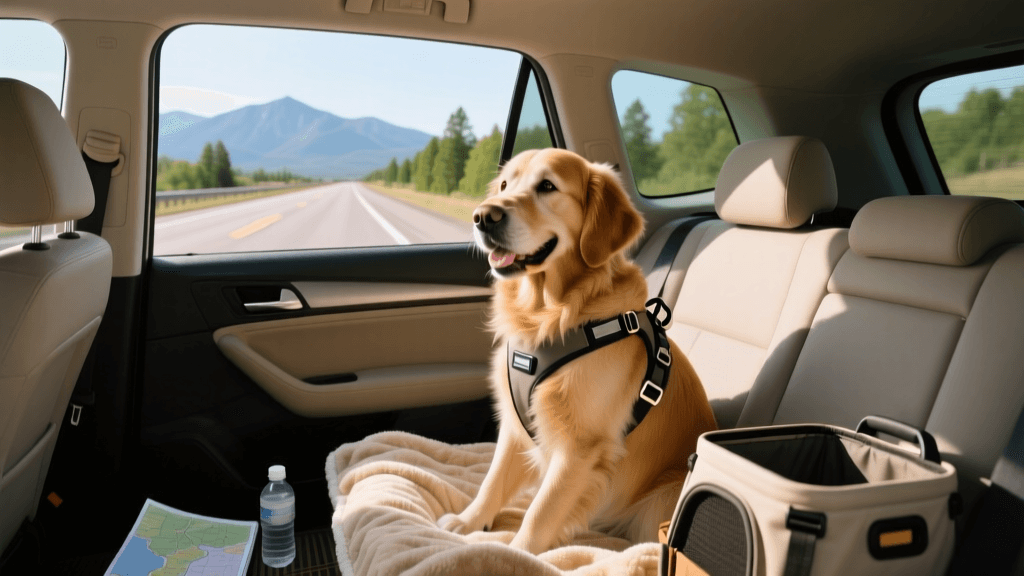
The safest place for a dog in a vehicle is the back seat or the cargo area of an SUV, secured inside a crash-tested crate or wearing a certified safety harness. The front passenger seat is incredibly dangerous for dogs due to airbags. Airbags are designed to protect human bone structures and deploy at speeds up to 200 mph. If a dog is in the front seat during a collision, the force of the deploying airbag can cause catastrophic, often fatal, injuries.
Furthermore, allowing your dog to roam freely in the car turns them into a dangerous projectile in the event of a sudden stop or crash. According to the ASPCA's official pet travel guidelines, pets should always be properly restrained to prevent them from distracting the driver and to protect them from injury. Never allow your dog to ride in the bed of a pickup truck; this exposes them to flying debris, extreme weather, and the high risk of being ejected during sudden maneuvers.
2. How Long Can a Dog Ride in a Car Without a Break?
There is no universal answer to this question, as a dog's ability to hold their bladder and tolerate the mental fatigue of balancing in a moving vehicle depends heavily on their age, size, and health status. While a healthy adult dog might comfortably ride for four to six hours, puppies and senior dogs require much more frequent stops.
When planning your route, use the following data table to schedule your rest stops. Remember that breaks should not just be for bathroom needs; dogs need to stretch their legs, hydrate, and engage in mental enrichment (like sniffing) to reduce travel anxiety.
| Dog Category | Max Drive Time | Break Frequency | Activity Needed at Stop |
|---|---|---|---|
| Puppies (8-16 weeks) | 1-2 Hours | Every 1 Hour | Potty, light sniffing, hydration |
| Adult Dogs (1-7 years) | 4-6 Hours | Every 3-4 Hours | 15-min walk, potty, water |
| Senior Dogs (8+ years) | 3-4 Hours | Every 2-3 Hours | Stretching, potty, joint care |
| Brachycephalic Breeds | 2-3 Hours | Every 2 Hours | Cool down, water, panting rest |
Pro Tip: Always keep a travel kit in your trunk that includes a collapsible silicone water bowl, a jug of fresh water from home (to prevent stomach upset from new water sources), biodegradable waste bags, and a long-line leash for safe exploration at rest areas.
3. How Do I Stop My Dog From Getting Carsick?
Canine motion sickness is incredibly common, especially in puppies whose inner ear structures (the vestibular system) are not fully developed. However, in adult dogs, carsickness is often rooted in anxiety and negative associations, such as only riding in the car to visit the veterinarian.
The American Kennel Club (AKC) recommends a multi-pronged approach to treating and preventing car sickness:
- Fasting: Withhold food for 3 to 4 hours before the trip, but ensure they have access to water. A full stomach exacerbates nausea.
- Desensitization Training: Spend a week changing your dog's emotional response to the car. Days 1-3: Sit in the parked car with the engine off and feed high-value treats like boiled chicken or freeze-dried liver. Days 4-6: Turn the engine on, give treats, and turn it off without driving. Days 7-10: Take short, 5-minute drives to highly rewarding locations like the park or a pet-friendly store.
- Natural Remedies: Ginger snaps (made for dogs) or calming chews containing L-theanine and chamomile can soothe mild stomach upset.
- Veterinary Medication: For severe cases, consult your vet about prescribing Cerenia (maropitant citrate), a highly effective anti-nausea medication specifically designed for dogs, or Trazodone for travel-induced anxiety.
4. What Are the Best Car Restraints for Dogs?
Not all pet travel gear is created equal. The term 'crash-tested' is largely unregulated in the pet industry, meaning many brands make false safety claims. To ensure your dog is truly protected, you must look for products certified by the Center for Pet Safety (CPS), an independent organization that conducts rigorous 30-mph frontal collision crash tests using canine crash-test dummies.
Below is a comparison of the most common restraint types to help you choose the right gear for your vehicle and your dog's size.
| Restraint Type | Safety Rating | Avg. Cost | Best For |
|---|---|---|---|
| CPS-Certified Harness (e.g., Sleepypod Clickit Sport) | 5-Star Crash Tested | $90 - $120 | Dogs under 75 lbs who prefer to sit or lie down on the seat |
| Crash-Tested Crate (e.g., Gunner G1, Dakota 283) | 5-Star Crash Tested | $500 - $800 | Large breeds, anxious dogs, and SUV cargo-area travel |
| Standard Seatbelt Tether / Zipline | Not Crash Tested (High Risk) | $15 - $30 | Low-speed city driving only; prevents roaming but not impact injury |
| Mesh Car Barrier | Distraction Prevention Only | $25 - $50 | Keeping dogs out of the front seat; offers zero crash protection |
The 'Two-Inch Rule' for Crates: If you opt for a crate, sizing is critical for safety. Your dog should be able to stand up, turn around, and lie down comfortably. However, there should be no more than two inches of extra space above their head or on either side. If a crate is too large, the dog can be thrown against the interior walls during a collision, causing severe blunt force trauma.
5. Can I Leave My Dog in the Car While I Run Errands?
The short and absolute answer is no. Leaving a dog in a parked car is one of the most dangerous things a pet owner can do, regardless of the weather outside. Cars act like greenhouses, trapping solar radiation and rapidly escalating the interior temperature.
Even on a mild 70°F (21°C) day, the temperature inside a parked car can reach 104°F (40°C) in just 30 minutes. Cracking the windows has a negligible effect, lowering the temperature by only 1 or 2 degrees. Dogs do not sweat through their skin like humans do; they rely on panting to cool down, which is entirely ineffective in a stagnant, superheated environment. Heatstroke can set in within minutes, leading to symptoms such as excessive panting, thick drooling, lethargy, vomiting, and ultimately, organ failure and death.
Furthermore, many states and municipalities have enacted 'Rescue Laws' that grant legal immunity to bystanders or law enforcement officers who break a vehicle's window to save an animal in distress. If you are on a road trip and need to stop for food or groceries, utilize drive-thrus, take turns waiting outside with the dog, or use pet-friendly delivery apps to bring necessities to your vehicle.
Conclusion: Preparation is the Key to Happy Travels
Road tripping with your dog should be a joyful experience that strengthens your bond and creates lasting memories. By addressing these most-asked questions and prioritizing your dog's physical safety and emotional comfort, you can transform stressful car rides into exciting adventures. Invest in CPS-certified restraints, plan your rest stops meticulously, and never compromise on their well-being by leaving them unattended in a vehicle. Safe travels from all of us at Paws-Tales!
jonas-cole
All our authors care for dogs every day — read more of their work on the authors page.