DIY Scent Work Games To Unlock Your Dog's Natural Instincts
Discover how DIY scent work games and homemade snuffle mats tap into your dog's natural foraging instincts to reduce anxiety and improve behavior.
The Psychology of a Dog's Nose
When we look at our dogs, we often focus on their expressive eyes or their wagging tails. However, to truly understand your dog, you must understand how they perceive the world through their nose. A dog's olfactory system is a marvel of evolutionary biology. While humans have roughly six million olfactory receptors, dogs possess up to 300 million, depending on the breed. Furthermore, the part of a dog's brain that is devoted to analyzing odors is proportionally 40 times greater than ours. This means that scent is not just a way for your dog to find food; it is their primary method of gathering information, communicating, and processing their environment.
From a behavioral psychology standpoint, sniffing is deeply tied to a dog's emotional regulation. The olfactory bulb has direct connections to the limbic system, the brain's emotional center. When a dog engages in deep, focused sniffing, it actually triggers a parasympathetic nervous system response, which lowers their heart rate and promotes a state of calm. By creating DIY scent work games at home, you are not just entertaining your dog; you are providing a vital psychological outlet that satisfies their ancestral foraging instincts and reduces anxiety-driven behaviors.
Why Sniffing is Crucial for Canine Mental Health
Many dog owners mistakenly believe that a long physical walk is the ultimate cure for a hyperactive or destructive dog. While physical exercise is important, it does little to tire out a dog's brain. According to experts at the American Kennel Club (AKC), engaging a dog in nose work and scent-based games builds confidence, provides immense mental stimulation, and can be particularly beneficial for shy, reactive, or senior dogs who may not be able to handle rigorous physical activity. Mental fatigue achieved through scent work is often more exhausting for a dog than a mile-long run. By integrating homemade scent puzzles into your daily routine, you can effectively manage behavioral issues rooted in boredom and understimulation.
DIY Project 1: The Classic Fleece Snuffle Mat
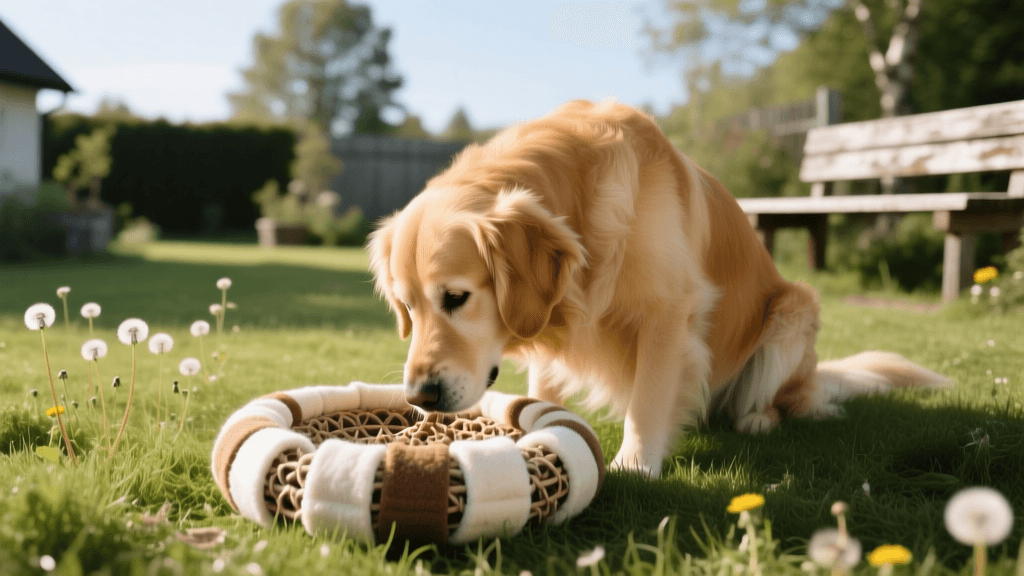
The snuffle mat is the gold standard of DIY canine enrichment. It mimics the natural behavior of foraging for food in tall grass and underbrush. It is highly customizable, machine washable, and incredibly cost-effective compared to store-bought puzzle toys.
Materials and Cost
- Anti-Pill Fleece Fabric: 1.5 yards (Approx. $8 to $12 at craft stores like Joann or Walmart). Choose 2 or 3 contrasting colors to make the treats slightly more visible for beginners, or stick to greens and browns to mimic nature.
- Rubber Sink Mat: 1 standard-sized rubber sink liner with drainage holes (Approx. $5 to $8). Ensure the holes are roughly 1/2 inch to 1 inch wide.
- Scissors: A sharp pair of fabric scissors.
Total Cost: Under $20.
Time Required: 45 to 60 minutes of crafting while watching TV.
Step-by-Step Instructions
- Cut the Fleece: Cut your fleece fabric into strips that are exactly 1 inch wide and 6 to 7 inches long. You will need approximately 300 to 400 strips depending on the size of your sink mat.
- Tie the Strips: Take one strip of fleece and thread it through two adjacent holes in the rubber mat. Pull it halfway through so you have equal lengths on both sides.
- Knotting: Tie a simple, tight overhand knot on the top side of the mat. Repeat this process across the entire mat until every hole is filled and the rubber base is completely hidden beneath a thick canopy of fleece strips.
- Fluff and Hide: Fluff the strips outward. Sprinkle your dog's daily kibble or small, high-value training treats deep into the mat. The dog must use their nose to part the fleece and locate the food.
DIY Project 2: The Muffin Tin Scent Puzzle
If you need a quick, zero-prep enrichment game to keep your dog occupied while you work from home, the muffin tin puzzle is an excellent solution that tests your dog's problem-solving skills and paw-to-nose coordination.
Materials and Setup
- 1 standard 12-cup metal or silicone muffin tin.
- 12 tennis balls or appropriately sized rubber balls (must be large enough that they cannot be swallowed).
- Strong-smelling treats (e.g., freeze-dried liver or small pieces of cheese).
How to Play and Behavioral Observation
Place a few treats into several of the muffin cups, leaving some empty to increase the difficulty and encourage sustained searching. Place a tennis ball over each cup to hide the contents. When you present this to your dog, observe their approach. Do they use their paws to bat the balls away, or do they use their snout to nudge them? According to The Humane Society of the United States, providing interactive puzzle toys like this helps prevent destructive behaviors born from boredom. If your dog becomes frustrated and starts chewing the tin or barking, the puzzle is too hard. Remove a few balls to make the treats more accessible, ensuring they end the session on a successful, positive note.
DIY Project 3: Homemade Indoor Scent Trails
For dogs with strong tracking and hound instincts, creating a scent trail in your living room or hallway is a fantastic way to engage their prey drive in a controlled, constructive manner.
Creating the Trail
You do not need expensive essential oils to create a scent trail. Simply take a handful of your dog's favorite smelly treats and rub them along the edges of doorframes, the legs of chairs, and the corners of cardboard boxes. Create a deliberate path that leads from the kitchen to the living room, ending with a 'jackpot' pile of treats inside an open cardboard box. For advanced dogs, you can drag a piece of jerky along the carpet to leave a stronger scent molecule trail. This game forces the dog to keep their nose glued to the floor, tracking the invisible path you have laid out, which deeply satisfies their genetic urge to hunt and track.
Comparison Chart: Mental vs. Physical Enrichment
Understanding the difference between physical exhaustion and mental fatigue is key to managing your dog's behavior. The table below illustrates why DIY scent work is a vital component of a balanced canine lifestyle.
| Enrichment Type | Activity Example | Duration | Mental Fatigue Level | Physical Exertion | Impact on Heart Rate |
|---|---|---|---|---|---|
| Physical | Brisk Neighborhood Walk | 30 Minutes | Low to Moderate | High | Elevates, then normalizes |
| Mental | DIY Snuffle Mat Foraging | 15 Minutes | Very High | Low | Lowers (Calming effect) |
| Hybrid | Outdoor Scent Trail Tracking | 20 Minutes | High | Moderate | Fluctuates with excitement |
As the chart demonstrates, just 15 minutes of intense sniffing on a homemade snuffle mat can provide the equivalent mental exhaustion of a much longer physical walk, while simultaneously promoting a relaxed physiological state.
Reading Your Dog's Body Language During Scent Work
As your dog engages with these DIY scent games, it is crucial to observe their body language to understand their emotional state. Scent work should be a joyful, confidence-building experience. Look for loose, wiggly body movements and a relaxed, sweeping tail wag. These are indicators of positive arousal and engagement.
However, if your dog exhibits lip licking, yawning, or turning their head away from the puzzle, these are 'calming signals' indicating stress or frustration. This usually means the treat is hidden too well, or the dog is overwhelmed by the environment. If you notice a stiff tail, pinned-back ears, or 'whale eye' (showing the whites of their eyes), pause the game. Simplify the puzzle by placing treats on top of the fleece or removing the tennis balls from the muffin tin. Understanding these subtle communication signals ensures that your DIY enrichment efforts remain a positive psychological tool rather than a source of anxiety.
Conclusion
Understanding your dog requires looking past their physical needs and addressing their deep-seated psychological and instinctual drives. By utilizing simple, homemade materials like fleece, muffin tins, and cardboard boxes, you can create a rich olfactory environment that speaks directly to your dog's ancestral heritage. DIY scent work games are not merely crafts; they are powerful behavioral tools that foster confidence, alleviate anxiety, and strengthen the bond between you and your canine companion. Start with a simple snuffle mat today, observe your dog's natural brilliance at work, and watch as their behavioral issues melt away into the satisfying rhythm of the sniff.
robin-maitland
All our authors care for dogs every day — read more of their work on the authors page.