DIY Puppy Proofing: Budget Home Prep for New Dogs
Learn how to puppy-proof your home on a budget with our DIY guide. Discover homemade barriers, safe chew alternatives, and cost-saving prep tips.
Bringing a new dog or puppy into your home is one of the most exciting milestones in life, but it can also be financially overwhelming. Between veterinary bills, high-quality food, and essential gear, the costs add up quickly. According to the ASPCA, the initial first-year costs of dog ownership can easily exceed a thousand dollars. However, one area where you can significantly reduce your expenses without compromising on safety or quality is preparing your home. By embracing DIY and homemade solutions for puppy-proofing and enrichment, you can create a safe, engaging environment for your new furry friend on a shoestring budget.
The DIY Puppy Safe Zone: Creating a Haven
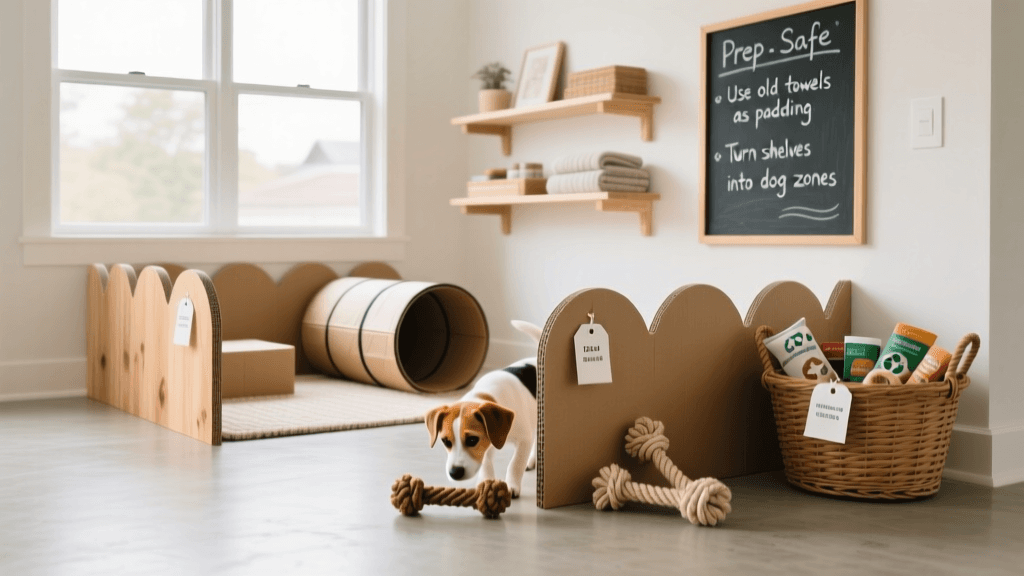
Before your new dog even steps through the front door, you need to establish a 'safe zone.' This is a confined area where your puppy can relax, sleep, and play without access to household hazards. While commercial wire crates and modular exercise pens are excellent, they can cost anywhere from $60 to over $150. Instead, consider building an upcycled puppy playpen.
Head to your local hardware store or repurpose materials from your garage. You can construct a sturdy, temporary pen using wire closet shelving and heavy-duty zip ties. Cut the wire shelving into 36-inch high panels and secure the corners with zip ties, ensuring all sharp, cut ends are filed down or covered with split rubber tubing (which can be sliced from old garden hoses). Alternatively, if you have a large, sturdy cardboard appliance box, you can cut it down to a 30-inch height, reinforce the corners with duct tape, and line the bottom with a waterproof tarp and old blankets. This creates an instant, draft-free, and highly affordable containment area for the first few weeks of potty training.
Homemade Puppy-Proofing Hacks for Every Room
Puppies explore the world with their mouths, which means your baseboards, electrical cords, and cabinetry are all potential targets. Here are several highly effective, low-cost DIY solutions to puppy-proof your living spaces.
Kitchen and Bathroom Cabinet Locks
Puppies can easily nose open lower cabinets containing toxic cleaning supplies or dangerous foods. Instead of buying expensive magnetic child locks, use heavy-duty velcro strips. Apply the adhesive side of the velcro to the inside frame of the cabinet and the door. A strong velcro pull requires human-level dexterity and strength to open, completely baffling a puppy's paws and snout. For sliding doors, a simple rubber band looped around the two handles will provide enough tension to keep a curious nose out.
Baseboard and Furniture Deterrent
Teething puppies love the texture of wooden baseboards and table legs. Commercial bitter apple sprays are effective but cost around $12 to $15 a bottle. You can make a highly effective homemade deterrent spray using ingredients from your pantry. Mix 2 cups of apple cider vinegar with 1 cup of white distilled vinegar in a spray bottle. Shake well and mist it lightly on baseboards and furniture legs. The strong, pungent scent and sour taste will naturally deter most puppies from chewing. Reapply every few days until the teething phase passes.
Cord Management and Protection
Exposed electrical cords are a severe electrocution hazard. Rather than purchasing plastic cord concealers, save your empty toilet paper and paper towel rolls. Slit them down the middle lengthwise, wrap them around your bundled cords, and secure them with a piece of masking tape. You can also weave cords through the legs of heavy furniture to keep them completely out of reach. As recommended by The Humane Society of the United States, removing hazards at the puppy's level is critical, and covering wires with tough, inedible barriers is a vital step in preventing tragic accidents.
DIY Enrichment and Chew Toys
A bored puppy is a destructive puppy. Providing mental stimulation and appropriate chewing outlets will save your shoes and furniture. You don't need to spend a fortune at the pet store to keep your dog entertained.
The Fleece Snuffle Mat
Snuffle mats engage a dog's natural foraging instincts, slowing down their eating and providing excellent mental enrichment. To make one, purchase a cheap rubber sink mat with holes (usually under $5) and a yard of anti-pill fleece fabric from a craft store. Cut the fleece into strips measuring 2 inches wide by 6 inches long. Tie each strip through the holes in the rubber mat using a simple double knot. Once the mat is fully covered, sprinkle your dog's kibble into the fleece strips and let them sniff out their meal. This DIY project costs a fraction of the $30+ retail price of commercial snuffle mats.
Frozen Teething Towel
Soothe your puppy's aching gums with a homemade ice toy. Take an old, clean cotton hand towel and soak it in water or low-sodium chicken broth. Wring it out so it is damp but not dripping, then twist it tightly into a rope shape. Place the twisted towel into a ziplock bag and freeze it overnight. The frozen, textured fabric provides incredible relief for teething puppies and is completely free if you repurpose old linens.
Potty Training Door Bells
Teaching your dog to ring a bell to go outside is a classic training milestone. Instead of buying a specialized pet doorbell, buy a spool of nylon ribbon and a few large jingle bells from a craft store. String the bells onto the ribbon, tie a loop at the top, and hang it over your doorknob. Every time you take the puppy out to potty, gently guide their nose or paw to ring the bells before opening the door.
Cost Comparison: Store-Bought vs. DIY Puppy Prep
To illustrate just how much you can save by taking a hands-on approach to getting a dog, review the cost breakdown below. These estimates are based on average retail prices compared to the cost of raw materials for homemade alternatives.
| Item | Store-Bought Cost | DIY / Homemade Cost | Total Savings |
|---|---|---|---|
| Bitter Apple Spray (Deterrent) | $14.00 | $3.50 (Vinegar Mix) | $10.50 |
| Modular Wire Puppy Pen | $75.00 | $15.00 (Wire Shelving) | $60.00 |
| Commercial Snuffle Mat | $28.00 | $7.00 (Fleece & Sink Mat) | $21.00 |
| Plastic Cord Protectors | $18.00 | $0.00 (Cardboard Tubes) | $18.00 |
| Pet Potty Door Bells | $12.00 | $3.00 (Ribbon & Craft Bells) | $9.00 |
| Total Estimated Savings | $118.50 | ||
Cleaning Up Accidents: Homemade Solutions
Even with diligent potty training, accidents will happen. It is crucial to clean these spots thoroughly so your puppy doesn't return to the same area. While commercial enzymatic cleaners are the gold standard for breaking down uric acid, you can make a highly effective DIY spot cleaner for fresh accidents using household staples.
First, blot up as much of the urine as possible with paper towels. Next, sprinkle a generous layer of baking soda over the damp area. In a spray bottle, mix half a cup of 3% hydrogen peroxide with one teaspoon of mild, pet-safe liquid dish soap. Spray this mixture over the baking soda and gently work it into the carpet fibers with an old toothbrush or cloth. Let it sit for 15 minutes, then blot dry and vacuum once completely dry. Note: Always test hydrogen peroxide on a hidden area of your carpet first to ensure it does not cause discoloration.
The Eye-Level Inspection
The most important DIY puppy-proofing step requires no tools and costs absolutely nothing. The American Kennel Club strongly advises new owners to get down on their hands and knees to view their home from a puppy's perspective. From this vantage point, you will spot dropped pills under the sofa, toxic houseplants within tail-swiping distance, and loose change that could be swallowed.
'Getting down on your puppy's level is the single most effective way to identify hidden hazards. What looks safe from a standing height can be a dangerous trap from the floor.'
Preparing your home for a new dog doesn't require an endless budget or expensive gadgets. By utilizing DIY barriers, homemade deterrents, and upcycled enrichment toys, you can provide a safe, stimulating, and loving environment for your new companion. The money you save on puppy-proofing can then be redirected toward what truly matters: high-quality nutrition, routine veterinary care, and a lifetime of happy memories with your new best friend.
robin-maitland
All our authors care for dogs every day — read more of their work on the authors page.